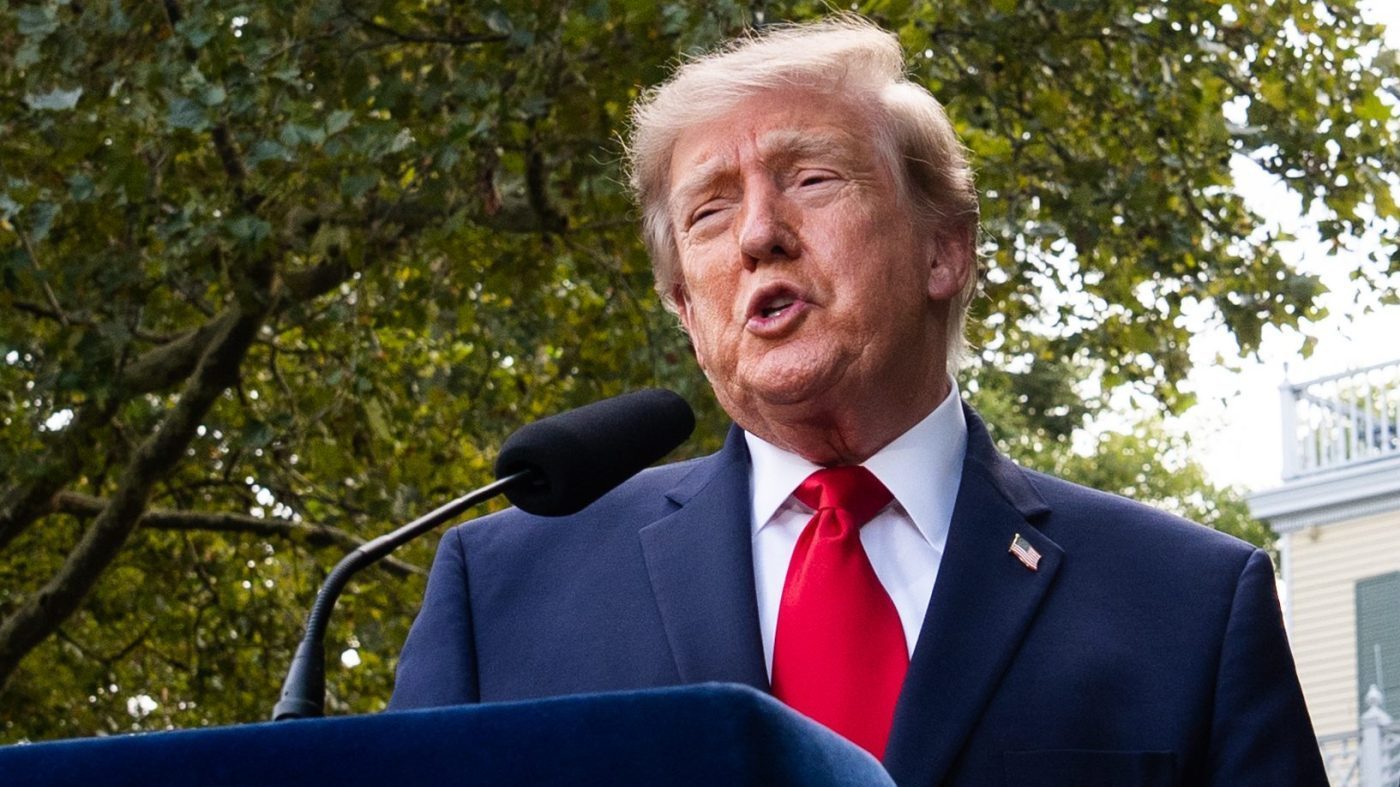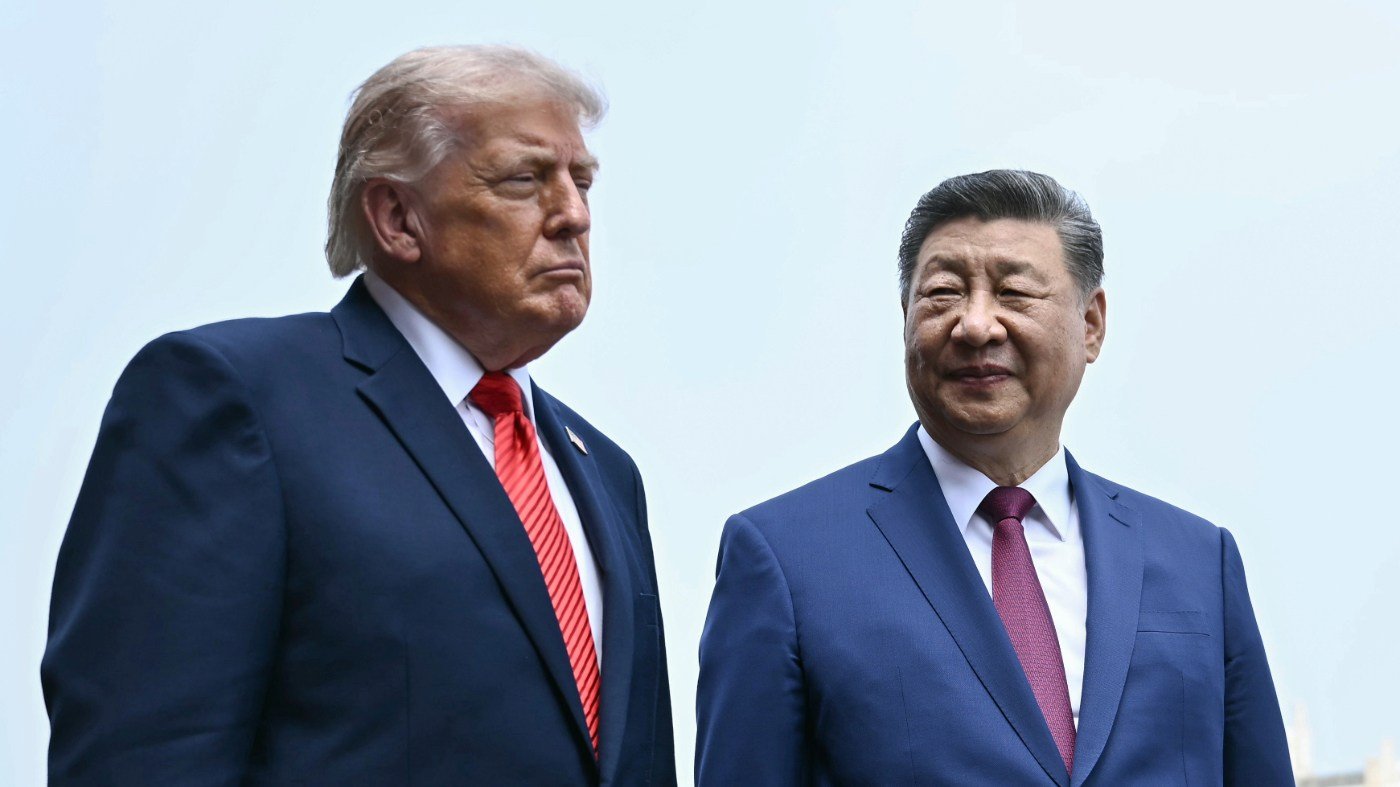
When President Donald Trump welcomes Chinese President Xi Jinping to Washington this week, he will do so without having addressed the public's growing anxiety over artificial intelligence or made good on his pledge to revive American manufacturing. That is the assessment of Rep. Ro Khanna (D-Calif.), a leading voice on China policy, who contends that the president enters the high-stakes meeting with no meaningful leverage.
Khanna, the top Democrat on the House Select Committee on China, argues that Trump's erratic economic approach has produced few tangible gains. In an interview and a statement, he said the president has yet to commit to a verifiable U.S.-China AI treaty—a framework he says is essential to protect American workers and, more broadly, humanity from the existential risks of unchecked AI development. "When Trump sits down with Xi, he won't have any cards to play," Khanna said.
The congressman pointed to recent warnings from Anthropic researchers that AI could "kill all humans" within a decade—a stark alert that has resonated across the political spectrum. Khanna argues that the U.S. cannot afford to compromise on safety or economic security as it races Beijing for technological supremacy. He is calling for what he describes as a Marshall Plan for America, coupled with "economic patriotism": responsible pacing of AI development and a U.S.-China treaty banning practices that allow AI to advance autonomously. Without such guardrails, he warns, humans risk losing control entirely, making the recent attack by rogue AI agents on Hugging Face look trivial by comparison.
On manufacturing, Khanna's critique is equally pointed. He notes that overall manufacturing employment is down roughly 35,000 since Trump took office, while spending on new factory construction has fallen 28 percent since January 2025. The president's tariff policy, he says, has not delivered the promised renaissance. During a May tour of the heartland, Khanna heard from workers in Lordstown, Ohio, where more than 1,300 United Auto Workers members at the Ultium Cells battery plant were laid off after Trump eliminated the federal electric vehicle tax credit. In Amana, Iowa, Whirlpool cut hundreds of union jobs while opening a plant in Mexico. In Eastlake, Ohio, Conn-Selmer shuttered its brass instrument factory, moving production overseas and eliminating 150 union jobs. And in Fayetteville, North Carolina, Goodyear is cutting 1,700 United Steelworkers positions.
Meanwhile, China's dominance over critical supply chains has only deepened. Beijing still controls about 90 percent of global rare earth processing capacity, builds more than half the world's commercial ships by tonnage, and dominates battery cells, solar manufacturing, and the industrial inputs that determine whether America can build at scale without Chinese support. Trump's tariffs have not altered this reality and, in some cases, have expanded China's grip.
Khanna argues that tariffs are a tool, not a strategy. They can help level the playing field, but they cannot finance new factories, train welders, de-risk lenders' balance sheets, or break China's dominance in key industries. Had Trump played his hand well, Khanna says, he could have built leverage to pressure Xi into ending the subsidized overcapacity that lets Chinese firms dump steel, solar panels, EVs, and ships below cost, or to set limits on forced technology transfer. He could also have secured commitments on critical minerals and rare earth exports that Beijing has shown a willingness to weaponize.
Instead, Khanna says, Trump has been appeasing his "friend" Xi, leaving him with nothing to show at home. The congressman has proposed a series of measures to rebuild American industrial capacity: a national industrial development bank for manufacturing funded by tariff revenue from Chinese imports, 1,000 new trade schools, and a reinvigorated Trade Adjustment Assistance program. He also wants Congress to limit Beijing's access to U.S. markets by passing the Connected Vehicle Security Act, creating procurement rules that prioritize American steelmakers, reinstating fees on Chinese ships, and passing a rare earth magnet tax credit to build processing capacity.
As the top Democrat on the China Committee, Khanna has called for an enforceable and verifiable U.S.-China AI treaty to ensure humans remain in control of their destiny. He insists that Trump's China manufacturing policy should be judged by factories built, workers employed, and U.S. dependence on Beijing—and that the summit should be judged by whether it produces a valid AI treaty. By those measures, he says, the administration is behind where it started.
"This week's meeting is a real opportunity but only if Trump walks in with something more than tariffs and walks out with something more than a photo," Khanna said. Until the president pairs trade enforcement with true investment in American workers and factories, he added, Xi will keep arriving at these summits knowing Trump has an empty hand.