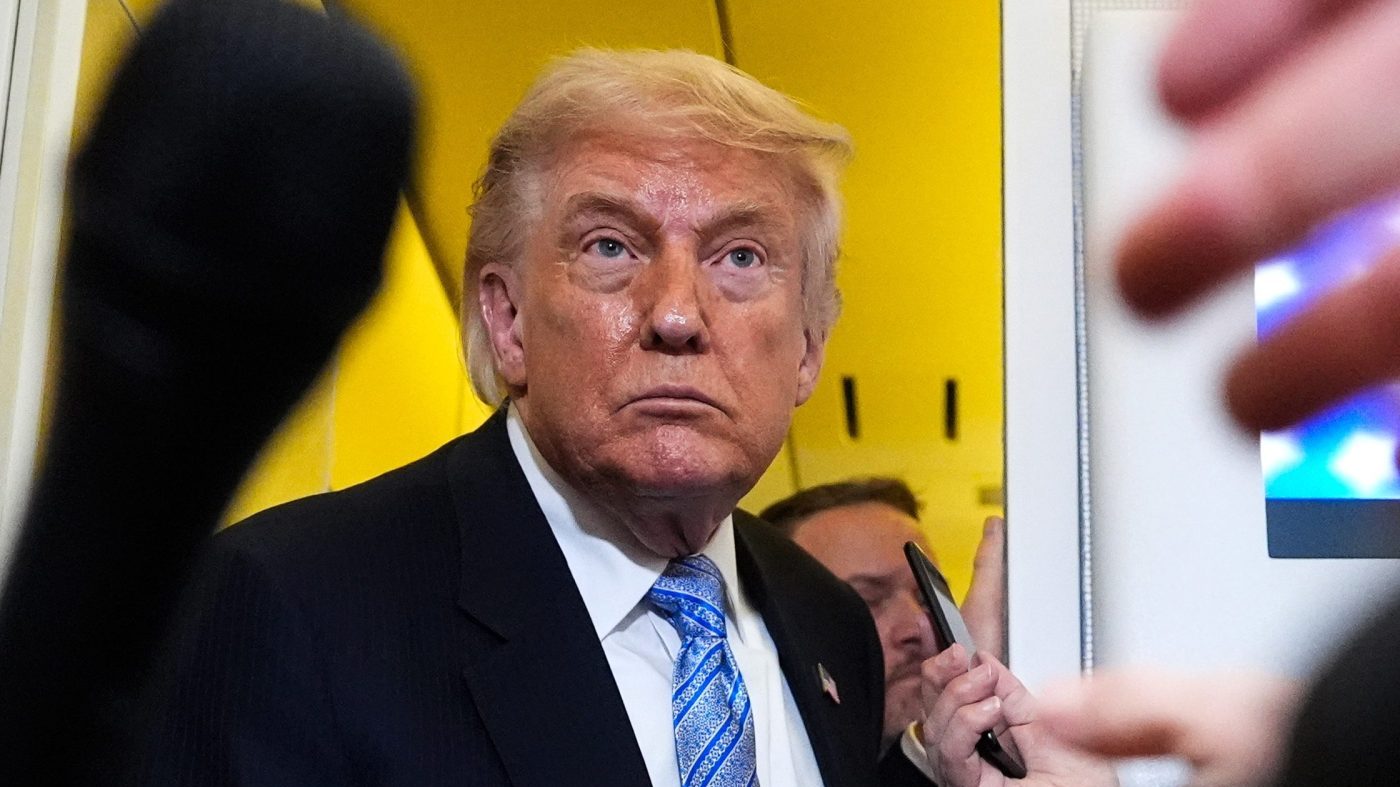
President Trump on Friday forcefully defended his earlier remarks that he is not factoring in Americans' cost-of-living concerns during negotiations to end the conflict with Iran, telling Fox News's Bret Baizer, "That's a perfect statement. I'd make it again." The comments came as the president returned from a summit in China, facing mounting criticism over soaring energy prices and inflation.
Earlier this week, Trump told reporters that the "only thing" that matters in the talks is preventing Iran from obtaining a nuclear weapon. "I don't think about Americans' financial situations. I don't think about anybody. I think about one thing: We cannot let Iran have a nuclear weapon," he said. The war in Iran, particularly disruptions in the Strait of Hormuz, has squeezed global energy markets, sending benchmark Brent crude to around $109 per barrel—up from roughly $70 before the conflict began.
U.S. drivers are feeling the pain at the pump. The nationwide average for regular gas hit $4.52 on Saturday, according to AAA, a sharp increase from pre-war levels. The Labor Department reported this week that annual inflation rose 3.8 percent over the last year, with energy costs driving much of the increase in March and April. The Trump administration has tried to calm public anxiety, with the president promising on Monday that "as soon as this is over, you're going to see gasoline and oil drop like a rock."
But polling suggests many Americans blame the president for the economic strain. A recent CNN survey found that 77 percent of respondents believe Trump's policies have increased the cost of living in their communities, and a significant number expect a recession next year. The affordability crisis poses a serious electoral threat to Republicans in November, and Democrats are already seizing on the issue. GOP House members have stepped up legislative efforts, including a push to temporarily suspend the federal gas tax.
The White House's position remains firm. Press Secretary Karoline Leavitt reiterated that the president's priority is national security, not short-term economic fluctuations. However, critics argue that ignoring domestic economic pain is politically untenable. Senator Elizabeth Warren and Senator Jeanne Shaheen have demanded an end to the Russian oil sanctions waiver, accusing the administration of exacerbating energy costs.
Trump's handling of the Iran conflict has also drawn fire from journalists and lawmakers. The president recently accused New York Times reporter David Sanger of "treasonous" coverage of the war, escalating tensions with the press. Meanwhile, Senator Marco Rubio has warned that Iran's attempts to use U.S. politics for leverage won't force a "bad" deal on Trump, signaling continued hardline negotiations.
As the November midterms approach, the interplay between national security and economic pain will be a defining theme. Trump's unapologetic stance may rally his base, but it risks alienating swing voters struggling with higher costs. The administration's bet that a swift end to the conflict will restore affordability remains unproven, and the political fallout is far from settled.