There's a particular kind of late-autumn warmth that settles over Washington, D.C., each November—a balmy, humid air that feels out of place on the calendar, like a stolen moment from a Florida winter. It's the kind of weather that, for those who grew up here, carries a sense of both nostalgia and unease, a charged atmosphere before the storms roll in.
This year, that "Florida weather" has been especially pronounced, providing a fitting backdrop for the strange, suspended state of affairs at East Potomac Park. The park's golf course, a century-old municipal fixture on Hains Point, has become the latest battleground in the ongoing clash between the Trump administration and the District of Columbia.

The president's ambitions for the city's western riverfront are well-documented. Upstream, the Kennedy Center sits in a state of decay, its nameplate shrouded in tarp after courts blocked a renaming effort. Just south, the site of a proposed triumphal arch remains a fenced-off construction zone, a project waiting for a legal opening to proceed. But it's at Hains Point where the conflict has taken a particularly tangible form.
East Potomac Golf Course was born from dredging mud in the late 19th century, transformed into a public park by Congress in 1897. By 1920, it had become a golfing destination, designed by Walter Travis to evoke Scottish links. For over a century, it served as a working-class haven for golfers of all stripes.
Trump's plan is to replace the three municipal courses with a single 18-hole championship track, a showpiece for the federal government. To do that, he needs to oust the National Links Trust, the non-profit that took over operations under a Park Service deal in his first term. That effort, like so many of the administration's projects, is now mired in litigation, with a judge recently extending a hold on the plan.
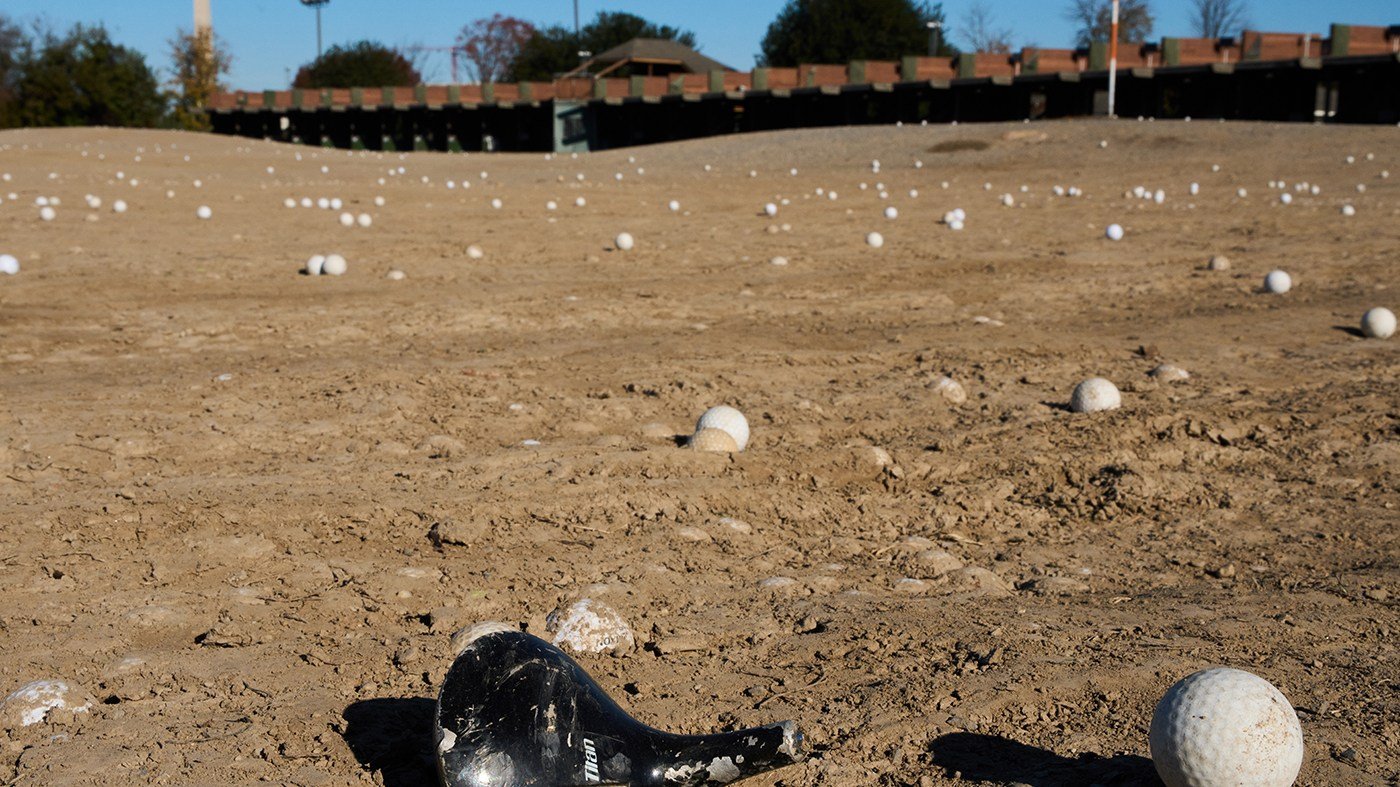
The result is a strange limbo. The National Links Trust was forced out, trees were torn down, but the full-scale demolition was halted—for now. The Park Service stripped the course of everything portable: pencils, flags, even the flagsticks. But you can't pack up 220 acres.
What happened next was a spontaneous act of civic defiance. Loyal golfers showed up anyway, some with homemade flags, others with leaf blowers, and simply played. There are no starters, no marshals, no fees. It's just golf, in its purest form.
On a recent balmy afternoon, my youngest son and I joined that quiet parade. We walked the fairways, kicked through the leaves, and watched the jets from Reagan National claw into the heavy sky. Dads pushed strollers, old-timers walked instead of riding, and first-timers soaked in the scene. It was a small, peaceful act of normalcy in the midst of political turmoil.
What happens next for East Potomac is uncertain. The litigation continues, and the administration's determination remains clear. But on that November day, the golfers of Washington offered a reminder that even when institutions fail, communities find a way to persevere. The course may be in limbo, but the game goes on.