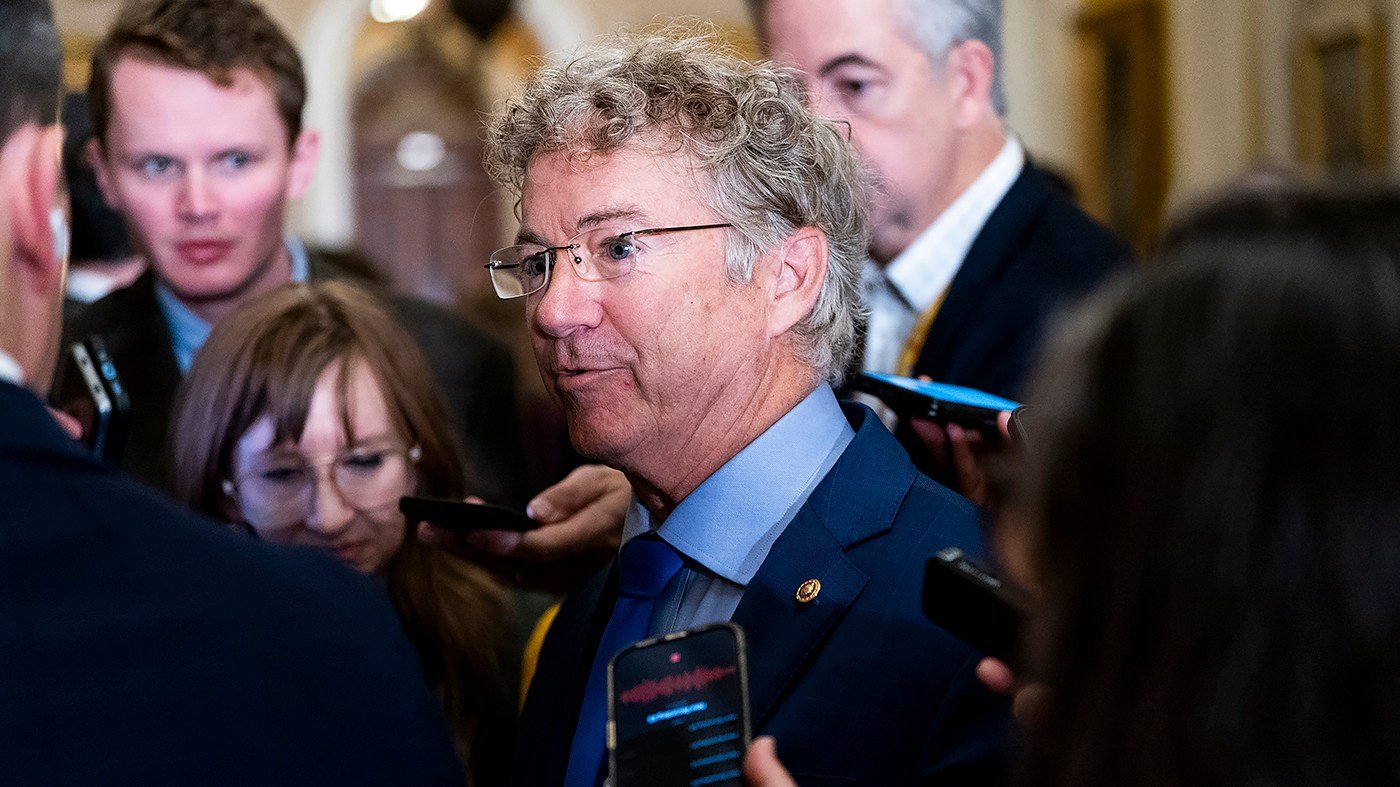
A new grassroots effort is underway to persuade Sen. Rand Paul (R-Ky.) to mount a presidential bid in 2028, a possibility the libertarian-leaning Republican says he will weigh in the coming months.
The group, calling itself Draft Rand, launched DraftRand.com to build support for Paul, who previously sought the GOP nomination in 2016. Organizers describe the movement as independent of any campaign structure and focused on rallying fiscal conservatives, constitutionalists, and anti-interventionists behind the Kentucky senator.
In an interview with The Hill, Paul said he sees a potential opening for a candidate who champions free trade, opposes tariffs, and wants to end U.S. military involvement in Iran—a conflict that has driven up gasoline and diesel prices.
“I think there needs to be a candidate who’s pro-international trade and the benefits that come with it, against deficits, against the trade war and the Iran war, and I don’t think there are that many people out there really,” Paul said. He added, “Most of the people from here that might want to run have already voted to raise the debt ceiling, they all voted for the trade war, they all voted for the Iran war. I think there might be a lane, but I haven’t made a decision.”
Paul has a record of bucking his party’s leadership on key votes. Last year, he opposed the One Big Beautiful Bill Act, which increased the federal debt limit by $5 trillion to $41.1 trillion. He also joined Democrats and a few Republicans—including Sens. Lisa Murkowski (R-Alaska) and Susan Collins (R-Maine)—in votes to unwind President Trump’s global tariffs and to end tariffs on Brazil and Canada. Additionally, he has repeatedly supported Democratic-led resolutions requiring Trump to get congressional authorization before continuing military action against Iran.
Supporters argue Paul offers a distinct alternative to the GOP’s current direction. “Senator Paul has said he will make his decision after the midterms, and we intend to make sure that when he does, he knows exactly how many Americans are ready to stand with him,” said Larry Ward, chair of Constitutional Rights PAC, which is helping organize the Draft Rand effort. “This effort is not about pointing fingers. It is about building something powerful. Fiscal conservatives, constitutional conservatives, liberty voters and independents all agree that Washington spends too much, spies too much and too often forgets that our foreign policy should protect the interests of the American people.”
The draft movement plans to highlight Paul’s work on balancing the budget, his scrutiny of Dr. Anthony Fauci’s COVID-19 policies, and his opposition to endless foreign wars. Brian Darling, a GOP strategist who previously served as Paul’s senior communications director and counsel, said the senator has shown resilience under pressure. “He fought to balance the budget when it was unpopular in his own party. He fought for the Fourth Amendment when the surveillance establishment insisted it could not be done. He chased answers on COVID when the rest of Washington wanted to move on,” Darling said. “That record is exactly why the coalition that came together around the liberty movement can come together again, and why it can win.”
Paul’s willingness to break with GOP leadership has drawn criticism, including from Trump, who in June of last year attacked him for opposing the debt ceiling and tax bill. “Rand votes NO on everything, but never has any practical or constructive ideas. His ideas are actually crazy (losers!). The people of Kentucky can’t stand him. This is a BIG GROWTH BILL!” Trump posted on Truth Social.
But Paul’s allies believe the political landscape may be shifting in his favor, especially after the midterm elections delivered a rebuke to Trump and gave Democrats majorities in both chambers. Darling noted, “Sen. Paul has a unique perspective within the Republican Party when it comes to restrained foreign policy, not a fan of tariffs and somebody who wants to take a hard look at the national debt and how to tackle it.”
Other potential 2028 GOP contenders include Vice President Vance, Secretary of State Marco Rubio, Sen. Ted Cruz (Texas), Georgia Gov. Brian Kemp, Florida Gov. Ron DeSantis, former Virginia Gov. Glenn Youngkin, and Sen. Tom Cotton (Ark.).