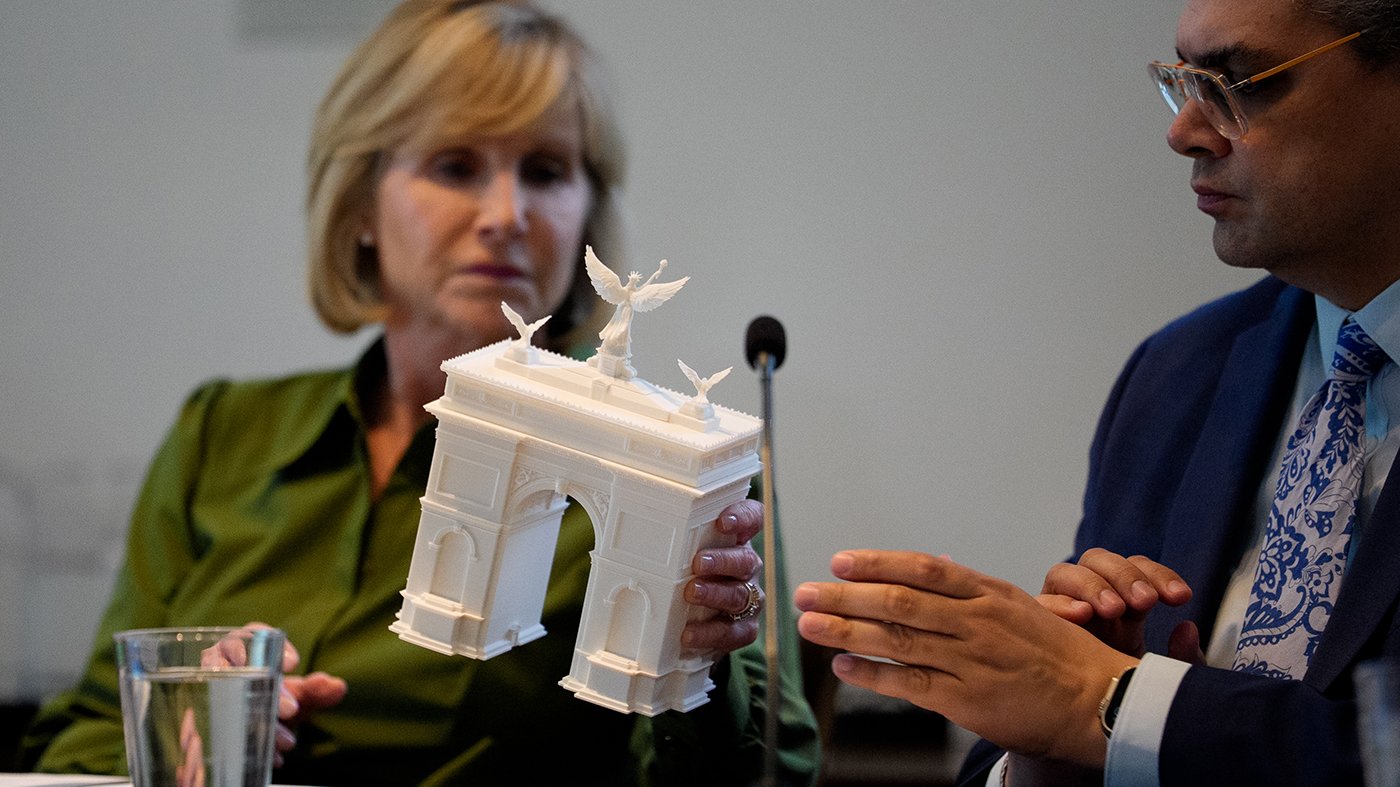
The U.S. Commission of Fine Arts gave its formal approval on Thursday to advance plans for a monumental 250-foot Triumphal Arch, a project personally championed by former President Donald Trump. The structure is slated for construction on Columbia Island, a National Park Service-managed landmass in the Potomac River positioned between the Lincoln Memorial and Arlington National Cemetery.
Monumental Ambitions and Official Praise
Interior Secretary Doug Burgum, presenting the Department of the Interior's plans, framed the arch as a continuation of historical tradition. "Carefully designed and thoughtfully placed, such a structure will enrich Washington's historic fabric, adding a new chapter to the infinitely rich history of our nation's capital," Burgum stated. He further argued that "great nations build beautiful structures and works of art that cultivate national pride and love of country," asserting the arch would be "a project of which all Americans will be proud."
Trump himself has previously promoted the arch to supporters, declaring earlier this year, "It's going to be really beautiful. I think it's going to be fantastic." The approval represents a significant step for a project that aligns with Trump's longstanding focus on nationalist iconography and physical monuments.
Design Debate and Unanimous Public Opposition
While the commission voted to move forward, the meeting included substantive critique. CFA Vice Chair James McCrery III questioned specific design elements, notably the proposed gold lions at the arch's base. He suggested replacing them with a species native to North America. However, McCrery ultimately endorsed the overall vision, stating the arch would "participate in the language of Washington, D.C.'s monumental architecture" and become "part of what people come to Washington for."
This professional approval starkly contrasted with overwhelming public sentiment. Commission Secretary Thomas Luebke reported receiving nearly 1,000 public comments on the project, with "100 percent" opposing it. Testimony during the meeting included emotional appeals from Washington residents attached to the site's current state and its historical symbolism in reuniting the capital with the South after the Civil War.
Broader Political Context
The arch's progression occurs within a broader political landscape where Trump continues to exert considerable influence over the Republican agenda and federal priorities. This includes efforts by allies like budget officials defending massive proposed defense spending increases paired with domestic cuts. Furthermore, the project advances amid a climate of permissive congressional leadership that critics argue facilitates executive overreach.
The commission's decision is a procedural but crucial milestone. It allows the project to proceed through further regulatory and funding stages. The arch, intended as a permanent addition to the capital's monumental core, now faces the realities of appropriation and potential legal challenges, ensuring its path forward will remain a subject of intense political and public scrutiny.