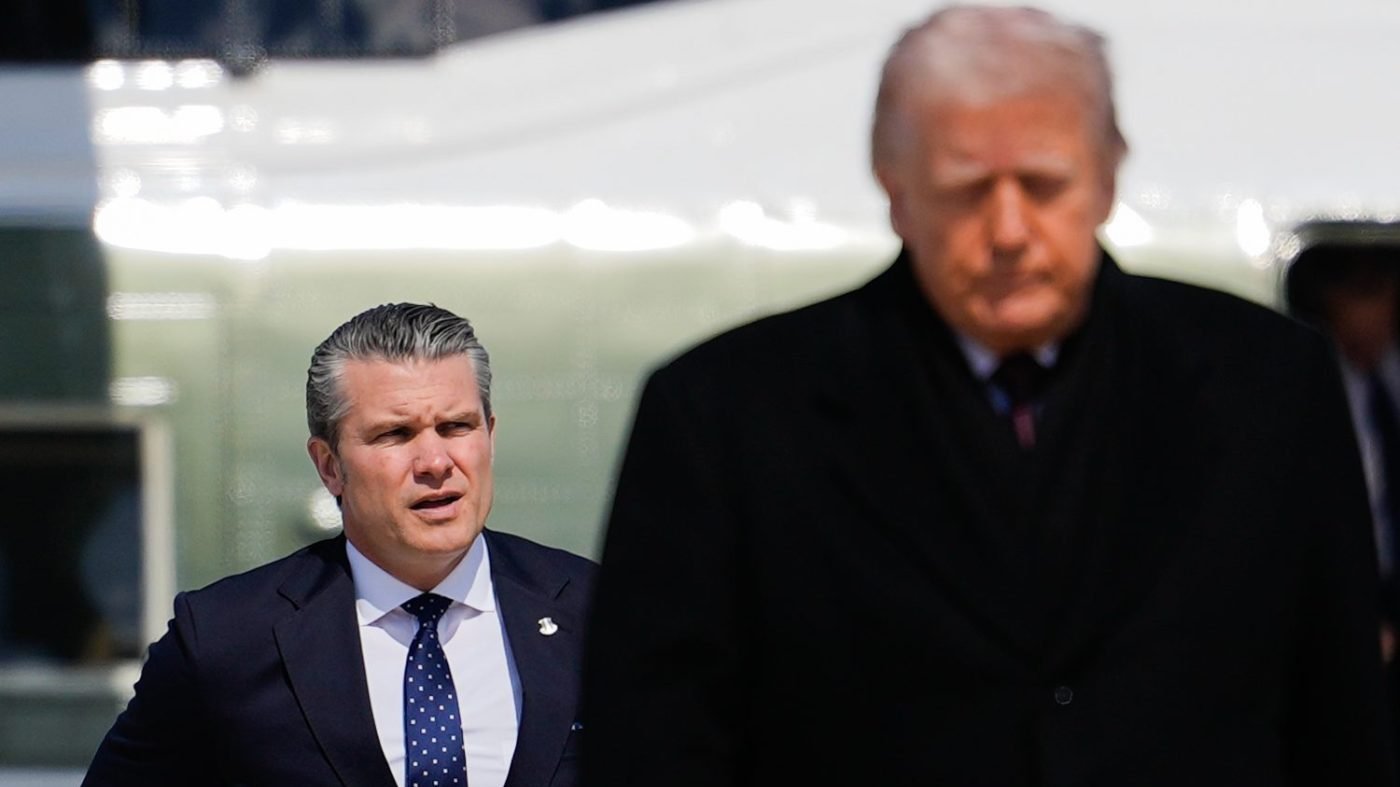
President Trump revealed on Monday that Defense Secretary Pete Hegseth was the initial member of his cabinet to endorse military action against Iran, singling out his defense chief for early support of the campaign now in its fourth week.
Speaking at a public safety roundtable in Memphis, Tennessee, Trump directly addressed Hegseth, who was seated beside him. "Pete, I believe you were the first to voice support," the president stated. "You argued we must act to prevent them from obtaining a nuclear weapon."
Hegseth's Central Role in War Strategy
The defense secretary has emerged as a principal architect and public defender of the military operations inside Iran. He has conducted regular briefings at the Pentagon, outlining objectives that include the destruction of Iran's ballistic missile capabilities, drone manufacturing facilities, and naval assets.
Hegseth has also consistently criticized media coverage of the war, accusing outlets of amplifying opposition to the campaign. When pressed last Thursday on a potential timeline for concluding operations, he declined to specify an endpoint. "We wouldn't want to set a definitive timeframe," Hegseth told reporters, adding that the campaign remained "very much on track" with the president retaining final authority over its conclusion.
Internal Administration Divisions
Trump acknowledged that Vice President J.D. Vance, a longstanding skeptic of foreign military interventions, has been less supportive of the Iran campaign than other advisors, though Vance has refrained from public dissent. According to a weekend Bloomberg report, Israeli Prime Minister Benjamin Netanyahu and media executive Rupert Murdoch were influential in persuading Trump to initiate the conflict, while Vance, Secretary of State Marco Rubio, and Chief of Staff Susie Wiles expressed greater skepticism.
The internal tensions culminated last week with the resignation of Joe Kent, the former director of the National Counterterrorism Center, who became the first senior Trump administration official to step down in protest of the war.
Policy Announcement Amidst War Discussion
During the same Memphis event, Trump announced that Hegseth had signed a directive extending full active-duty military benefits to National Guard personnel deployed on the Memphis task force, as well as those serving in Washington, D.C., New Orleans, and on various border security missions. The declaration drew applause from the audience, including Attorney General Pam Bondi.
The president's comments come during a period of heightened military activity and diplomatic maneuvering. The administration recently extended an ultimatum to Iran while temporarily pausing strikes, a move that coincided with a rally in financial markets. Simultaneously, reports suggest the White House may be exploring diplomatic channels, following claims by Netanyahu that Trump seeks a new Iran deal, which Tehran has denied.
The Memphis appearance also served to promote the administration's domestic crime initiatives, following Trump's recent visit to Graceland where he highlighted local public safety efforts. The event underscored the administration's dual focus on ongoing foreign conflict and domestic policy priorities.