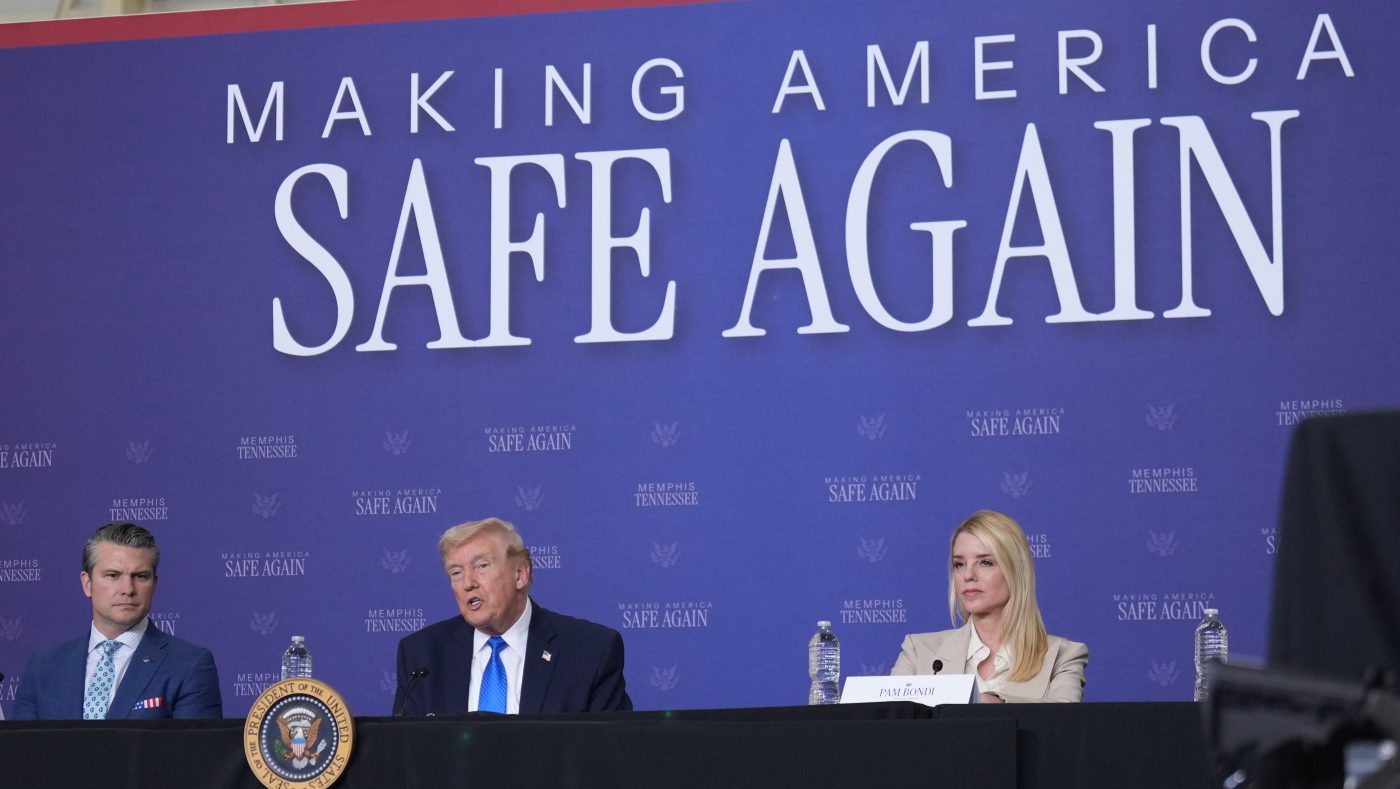
President Donald Trump issued a stark ultimatum to Iran on Monday, stating the regime has one final chance to halt its threats against the United States and allied nations. Speaking at a law enforcement event in Memphis, Tennessee, Trump asserted that Tehran desires peace, framing the moment as a critical juncture for de-escalation.
The president's remarks followed an earlier announcement that military strikes targeting Iran's energy infrastructure would be temporarily suspended for a five-day period. The White House characterized this pause as a goodwill measure to allow for what it called "constructive conversations" aimed at achieving a "total resolution of our hostilities in the Middle East."
Market Reaction and Broader Diplomatic Context
Financial markets responded immediately to the perceived reduction in immediate conflict risk, with major indices posting significant gains at the opening bell and maintaining strength throughout the trading session. The rally underscored investor sensitivity to geopolitical stability in the critical Persian Gulf energy corridor.
The administration's move occurs within a complex diplomatic landscape. Recent claims by Israeli Prime Minister Benjamin Netanyahu suggested Washington is actively pursuing a new agreement with Iran, allegations that Tehran has publicly denied. For deeper analysis on these conflicting narratives, see our report on Netanyahu's claims and Iran's denial of talks.
Parallel Crises Consume Capitol Hill
While the Iran situation unfolded, Washington remained gripped by a partial government shutdown now in its 38th day. The Department of Homeland Security, a focal point of the funding impasse, faced further scrutiny as the Senate prepared for a Monday vote on the nomination of Senator Markwayne Mullin (R-OK) to lead the agency. Divisions within the Republican Party over how to resolve the standoff have become increasingly public.
The political stakes of the upcoming elections were also highlighted at the Supreme Court, where justices heard arguments on whether states may count mail-in ballots received after Election Day. A majority of the Court appeared skeptical of allowing such counts, a stance that could dramatically shape voting procedures and outcomes in the November midterms.
Energy and Electoral Crosscurrents
The administration's Iran policy is inextricably linked to global energy markets and domestic political calculations. In a related energy development, the Trump administration recently finalized a significant agreement involving offshore wind and liquefied natural gas exports. Details of that arrangement are explored in our coverage of the deal to swap offshore wind for LNG.
Foreign policy is also emerging as a wedge issue in key electoral contests. During a recent Georgia Senate runoff debate, candidates sharply diverged on the potential for conflict with Iran and its economic implications, highlighting how international crises reverberate in domestic politics. The split is detailed in our analysis of the Georgia debate on Iran and economic priorities.
The coming days will test whether Tehran reciprocates the U.S. pause with tangible steps to reduce tensions, or whether the diplomatic window closes, reopening the path to military confrontation. The administration's dual-track approach—combining maximum pressure with intermittent pauses—now faces its most public test.