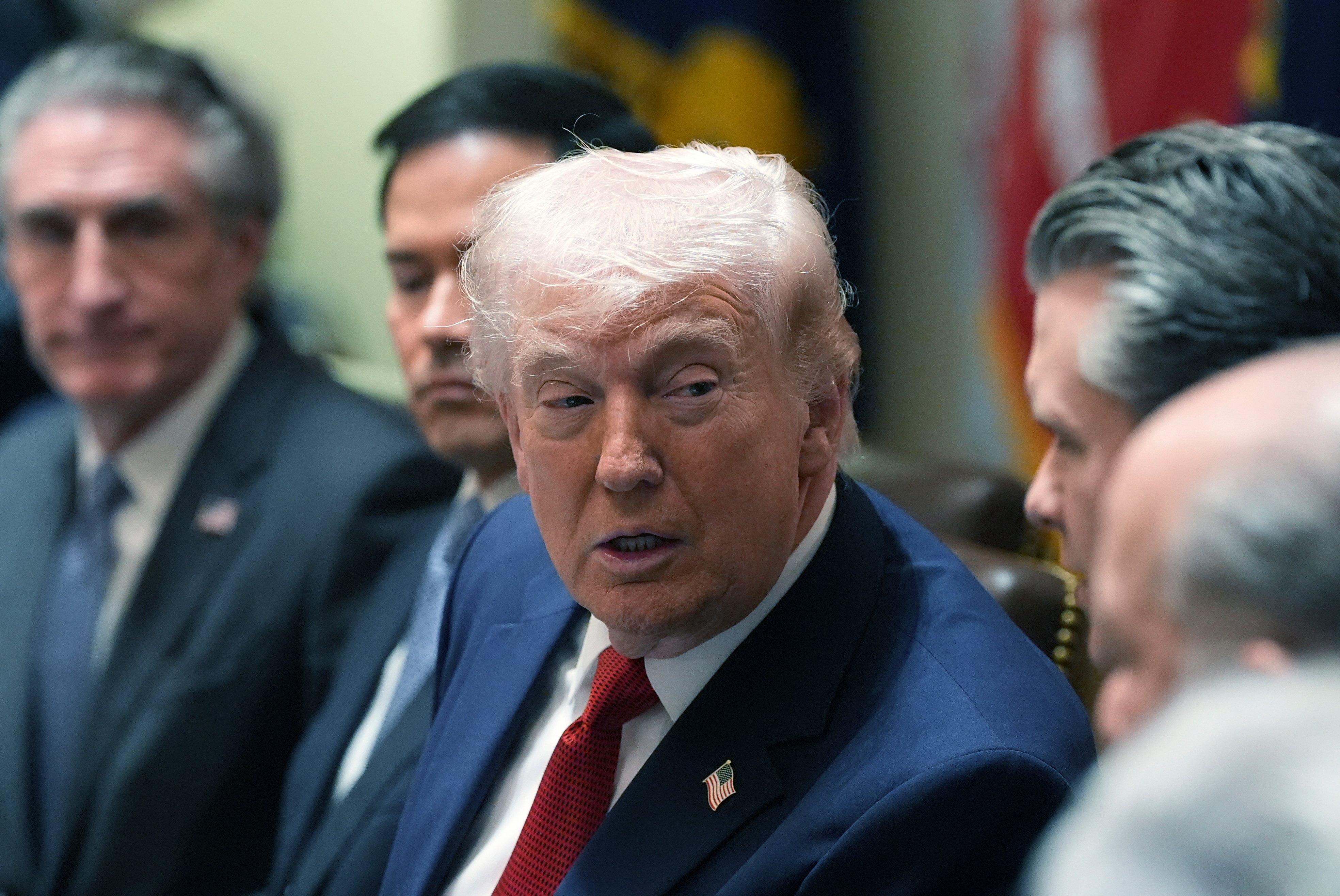
President Donald Trump disclosed on Thursday that a cryptic reference he made earlier in the week to a "present" from Iran pertained to the Islamic Republic allowing a convoy of oil tankers to transit a critical global chokepoint. The revelation came during a White House briefing where the President characterized ongoing dialogue with Tehran as significant, even as broader geopolitical friction persists.
Strait Passage as Diplomatic Signal
Trump told assembled reporters that Iran had communicated its intention to permit eight vessels carrying oil to pass through the Strait of Hormuz, a narrow waterway essential for global energy shipments. "They said 'to show you the fact that we're real and solid and we're there, we're going to let you have eight boats of oil,'" Trump recounted, paraphrasing the alleged discussion. He initially claimed to have dismissed the gesture before later observing media coverage of the ships' movement.

"I didn't think much about it, and then I watched the news, and they said...'There are eight boats that are going right up the middle of the Hormuz Strait,'" the President added. According to his account, Iran subsequently authorized two additional vessels as a form of apology, bringing the total to ten ships. This narrative frames a routine maritime transit as a deliberate diplomatic concession, a characterization experts find unusual given the strait's status as an international waterway.
Context of 'Very Substantial' Talks
The President's comments were delivered amid his assertion that the United States is engaged in "very substantial" talks with Iranian officials. This claim of direct dialogue contrasts with the public posture of maximum pressure and comes at a time of heightened military alerts in the region. The administration's strategy has faced scrutiny, with polling indicating most Americans oppose military action against Iran and disapprove of Trump's handling of the situation.
Trump's description of the oil tanker passage as a "present" attempts to cast a normal commercial activity as a personalized geopolitical offering. This fits a pattern of the President employing unconventional, deal-centric language in foreign policy, often bypassing traditional diplomatic channels and frameworks. The episode underscores the opaque nature of current U.S.-Iran communications, which frequently occur through indirect statements and symbolic actions rather than formal negotiations.
Broader Strategic and Political Implications
The Strait of Hormuz remains one of the world's most strategically vital maritime passages, with about one-fifth of global oil consumption flowing through it. Any incident there can trigger immediate volatility in energy markets and raise the specter of broader conflict. The President's focus on a specific number of ships draws attention to the waterway's role as both an economic artery and a potential flashpoint.
Domestically, the administration's Iran policy continues to generate debate. Some congressional Republicans, like Senator Lindsey Graham, have advocated for a more hawkish stance, while others urge caution. Notably, Representative Nancy Mace has publicly urged Trump to sideline Graham's influence, citing concerns about entanglements with the 'war machine'. This internal GOP dynamic plays out as the administration balances pressure campaigns with claims of productive dialogue.
The financial costs of military posturing are also coming under examination. Previous escalations have incurred billions in expenditures and prompted war powers scrutiny from Congress, highlighting the high stakes of managing the persistent tension. Meanwhile, the President is navigating other domestic challenges, including political vulnerabilities on issues like inflation and character that polling suggests create an opening for Democratic opponents.
Trump's latest remarks leave several questions unanswered, including the precise nature of the discussions with Tehran, the identity of the interlocutors, and the intended symbolism of the oil ship passage. The characterization of the transit as a gift blurs the line between coercive statecraft and diplomatic theater. As the situation develops, the administration's ability to translate such symbolic gestures into a stable, long-term strategic outcome remains uncertain, with regional stability and global energy security hanging in the balance.