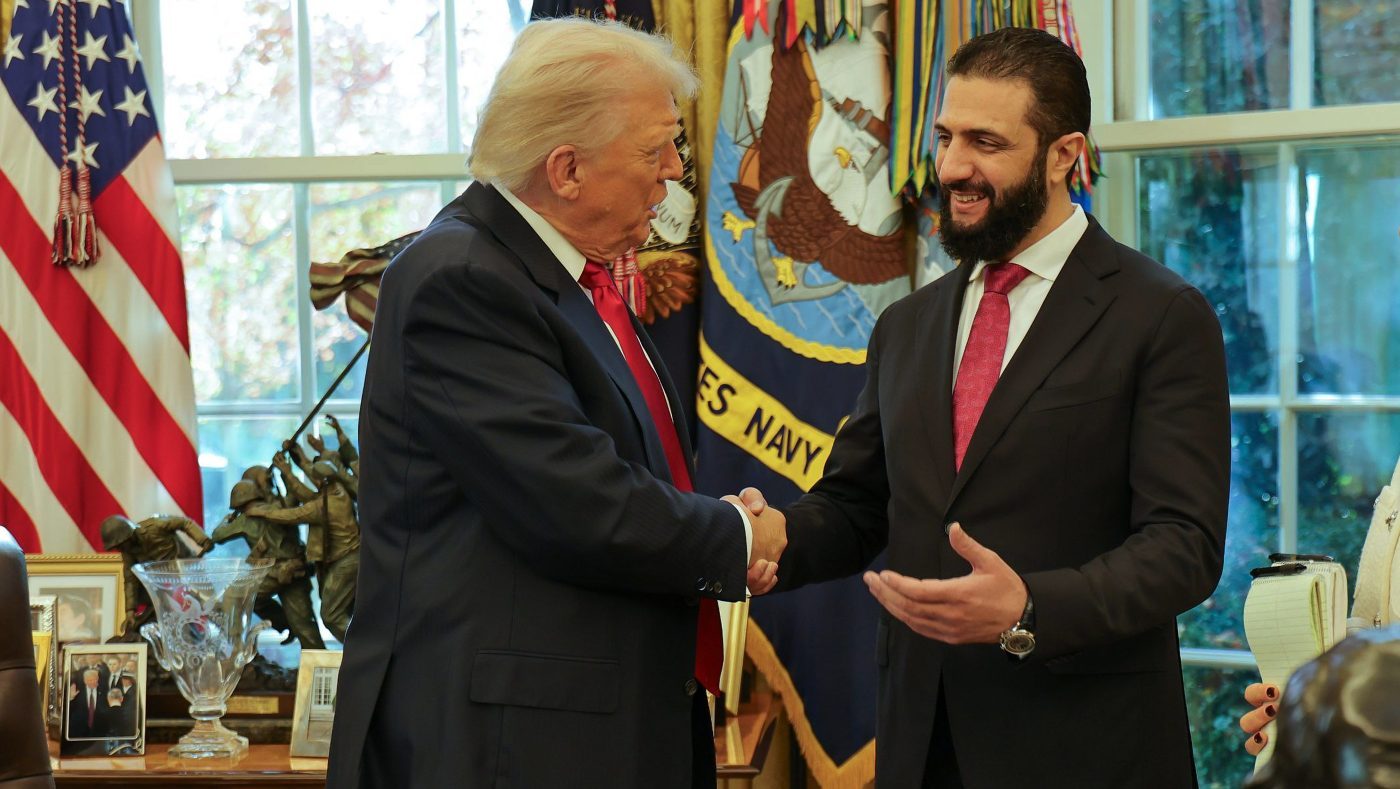
The Trump administration on Monday formally removed Syria from its State Sponsor of Terrorism (SST) list, a dramatic shift in U.S. policy that rewards the new government led by Ahmed al-Sharaa, the former insurgent who toppled Bashar al-Assad's dictatorship. The move grants Syria sweeping sanctions relief and clears the way for Damascus to re-enter the international financial system, a critical step for a country grappling with reconstruction after more than a decade of civil war.
Secretary of State Marco Rubio announced that the U.S. is also delisting al-Sharaa's group, Hay'at Tahrir al-Sham (HTS), from the Specially Designated Global Terrorist (SDGT) list. Rubio said the decision reflects "positive actions and further commitments" by the Syrian government to distance itself from international terrorism. Syria had been on the SST list since 1979, and its removal leaves only Cuba, Iran, and North Korea with that designation.
"Rescinding Syria's designation as an SST and HTS' designation as an SDGT eliminates the final major barriers for private sector investment in Syria and promotes Syria's economic recovery and reintegration into the global economy," Rubio said in a statement. The World Bank estimated in October 2025 that Syria's reconstruction needs could reach $216 billion.
President Trump took to Truth Social on Monday to share a photo of al-Sharaa and Syrian Foreign Minister Asaad al-Shaibani holding the signed executive order that directs sanctions relief. U.S. Ambassador to Turkey and special envoy for Syria Tom Barrack hailed the move as ushering in a new chapter in bilateral ties. "For too long, this designation was another wall separating the Syrian people from the investment, enterprise, and opportunity necessary to rebuild their nation. Today, another wall comes down," Barrack posted on X. "Capital can replace conflict, enterprise can replace isolation, and commerce can continue to triumph over chaos."
The decision enjoys broad bipartisan backing in Washington, despite lingering skepticism about whether al-Sharaa has truly shed his militant past. Since assuming power in December 2024, he has publicly renounced his former affiliations with al-Qaeda and the Islamic State, and he has leveraged close ties with Turkey and Saudi Arabia to court the Trump administration. The sanctions relief is seen as a key test of whether a former terrorist can be rehabilitated as a legitimate statesman.
However, some lawmakers remain concerned about ongoing sectarian violence, Syria's continued relationship with Russia, and the lack of inclusive representation in the new government. These issues could complicate future U.S. engagement and the broader normalization process. The administration's move also comes amid heightened regional tensions, including new Iran sanctions and debates over Taiwan policy that are reshaping U.S. foreign policy.
For Syria, the delisting is a lifeline. It opens the door for international investment, banking ties, and reconstruction aid that were previously blocked by U.S. law. Yet the path forward remains fraught. The country's infrastructure is in ruins, and the new government must prove it can govern inclusively and curb extremist elements. As Barrack put it, the removal of the designation is a symbolic and practical step, but the real work of rebuilding Syria has just begun.