When a construction crew in New Jersey sliced through a fiber line on Sept. 21, the ripple effect shut down air traffic at five major Northeast airports. The failure at the FAA's Philadelphia approach control facility was a stark reminder of the system's fragility—but a former controller says it should not be used to justify a blank check.
Vincent E. Bianco III, who spent 23 years in FAA air traffic control, pushed back against an Oct. 1 op-ed by Jackson Shedelbower that backed Transportation Secretary Sean Duffy's $30 billion modernization request. Bianco argues that while the funding is needed, it must come with strict conditions to ensure resilience and accountability.

Old equipment, but the same design flaw
Bianco acknowledges the equipment is aging—the circuit that failed was already slated for replacement. Controllers and technicians deserve better tools, and the unions and airlines support the funding. But he points to Shedelbower's own evidence: roughly two-thirds of copper lines have been replaced with fiber, yet the system still failed when a backhoe cut a fiber cable. "A backhoe does not care whether the cable it cuts is copper or glass," Bianco writes.
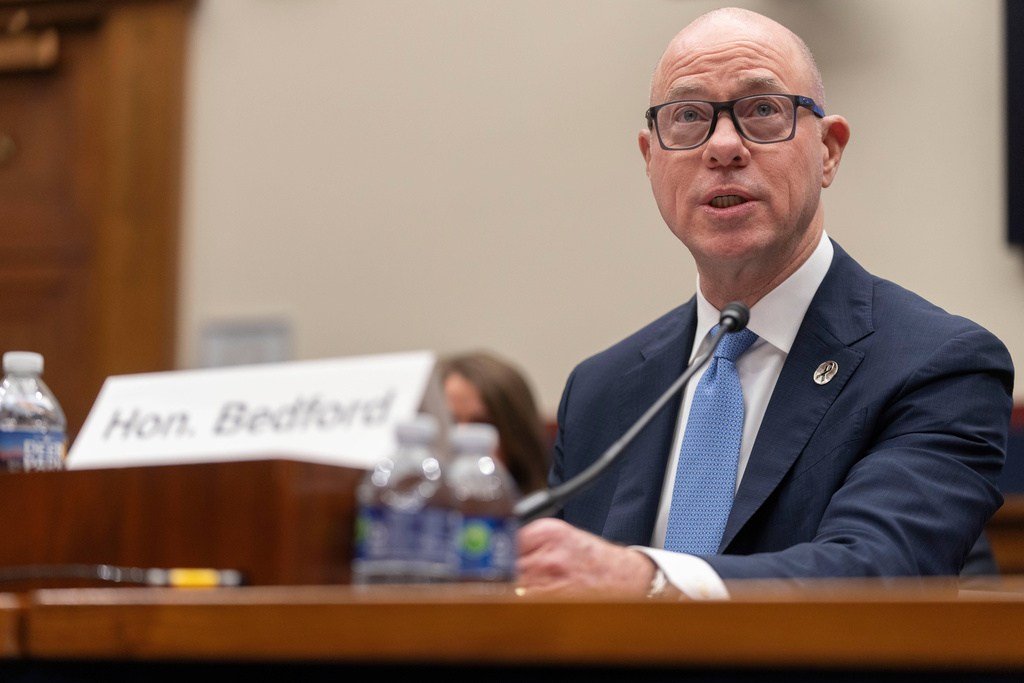
He also notes that the proposed funding would go toward a modern traffic flow management system and AI-powered software—neither of which provides a redundant physical route into a control facility. FAA Administrator Bryan Bedford acknowledged the agency is still relying on the same data architecture it has used for 50 years. "The head of the FAA is telling you the problem is design," Bianco argues.
Past failures loom large
Bianco points to the aftermath of the spring 2025 Newark outages, when the FAA laid new fiber between New York and Philadelphia and touted "two separate communications paths." Yet 16 months later, the Philadelphia TRACON lost one circuit, found the other cut, and shut down the Northeast. He also cites NextGen, launched in 2003 with similar promises, which delivered only about 16 percent of expected benefits after more than $15 billion in FAA spending, according to the Transportation Department's inspector general.
The current effort shows the same pattern. Congress provided $12.5 billion in July 2025, but phase one is now projected to cost $16 billion. The new request would bring the total to $42.5 billion—far above the department's earlier estimate of $31.5 billion. The Government Accountability Office found the phase one figure omits government costs, most operations costs, and all of phase two. Notably, only about a third of the new $30 billion is for air traffic control architecture and software; the rest goes to towers, runways, and airport improvements, none of which addresses the failed systems.
Training and oversight are missing
Bianco stresses that the human element is often overlooked. Controllers must be trained on new systems while still handling traffic, and technicians must maintain both old and new equipment during the transition. He ran a facility training program for nine years and warns that new automation adds workload before it removes any. With phase one due by December 2028, the GAO found the FAA is running 11,389 separate project schedules with no master schedule, generally without adjusting to reduce controller burden. "A cutover run that way is not modernization. It is a new hazard," he writes.
Bianco's recommendation: fund it, but with conditions. Require that no critical facility depend on a single physical route, and prove it by test. Release money against milestones, with inspector general and GAO reporting before each tranche. Put controller training and technician staffing in the same bill as the hardware. And demand a full lifecycle cost before the vote, not after.
Shedelbower wrote of "necessary investment and oversight." Bianco argues he made the case for the first but ignored the second. "Money is an ingredient," Bianco concludes. "The answer is a plan that can survive a backhoe."