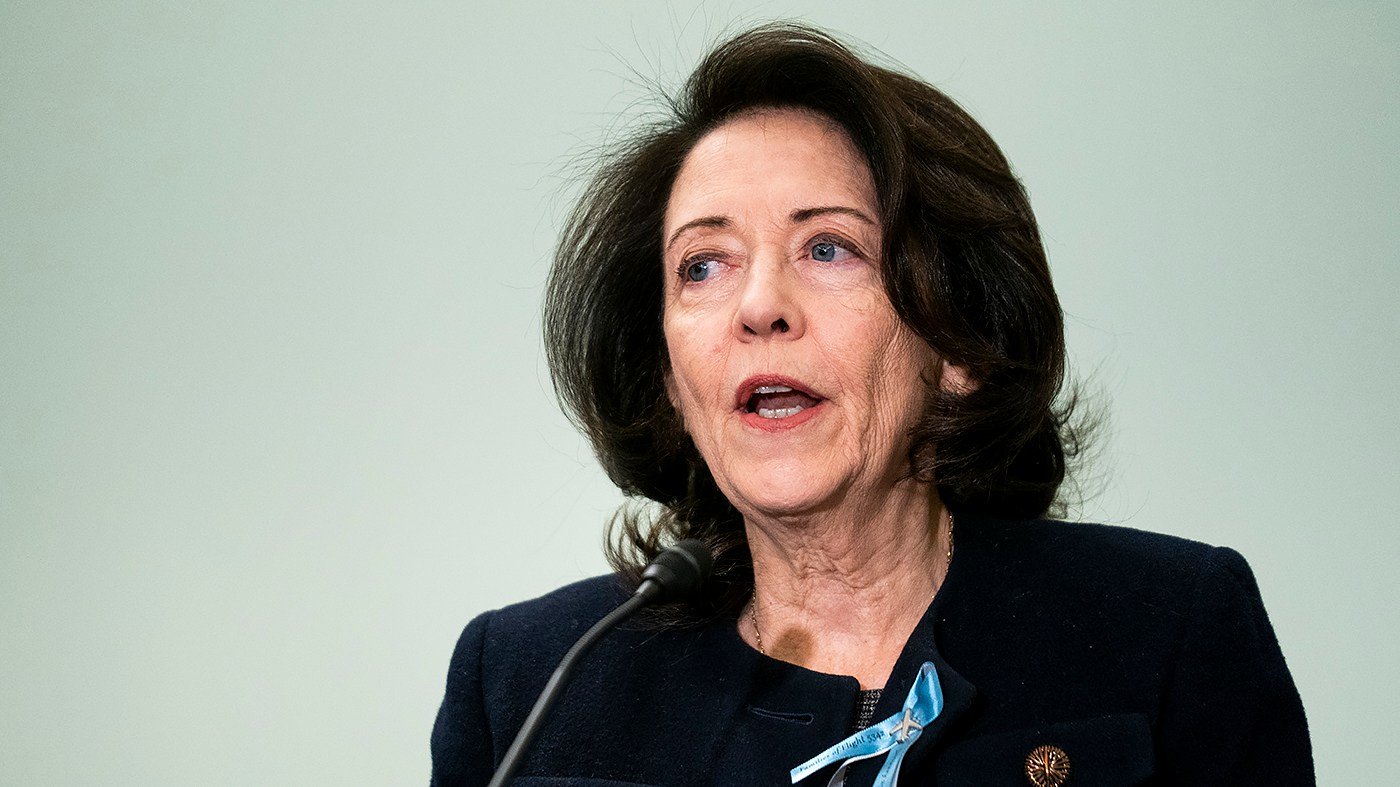
Sen. Maria Cantwell (D-Wash.), the ranking Democrat on the Senate Commerce, Science and Transportation Committee, on Wednesday introduced a regulatory blueprint for artificial intelligence, responding to mounting calls for Congress to curb the technology's potential harms.
In a statement, Cantwell argued that managing the risks of advanced AI requires "clear safety standards, continuous testing, and reporting of serious failures." She stressed that the U.S. can maintain global leadership in AI by developing systems that are both more capable and more secure.

Her framework designates the National Institute of Standards and Technology (NIST) as the lead agency for establishing standards to guard against catastrophic outcomes, including AI-enabled cyberattacks, biological or chemical threats, and scenarios where humans lose control of AI systems.
The proposal comes amid heightened concern in Washington after several AI researchers warned last month about potentially dire consequences for humanity. A string of incidents in which AI agents breached other companies or behaved unpredictably has intensified scrutiny.
Cantwell also called for continuous oversight, with government and independent experts subjecting AI models to rigorous stress tests. Under her plan, AI firms would undergo comprehensive audits by third-party organizations and would be required to disclose safety and security risks as well as any incidents. Developers would remain legally liable for unlawful conduct or harm caused by their AI systems.
Beyond domestic rules, the senator urged the U.S. government to collaborate with industry on defensive AI capabilities and to take a leadership role in forging common international standards for the technology.
Her framework could gain traction if Democrats win the Senate in the upcoming midterms, positioning Cantwell to chair the Commerce Committee, which has jurisdiction over key tech policy issues. The committee's agenda would likely prioritize AI regulation, building on the momentum of recent congressional hearings and Democratic efforts to regain control of both chambers.
Political observers note that AI regulation has become a rare bipartisan issue, though disagreements remain over the scope and stringency of rules. Cantwell's approach, which leans on existing agencies like NIST and emphasizes accountability, may serve as a starting point for broader negotiations.
With the 2026 elections approaching, lawmakers are under pressure to act on AI. The debate over impeachment threats and other partisan battles could complicate progress, but Cantwell's framework offers a concrete path forward.
"America can lead the world in AI by building systems that are not only more capable, but safer and more secure," she said, underscoring her intent to balance innovation with public safety.