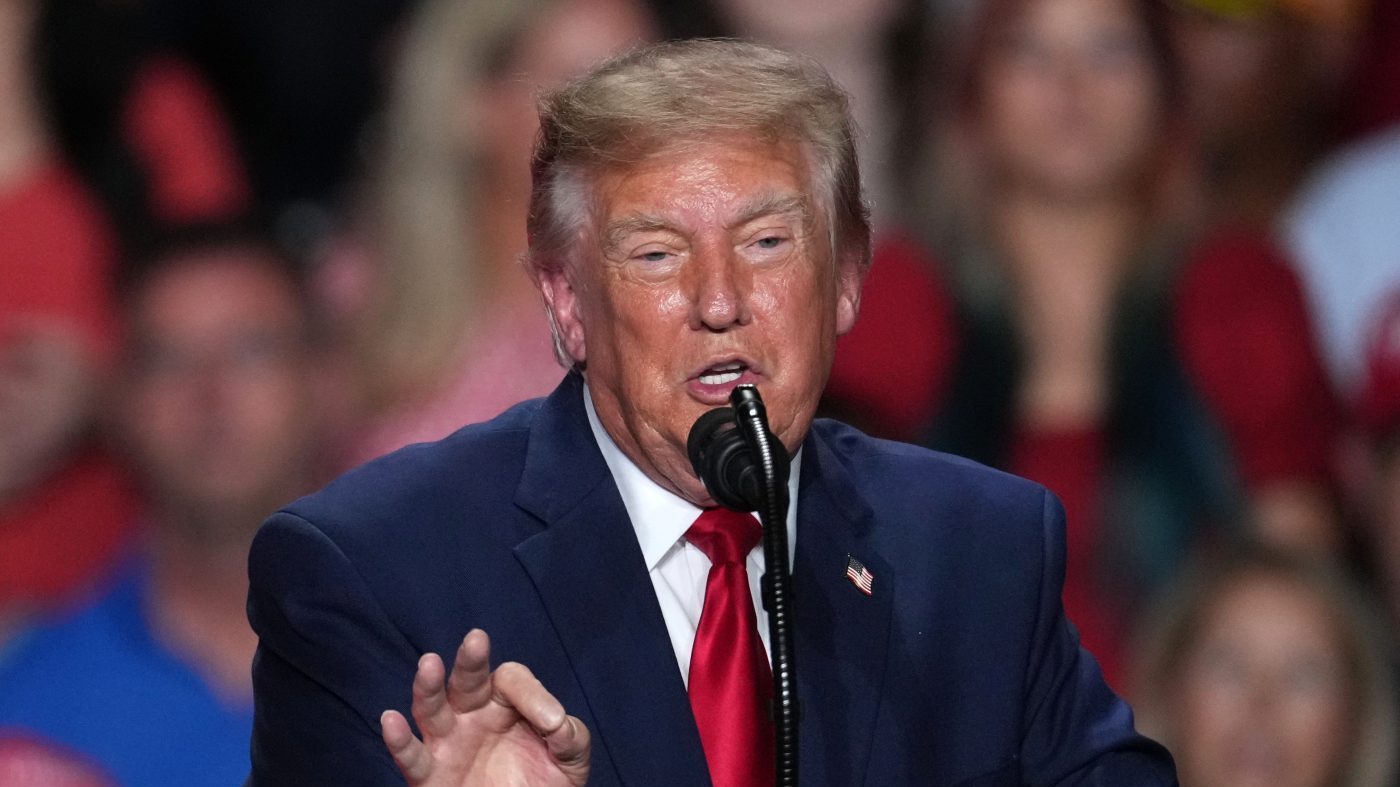
President Trump on Wednesday doubled down on his controversial remarks suggesting Iran could target major California cities, telling a rally crowd in San Antonio that allowing such an attack would be a “horror show” — while insisting the U.S. would never permit it.
“You want to see trauma? You want to see problems? And I said it the other day, let them hit a missile into San Diego or Los Angeles on the way. You want to see a horror show? Let them hit San Diego. Let them hit Los Angeles,” Trump said, repeating the language he used at a Nebraska rally earlier in the week.
He added: “You want to see some bad things happen? You want to see a country in free fall? We’re not going to let that happen.”
The comments drew immediate and sharp rebukes from California’s Democratic leadership. Gov. Gavin Newsom told The Hill on Tuesday that Trump was “mentally ill” and called for the 25th Amendment to be invoked. Los Angeles Mayor Karen Bass called the remarks “dangerous and could potentially compromise our safety,” while San Diego Mayor Todd Gloria said in a statement that his city was “not collateral damage.”
White House communications director Steven Cheung fired back, dismissing the media coverage as “not rooted in reality.” In a post on X, Cheung argued that Trump was “clearly stating U.S. cities would have been threatened if a nuclear Iran hadn’t been stopped,” adding that “America is safer because of the President. Iran has no nuclear, no navy, no air force, and no money.”
The president’s remarks come as he steps up his midterm campaign travel, including recent stops in Texas, Nebraska, and Oklahoma. His appearance in San Antonio was part of a broader push to rally support for Republican candidates in key battleground states, with Texas emerging as a critical test for the GOP under mounting political pressure.
Critics, however, argue that Trump’s rhetoric on Iran and U.S. cities is reckless and could undermine national security messaging. Some defense analysts note that the threat of Iranian missile strikes on U.S. soil is minimal, but the political fallout is significant as the administration continues to face scrutiny over its foreign policy posture.
The controversy also reignites a broader debate about presidential messaging during election season, with Democrats accusing Trump of using fear-mongering to rally his base. Meanwhile, the White House insists that the president’s comments were meant to highlight the success of his administration’s maximum pressure campaign against Tehran.
As the midterm season heats up, Trump’s remarks are likely to remain a flashpoint in California, where Democratic leaders have repeatedly clashed with the president over immigration, environmental policy, and federal funding. The state’s voters, who overwhelmingly supported Joe Biden in 2020, will be watching closely as Trump continues to test the limits of political rhetoric on the trail.