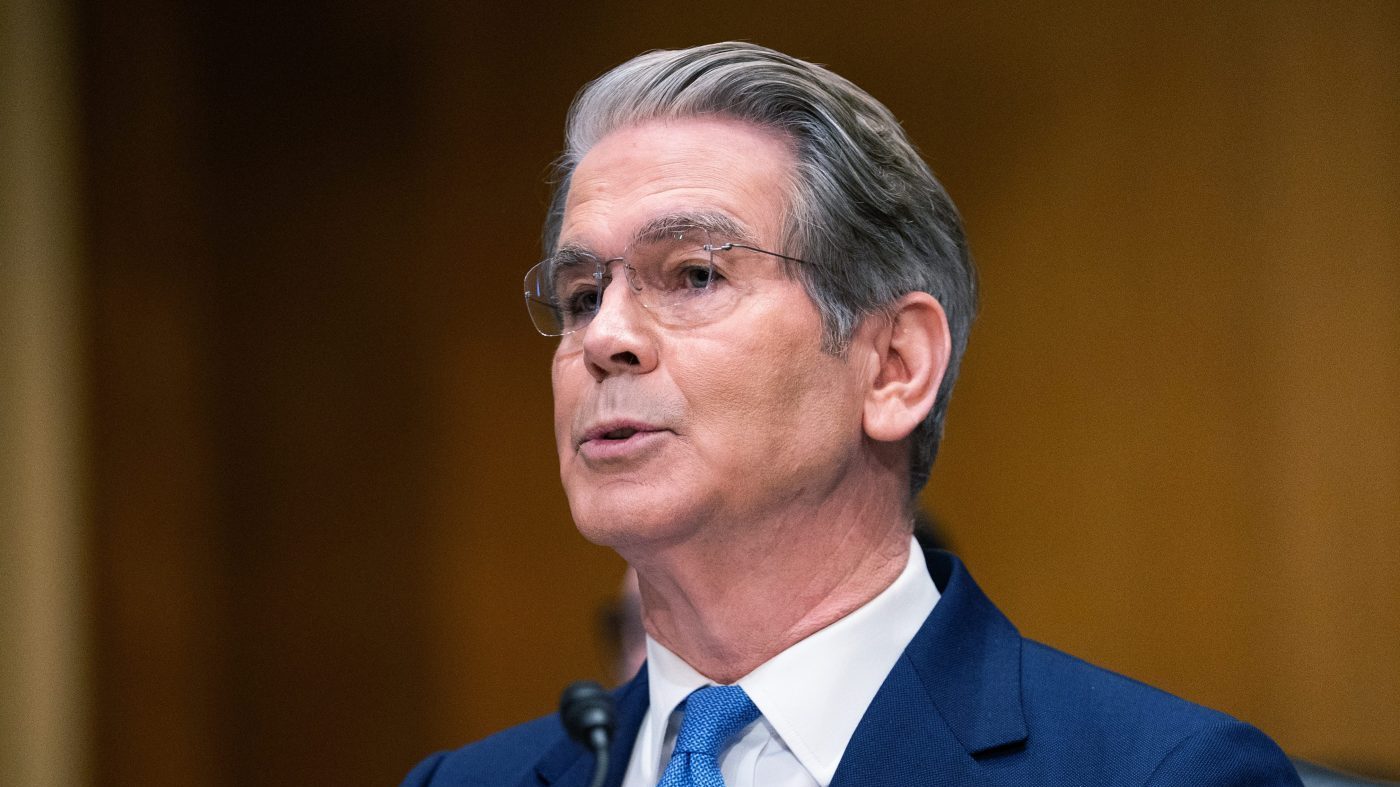
Treasury Secretary Scott Bessent is scheduled to announce a new round of sanctions against Iran on Monday afternoon, intensifying the Trump administration's campaign to compel Tehran to return to negotiations and fully reopen the Strait of Hormuz. The move follows President Trump's warning last week that Iran would face an "economic D-day" if it continued to resist a deal.
Speaking ahead of the announcement, Bessent said the objective is to sever Iran's remaining economic lifelines and target those who support the regime, as the conflict approaches its six-month mark. The sanctions are designed to tighten the financial noose around Tehran and its allies, further isolating the Islamic Republic from global markets.

Iranian Foreign Minister Seyed Abbas Araghchi has dismissed the pressure campaign, arguing that such measures would bring "further defeat" for the United States. His remarks suggest that Tehran remains defiant despite the escalating economic warfare.
The press conference is set to begin at 1 p.m. EDT, with Bessent expected to detail the specific entities and sectors targeted by the new sanctions. The announcement marks the latest chapter in the Trump administration's maximum pressure strategy, which has already had significant ripple effects across global energy markets and international trade.
Analysts note that the sanctions come at a delicate moment, as the administration simultaneously navigates a trade dispute with Canada. The dual economic fronts underscore the complexity of the current geopolitical landscape, where financial tools are increasingly wielded as primary instruments of statecraft. Bessent's dual front approach highlights the administration's willingness to use economic leverage across multiple arenas.
The timing of the sanctions also sends a signal to Beijing, which has been a major purchaser of Iranian oil. Washington's renewed pressure is likely to complicate China's energy imports and could strain relations between the two superpowers. Beijing is now on notice that its continued engagement with Tehran carries risks.
Supporters of the sanctions, including Senator John Barrasso, have framed the measures as a decisive blow to Iran's economy. "This will be D-Day for Iran's economic stability," Barrasso said in a recent statement, echoing the president's rhetoric. However, critics question whether such aggressive tactics will yield the desired diplomatic outcome or merely harden Tehran's position.
The announcement also comes amid reports of internal friction within the administration, including a reported feud between Army Secretary Driscoll and Defense Secretary Hegseth. While unrelated to the Iran policy, such distractions could complicate the administration's ability to maintain a unified front on foreign policy.
As the world watches, the effectiveness of these sanctions will be measured not only by their immediate economic impact but also by whether they can force a shift in Iran's strategic calculus. With the conflict nearing the six-month mark, the stakes are high, and both sides show little sign of backing down. Iran has already declared victory over the U.S. in the propaganda war, even as Washington prepares its next move.
Observers will be closely monitoring the market reaction and the response from Tehran in the coming days. The success of this latest round of sanctions may hinge on international cooperation, particularly from key allies and oil importers. As Bessent prepares to speak, the world awaits what could be a pivotal moment in the ongoing standoff.