President Trump's latest escalation in economic pressure against Iran has effectively placed China in the crosshairs, given Beijing's role as Tehran's largest trading partner and primary buyer of its crude. The announcement, framed as an 'economic D-Day,' comes after diplomatic efforts collapsed and six months of military strikes failed to subdue the Islamic Republic, leaving the Strait of Hormuz a risky passage for global energy shipments.
While Trump's social media post on Wednesday did not single out China by name, Treasury Secretary Scott Bessent was more direct. In a CNBC interview Thursday, Bessent urged Beijing to 'get with the program,' noting that China sources half of its energy from the Gulf region. 'We are confident that everyone wants the strait reopened and for energy prices to come back down,' he said, adding that a full policy rollout would be detailed at a Monday press conference.

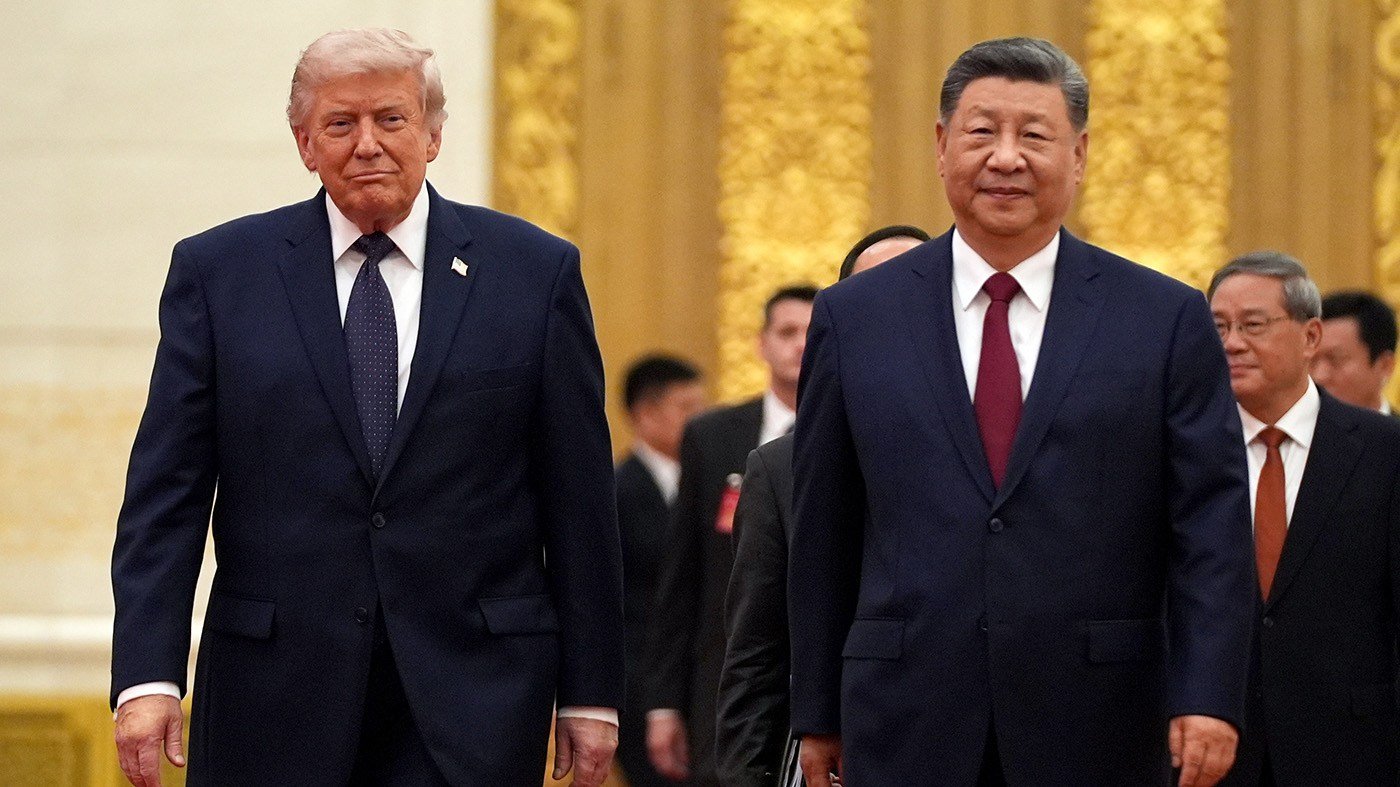
Beijing has pushed back against the threats. Chinese Foreign Ministry spokesperson Lin Jian told Bloomberg that 'sanctions and pressure tactics are not the solution' and called on all parties to pursue political and diplomatic avenues. The rebuff underscores the delicate balance between Washington and Beijing as they prepare for a scheduled summit between Presidents Trump and Xi Jinping on September 24.
Analysts are skeptical about the effectiveness of the new sanctions, especially given the timing. Craig Singleton, senior fellow at the Foundation for Defense of Democracies, noted that a major move against China a month before the summit 'would carry real diplomatic risk, invite a Chinese counterresponse and potentially put the meeting itself under pressure.' He pointed to earlier sanctions on Chinese 'teapot' refineries—small independent processors of Iranian oil—which Beijing rejected and instructed blacklisted firms to ignore.
Singleton also drew parallels to Russia, where broad sanctions have caused economic pain but Moscow has weathered the storm thanks to continued trade with China and other non-sanctioning states. 'Economic D-Day sounds dramatic, but it may say more about shrinking options than expanding leverage,' he observed. 'The military campaign has produced diminishing returns, so Trump is pivoting from missiles to markets.'
Jason Brodsky, policy director at United Against Nuclear Iran, echoed the need for enforcement, telling the press that the sanctions are a 'very strong warning' to Chinese banks and entities facilitating Iranian trade, but 'the proof will be in the follow-through.' Josh Lipsky of the Atlantic Council similarly cautioned that without European coordination and Chinese banks cutting off Tehran, the pressure campaign could fall flat. He questioned how Washington could choke off Iran further 'without triggering immense blowback from China on the eve of President Xi's visit.'
The stakes are high for both sides. Trump is eager to expand U.S. agricultural, aerospace, and energy exports to China, while preserving access to critical minerals essential for American weapons production, which have been strained by the ongoing conflict. The last Trump-Xi meeting in Beijing was seen as stabilizing relations, with Xi reportedly expressing opposition to a nuclear-armed Iran and supporting reopening the strait.
China's economic ties with Iran extend beyond oil. Tehran relies heavily on Chinese technology for its drone and missile programs, and U.S. sanctions have blacklisted 366 China- and Hong Kong-based entities for evading restrictions, according to a March fact sheet from the U.S.-China Economic and Security Review Commission. The same document highlighted a network of front companies and regional banks in China and Hong Kong that help launder renminbi proceeds from Iranian oil sales into the global financial system.
Meanwhile, the war's toll is visible in trade data. Reuters reported that Chinese imports of Iranian oil hit a historic low in June, dropping below 800,000 barrels per day, according to ship-tracking firm Vortexa. As the administration weighs its next moves, the central question remains whether Washington is prepared to impose real costs on major Chinese actors, risking a trade truce ahead of the high-stakes summit.