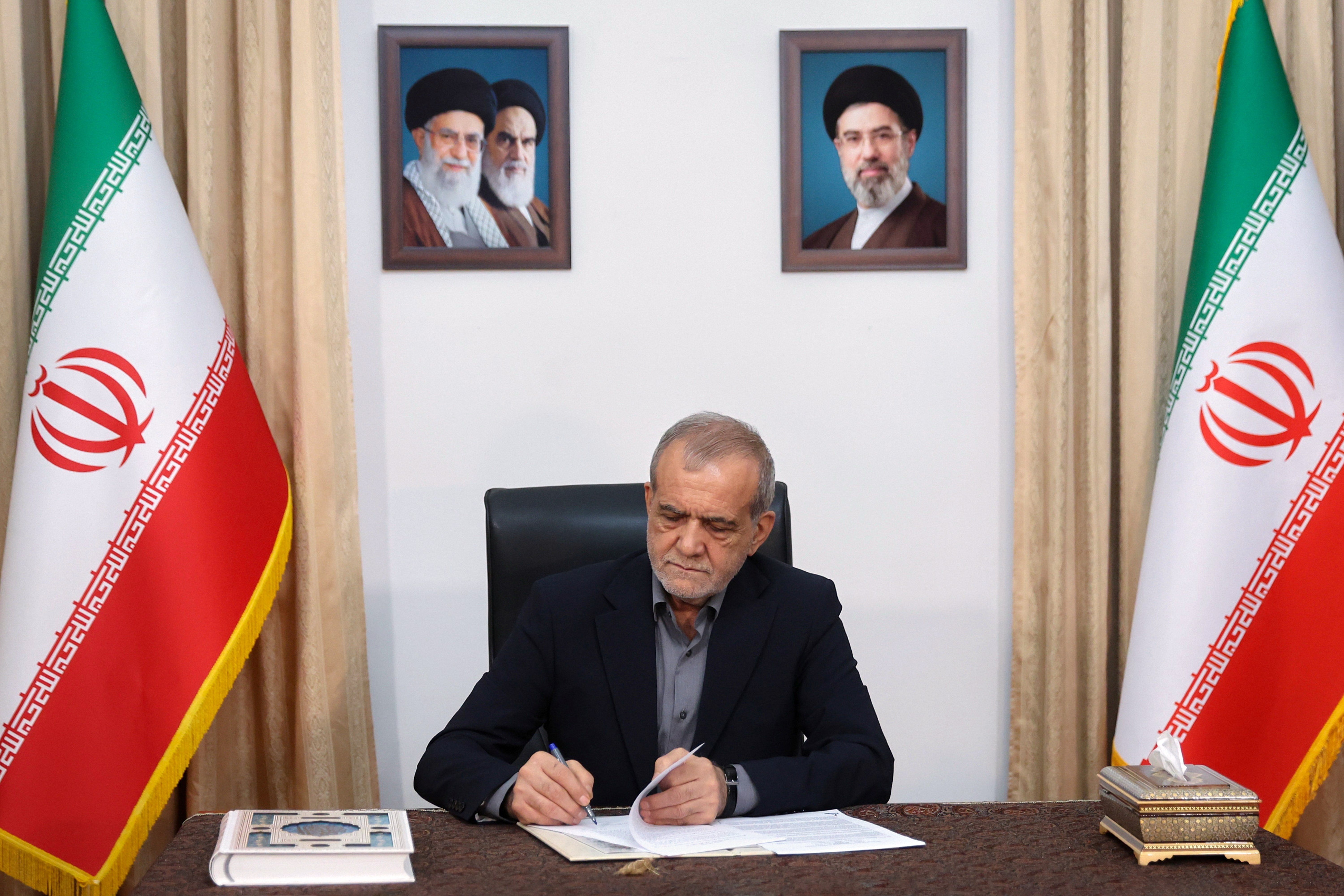
Iranian President Masoud Pezeshkian said Friday that the confrontation with the United States should come to an end, asserting that the international community has recognized Tehran's triumph in the standoff. His remarks, carried by state media, come just days before Washington is expected to impose a fresh wave of economic penalties on the Islamic Republic.
Speaking via the state-run IRNA News Agency, Pezeshkian declared, "The entire world approved our victory and the U.S. is hated." The president's comments reflect Tehran's narrative of resilience in the face of American pressure, a theme that has resonated domestically as the country grapples with severe economic strain.

The announcement of new sanctions follows President Trump's Wednesday statement vowing to launch what he called the "most crushing economic operation ever" against Iran. The measures are tied to ongoing negotiations over the Strait of Hormuz, a vital waterway that has been effectively closed due to Iranian counterstrikes and a U.S. naval blockade. The strait normally carries about one-fifth of the world's daily oil consumption, making its closure a significant global economic risk.
In a post on Truth Social, Trump outlined the scope of the planned actions, targeting oil smuggling, swap lines, cash transfers, exchange houses, ship registries, and front companies. "It all needs to stop NOW," he wrote, adding, "This will be an ECONOMIC D-DAY, and we need all of our Allies to stand with the United States of America to isolate, and defeat, the Iran threat."
Treasury Secretary Scott Bessent is set to unveil the details of the sanctions on Monday. In an interview with CNBC on Thursday, Bessent described the approach as a "one-two punch," combining the naval blockade with what he called "the toughest sanctions in history." He asserted that the measures would "collapse this regime," signaling the administration's intent to escalate economic pressure.
Iranian Foreign Affairs Minister Abbas Araghchi responded sharply to the anticipated penalties, framing them as a distraction from domestic American problems. In a social media post, Araghchi wrote, "The so-called 'Economic D-Day' is a diversion from America's own crisis: unprecedented debt & surging interest costs. Doubling down on failed policies will only bring further defeat—and enmity of Iranians. US economic terrorism threatens global economy and sovereignty worldwide."
The standoff over the Strait of Hormuz has drawn international concern, with Iran and Oman sharing joint jurisdiction over the waterway. Trump has previously threatened to make the strait a U.S. territory, a move that would escalate tensions further. The situation has already had ripple effects on global energy markets, with oil prices spiking after recent Iranian strikes.
Analysts note that Tehran's claims of victory may be aimed at bolstering domestic support amid economic hardship. The Iranian government has faced protests over rising costs and currency devaluation, and the leadership may be seeking to project strength in the face of external pressure. Meanwhile, Washington's strategy appears to be one of maximum economic coercion, a continuation of the "maximum pressure" approach that characterized the previous administration.
As the deadline for the new sanctions approaches, the international community watches closely. The blockade and sanctions could further destabilize an already volatile region, and the rhetoric from both sides suggests little room for compromise. For now, Iran's leadership insists that the world has sided with Tehran, even as the U.S. prepares to tighten the screws.