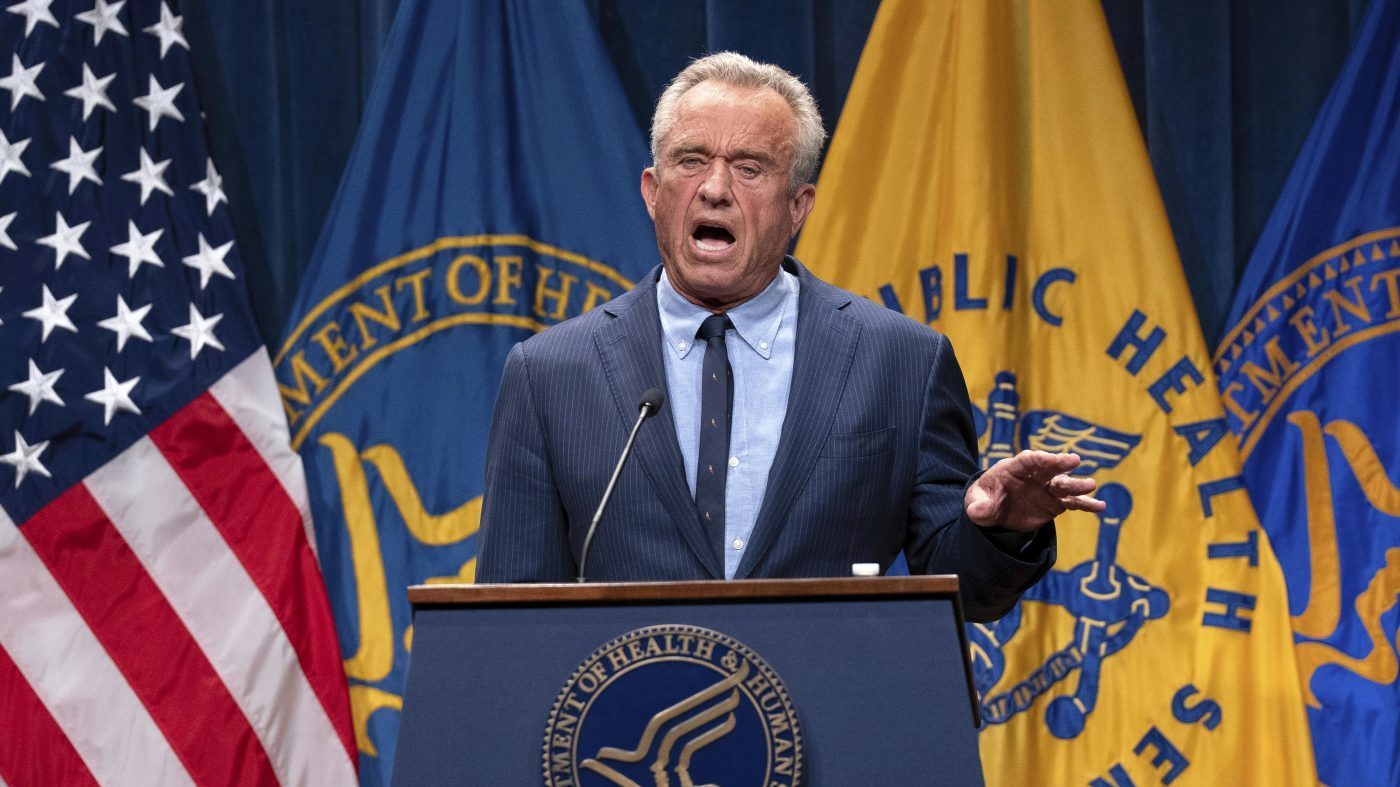
The Trump administration pressed a federal appeals court Tuesday to reverse a lower court's decision that barred Health and Human Services Secretary Robert F. Kennedy Jr. from installing his handpicked members on a crucial vaccine advisory committee, arguing the judge lacked the authority to intervene.
Justice Department attorney Matthew Zorn told a three-judge panel of the 1st U.S. Circuit Court of Appeals that U.S. District Judge Brian Murphy's March ruling effectively froze the Advisory Committee on Immunization Practices (ACIP) in place, preventing it from convening in any capacity. Zorn contended that even if Kennedy attempted to appoint new members through a different process, those efforts would be blocked by the injunction.

“The secretary wants to get the ACIP back to work, and we are being told if he reconstitutes any committee, it’s going to be right back in court,” Zorn said during oral arguments.
ACIP advises the Centers for Disease Control and Prevention on vaccine recommendations, which shape insurance coverage for immunizations across private and public health plans. The panel's guidance is pivotal in determining which vaccines are routinely administered to children and adults.
Judge Murphy ruled in March that Kennedy likely violated federal law when he dismissed all 17 existing ACIP members and replaced them with individuals who shared his skepticism about vaccines. Murphy found that Kennedy selected “distinctly unqualified” people instead of experts in vaccinology and immunology, disregarding the scientific rigor that has historically guided the committee's work.
During Tuesday's hearing, some appellate judges appeared troubled by Murphy's ruling, questioning why he did not provide a clear legal rationale for blocking Kennedy's appointees. The judges pressed both sides on the scope of the injunction and whether it improperly restricted the secretary's executive authority.
Plaintiffs, including the American Academy of Pediatrics and other medical organizations, argued that Murphy's order does not prevent Kennedy from appointing a new ACIP—it simply requires him to follow statutory requirements for balanced expertise. They accused the administration of seeking to reconstitute the panel with loyalists who would support Kennedy's efforts to roll back childhood vaccination recommendations.
Before Murphy intervened, Kennedy's newly installed ACIP held three meetings and voted to rescind several longstanding vaccine recommendations, including the universal hepatitis B vaccination for newborns. The injunction also paused other changes to the vaccine schedule that Kennedy had unilaterally announced, such as reducing the number of routinely covered diseases from 17 to 11.
The lawsuit initially challenged Kennedy's decision to stop recommending COVID-19 shots for most children and pregnant women, but was later expanded as HHS took additional steps seen as undermining pediatric vaccines. The administration has not appealed the pause on Kennedy's schedule changes, focusing its challenge solely on the ACIP appointments.
The appeals court did not indicate when it would rule, but the outcome could have significant implications for vaccine policy and the balance of power between the executive branch and the courts. For more on related political battles, see Trump's push for a taxpayer stake in a Maryland shipyard and Johnson's warning about impeachment if Democrats retake the House.