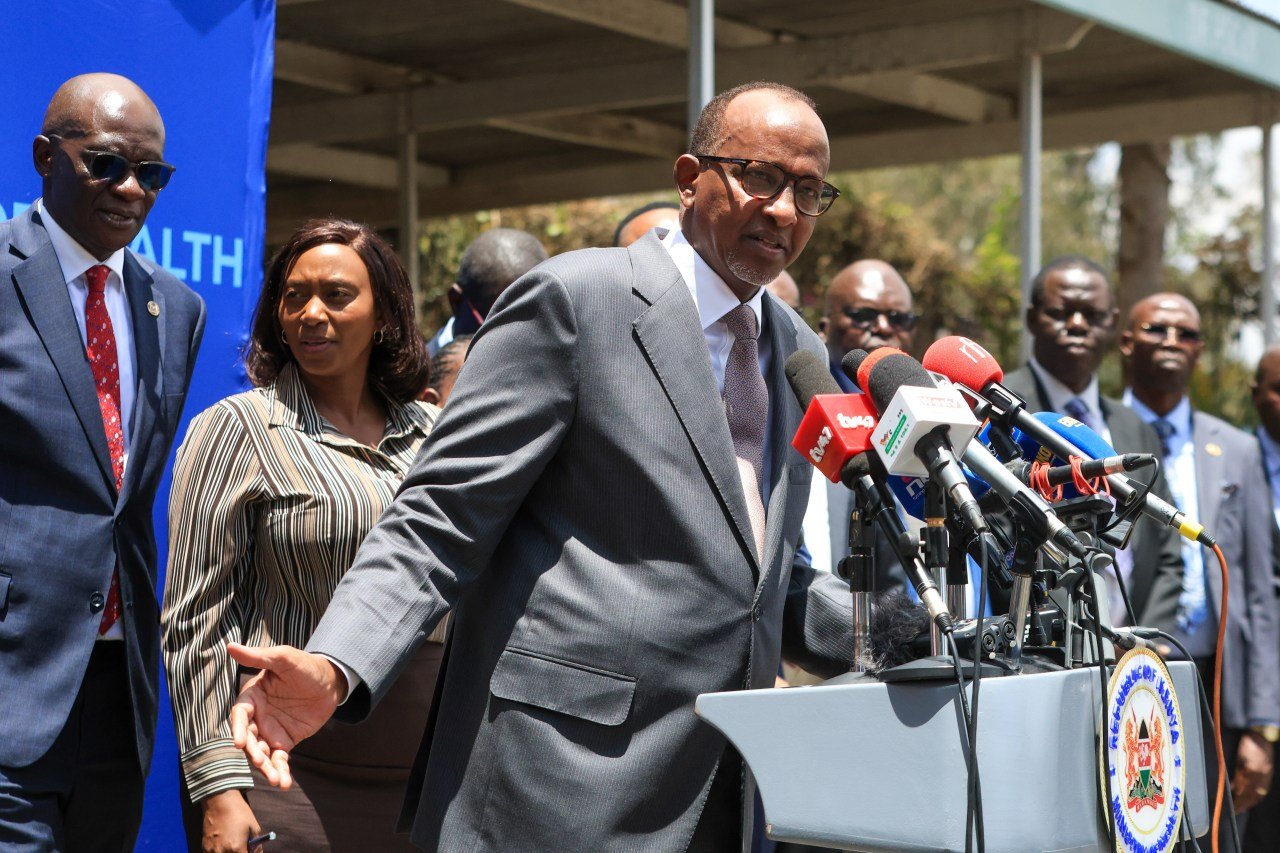
Kenya's Health Ministry on Tuesday confirmed the country's first imported Ebola case, linked to the ongoing outbreak in the Democratic Republic of Congo. The announcement came hours after the patient, a Kenyan national who had been living in Congo for the past seven years, died at a Nairobi hospital.
Health Minister Aden Duale said the patient arrived in Kenya on Saturday via Uganda, having traveled by road from Congo to Kampala before boarding a flight to Nairobi. The individual had been ill for about a month and had sought treatment at multiple hospitals in Congo before making the journey.
Upon arrival at Jomo Kenyatta International Airport, the patient was screened, but because he was already undergoing treatment, the screening did not flag any symptoms, according to Patrick Amoth, director of the Health Ministry. Relatives later transported him to Nairobi Hospital in a private vehicle, where he was immediately placed in isolation. The patient tested positive for the Ebola virus after developing symptoms consistent with hemorrhagic fever and died late Monday.
Health authorities have placed all border points on high alert and are monitoring for potential additional cases. Duale said 28 contacts, including family members and healthcare workers who cared for the patient, have been identified. Another 23 passengers who traveled on the same flight from Uganda are being traced.
The identified contacts will remain in isolation for 21 days and will only be released after testing negative for the virus, Amoth said. The patient's remains will be buried within 24 hours, following recommended public safety protocols to prevent further transmission.
Kenya has tested 267 samples across five laboratories since May, with only this one case returning positive. The country is now the fourth to record an Ebola case in the current outbreak, which was declared in eastern Congo in mid-May. Uganda has reported 20 cases, and France has had one. Prior to Kenya's announcement, there were no active cases outside Congo since Uganda declared its outbreak over in late August.
This outbreak is the fastest-growing in history, and the World Health Organization has warned it could become the deadliest as it outpaces containment efforts. The outbreak is caused by the rare Bundibugyo virus, for which there is no approved vaccine or treatment. Trials for vaccines and treatments are currently underway in Congo's Ituri province, the epicenter of the outbreak.
The confirmation of Kenya's first case underscores the regional risk posed by the outbreak and the challenges of cross-border disease surveillance. Health officials are urging vigilance while working to trace all potential contacts and prevent any local transmission.