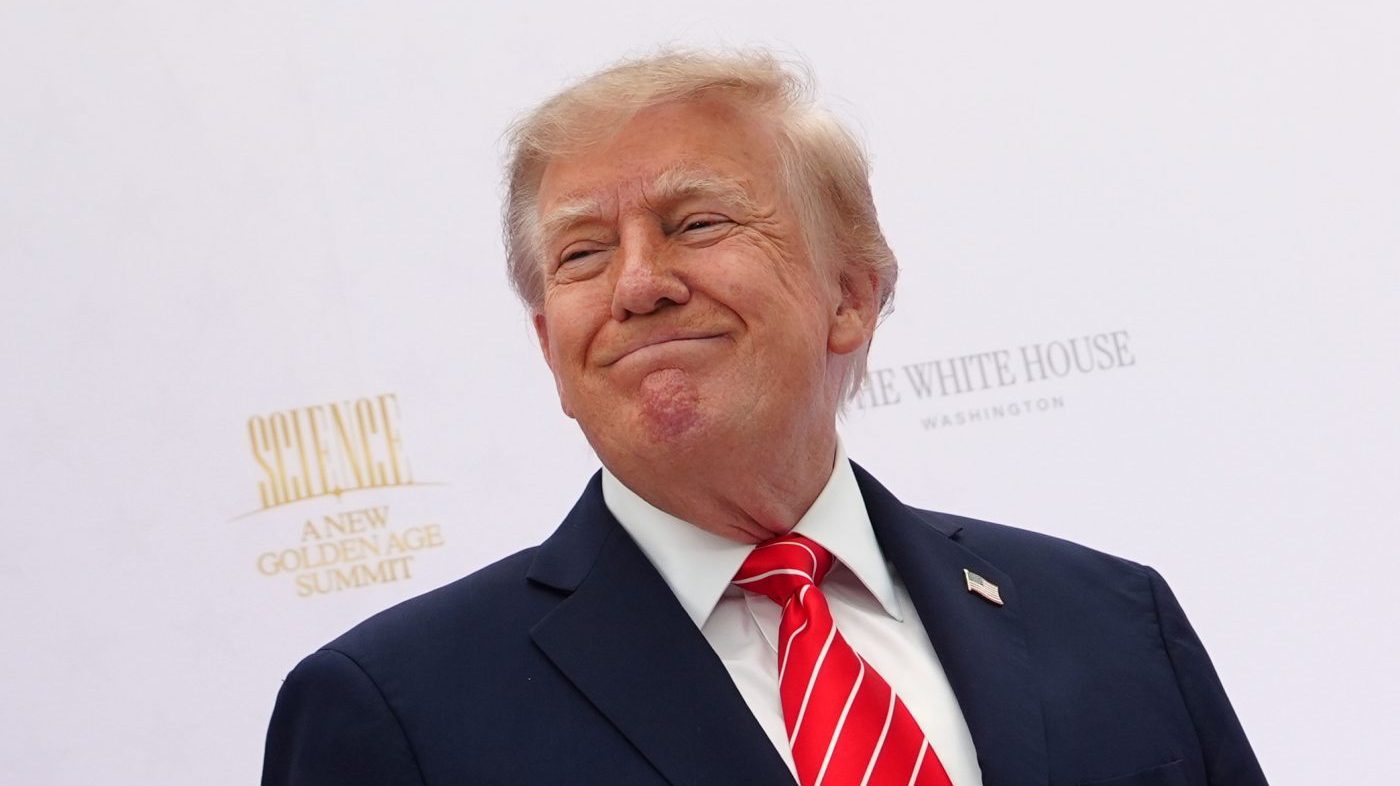
President Trump on Thursday blasted the media for what he called a misrepresentation of his recent remarks about Iran and the potential for attacks on Los Angeles and San Diego. In a post on Truth Social, he insisted that his comments were not an invitation for aggression but a rhetorical comparison tied to gasoline prices.
“What I was talking about was that a temporary increase in the price of Gasoline is a small price to pay for Iran not having a Nuclear Weapon and, if you want to see a big price, can you imagine what it would be like if they bombed San Diego and/or Los Angeles?” Trump wrote. He framed his remarks as a contrast between “paying a little more, for a short time, for Gasoline, versus the bombing of our Major Cities.”
The president accused the news media of deliberately twisting his words. “Everybody knew that, the Fake News knew it as well, but they continue to go out and say that I am asking the enemy to bomb two Cities that I love,” he added.
The controversy began Monday when Trump spoke at a campaign rally in Nebraska and suggested that Iran could “take out” the two California cities. The comments drew swift backlash from state and local leaders. California Governor Gavin Newsom told The Hill that Trump was “mentally ill” and called for the 25th Amendment to be invoked. Los Angeles Mayor Karen Bass said the remarks were “dangerous and could potentially compromise our safety,” while San Diego Mayor Todd Gloria declared that his city “is not collateral damage.”
The White House also pushed back on the characterization of the president’s words. Communications director Steven Cheung wrote on X that “The media freakout over President Trump’s comments is not rooted in reality.”
Trump doubled down on the theme during a rally in San Antonio on Wednesday, but added a note of assurance. “You want to see some bad things happen? You want to see a country in free fall? We’re not going to let that happen,” he said, suggesting he would not permit such an attack.
The episode underscores the ongoing friction between the president and the press, a recurring theme in his political career. It also highlights the sensitivity of any statements involving Iran, especially amid ongoing tensions over Tehran’s nuclear program and the potential for military action. Trump has previously pledged no strike on Iran before the November midterms, but his latest comments have reignited debate over his approach to foreign policy.
California’s Democratic leaders have long been at odds with Trump, and this incident is likely to deepen those divides. Senate Democrats have also criticized Trump’s rhetoric in the past, and this latest flare-up could further strain relations.
The president’s defenders argue that his remarks were taken out of context, while critics see them as reckless and dangerous. As the midterm elections approach, the clash over this episode may become a talking point on the campaign trail.