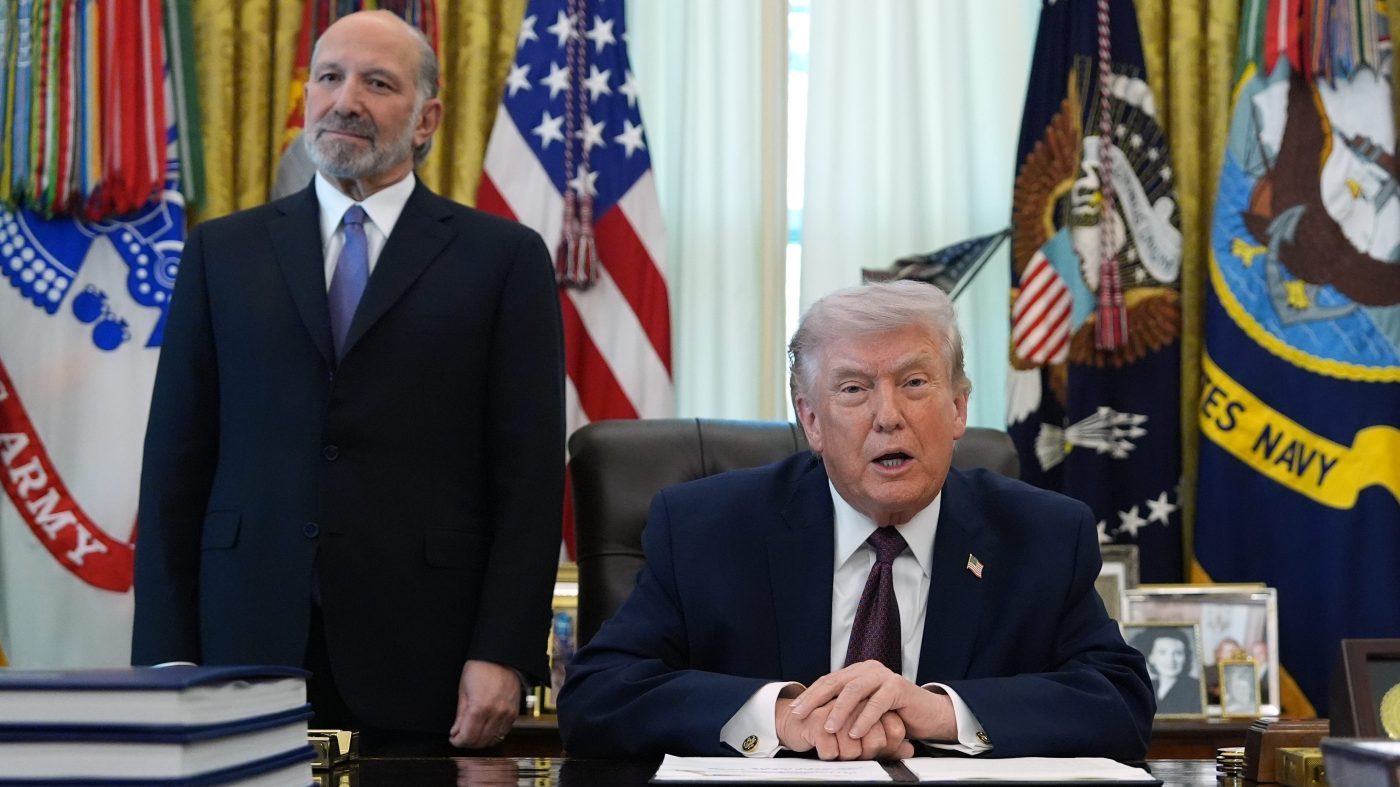
A federal court in New York will hear arguments today on the legality of former President Donald Trump's proposed 10% tariff on nearly all imported goods, a sweeping trade policy announced in the wake of a significant Supreme Court defeat for his administration's economic agenda. The U.S. Court of International Trade is set to review the challenge brought by several Democratic-led states and a coalition of small businesses, who argue the levy exceeds presidential authority.
Legal Backdrop and Supreme Court Precedent
The hearing follows a major judicial setback for Trump's trade policies earlier this year, when the Supreme Court struck down the legal foundation for much of his unilateral tariff agenda. That ruling limited the executive branch's power to impose duties for national security reasons without clearer congressional authorization, creating a precedent the plaintiffs hope will apply to this new case.

In response to that high court decision, Trump announced a new, blanket 10% levy on most imports, citing authority under a different statute—Section 301 of the Trade Act of 1974. He framed the tariff as a necessary measure to protect American industries and workers, and suggested the rate could escalate to 15% if economic conditions warranted. The legal question before the Court of International Trade is whether this use of the 1974 law is permissible, or if it constitutes an overreach similar to the policies already rejected by the Supreme Court.
The Plaintiffs' Case and Economic Stakes
The coalition challenging the tariff argues it would inflict severe economic damage, increasing costs for consumers and small businesses while potentially triggering retaliatory measures from trading partners. They contend the administration is attempting an end-run around the Supreme Court's ruling by invoking a different legal justification for broadly similar protectionist goals. A ruling against the tariff could deliver another stinging rebuke to Trump's "America First" trade doctrine and constrain future presidential actions in this arena.
This legal battle unfolds against a backdrop of ongoing trade tensions and strategic maneuvering by the former president. Trump's confrontational approach to international alliances has often dovetailed with his protectionist trade policies, creating friction with traditional partners. Furthermore, his penchant for aggressive, unpredictable tactics extends beyond commerce, as seen in his administration's application of 'madman theory' in foreign policy, a strategy that has drawn sharp criticism from Democratic lawmakers.
The hearing, scheduled to begin at 10 a.m. Eastern Time, will be closely watched by trade lawyers, multinational corporations, and foreign governments. The outcome could have immediate implications for global supply chains and the cost of thousands of consumer goods. It also tests the resilience of the judicial checks on presidential trade powers established by the Supreme Court's recent ruling.
Broader Political and Legal Context
This case is one of several high-stakes legal fronts involving the former president and his policies. While this challenge focuses on economic authority, Trump faces parallel scrutiny in other domains. For instance, congressional Democrats have intensified demands for testimony from his family members in separate investigations, highlighting the multifaceted nature of the legal pressures surrounding his political circle.
Ultimately, the trade court's deliberation is more than a technical dispute over statutory interpretation. It represents a critical juncture in defining the limits of executive power over international commerce. A decision upholding the tariff would empower a future president to unilaterally reshape U.S. trade policy with minimal congressional input. A decision striking it down would reinforce the judiciary's role as a constraint on such unilateral economic actions, potentially forcing a return to a more collaborative policy-making process between the White House and Capitol Hill.