Two centuries after Alexis de Tocqueville toured the young United States, his insights into American democracy remain remarkably fresh. The French aristocrat arrived in 1831 to study prisons but left with a far more enduring work—"Democracy in America"—which captured a distinctive American trait he called "liberty of action." As the nation approaches its 250th anniversary, this overlooked freedom may be more relevant than ever.
Tocqueville contrasted American associations with their European counterparts. In Europe, he wrote, people band together "as a weapon of war to be hastily improvised and used at once on the field of battle." But in America, association was something different: "liberty in action." Americans see a blocked road, a need for a festival, or a community problem, and they simply organize to fix it. This pragmatic, voluntary cooperation struck him as a cornerstone of democratic strength.
Today, amid entrenched political conflict and what sociologist Robert Putnam termed "bowling alone"—the fraying of social bonds—the question is whether that spirit survives. Former Surgeon General Vivek Murthy warned in 2023 that loneliness is as damaging as smoking, eroding both individual health and community fabric. Yet evidence suggests Tocqueville's observation still holds.
Consider Dina Gregory, who witnessed an act of radical kindness on a subway and later regretted not acting. Years afterward, she seized a similar chance, leading her to declare, "The future isn't me. It's we." She launched La Befana's Table and a podcast to create spaces for shared stories. Madeleine Spencer took a different path, using art to transform communities in Santa Ana, California, and Akumal, Mexico, sparking murals and festivals that reknit social ties.
These examples echo Tocqueville's core insight: Americans still gather to get things done, not as a weapon but as a constructive force. The need for connection extends from the subway to the town square, and small acts of healing can counter the epidemic of isolation.
Frederick J. Riley, executive director of Weave: The Social Fabric Project at the Aspen Institute, argues that such efforts are as critical as battlefield medicine. "When we reach out to others, we make ourselves healthy, and our neighborhoods, too," he writes. "They are acts of healing."
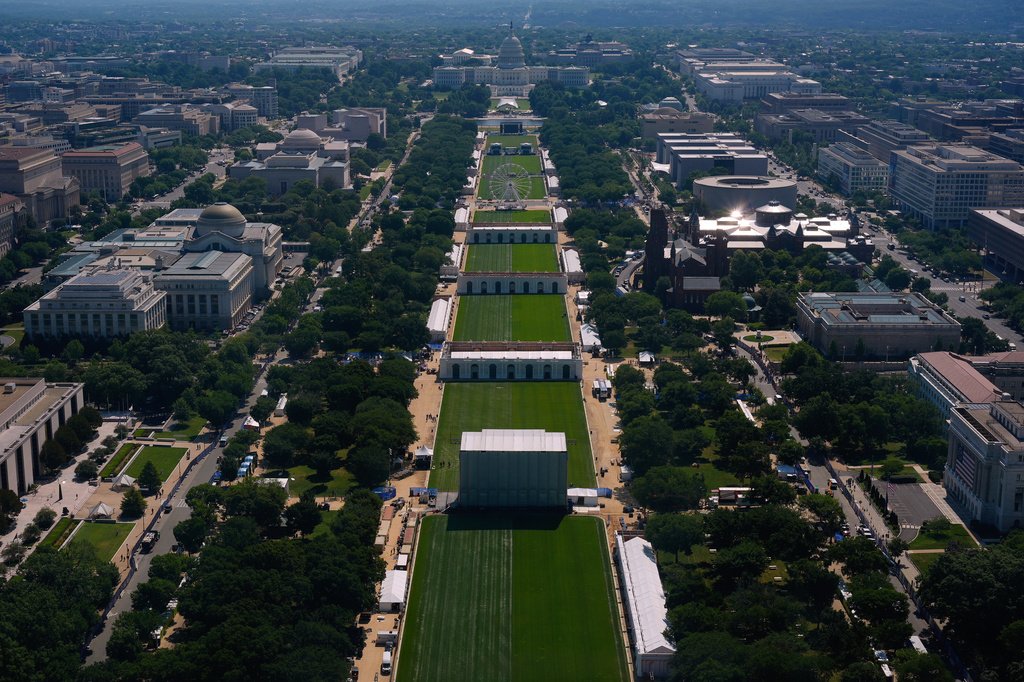
The anniversary offers a moment to reclaim Tocqueville's "liberty of action"—not as a partisan slogan but as a call to rebuild community. As Riley puts it, "Let's get stuff done, for each other and with each other." In a time of deep division, that may be the most democratic act of all.
For context on how political forces are shaping the anniversary, see coverage of Trump's July 4 'Freedom 250' events and allegations of donor misrepresentation. Meanwhile, a look at Benjamin Franklin's civic legacy offers another historical lens on community action.