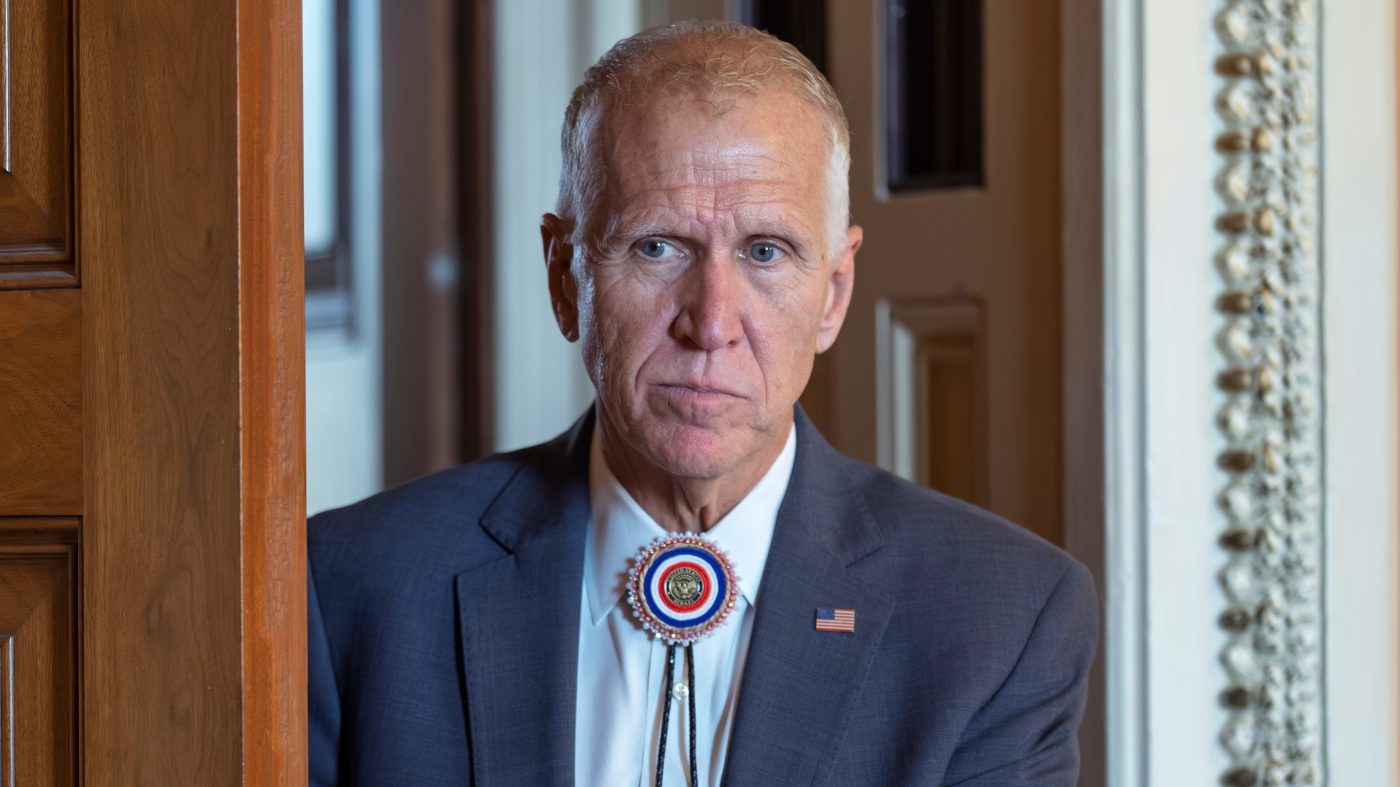
Senator Thom Tillis, a North Carolina Republican, has broken ranks with President Trump by calling for a direct apology to Pope Leo XIV following the president's sharp criticism of the pontiff's stance on the ongoing U.S.-Israeli military engagement in Iran. In an interview with NBC News, Tillis stated that Trump's characterization of the pope as "weak" on crime was a misstep that required contrition.
A Call for Political Accountability
"When you're wrong, you're wrong," Tillis asserted, framing his remarks as a matter of principle. He drew a clear distinction between political combat and diplomatic discourse, noting that accusations of being "soft on crime or soft on the border" are tactics reserved for electoral opponents. "Maybe a presidential or prime minister candidate in some other country, but not to the pope of the Catholic Church," he clarified, suggesting Trump views the religious leader through an overly political lens.
The senator, who is not seeking reelection, emphasized that apologies are "underused in art and politics." He urged the president to move past the dispute, whether it stemmed from a mistake or a misconception, and refocus on his policy achievements. "This president has done so many positive things that I want to focus on," Tillis added, attempting to balance his criticism with support for Trump's broader agenda.
Dispute Over Role and Rhetoric
At the heart of the disagreement is a fundamental clash over the pope's role. While Trump has treated Leo XIV as a political figure, Tillis argued the pontiff is primarily a spiritual leader whose messages on peace and civilian protection during the Iran conflict are consistent with church doctrine, irrespective of geopolitical events. The public spat is part of a series of disagreements between the two leaders on foreign policy, including the U.S. operation that captured former Venezuelan President Nicolás Maduro, during which Leo had advocated for dialogue.
Despite the tension, Pope Leo XIV struck a conciliatory tone on Wednesday, telling reporters aboard his plane that despite differences, both leaders could "live in peace together." He expressed hope that promoting such an image was a needed message for the world, as reported by CNN. This response stands in contrast to Trump's continued refusal to apologize for his rhetoric.
Controversial AI Image Adds to Tensions
The rift was further complicated by a separate controversy involving an AI-generated image posted to Trump's Truth Social account that depicted him in a Christ-like manner. After significant backlash from conservatives and Christians, the post was deleted. Trump later claimed he believed the image showed him as a "doctor." Tillis addressed the incident, stating he worried less about the post since it was taken down, which he saw as an acknowledgment it should not have been shared. He said he accepted "at face value" the president's explanation of confusion.
This episode is part of a pattern where religious imagery and conflict commentary have drawn attention away from the administration's domestic policy goals. Meanwhile, the pope has remained an outspoken advocate for peace in the Middle East, consistently denouncing attacks on civilians—a position that has now drawn direct fire from the U.S. president and his allies, prompting a defense of his peace message.
Tillis's public admonishment highlights a rare intra-party critique of Trump's diplomatic approach toward a major global religious figure. It underscores the balancing act for Republicans between supporting the president and managing relationships with influential international institutions. The call for an apology, coming from a sitting Republican senator, signals that some within the party view the president's combative style as counterproductive when directed at certain figures, even as they support his policy objectives elsewhere.