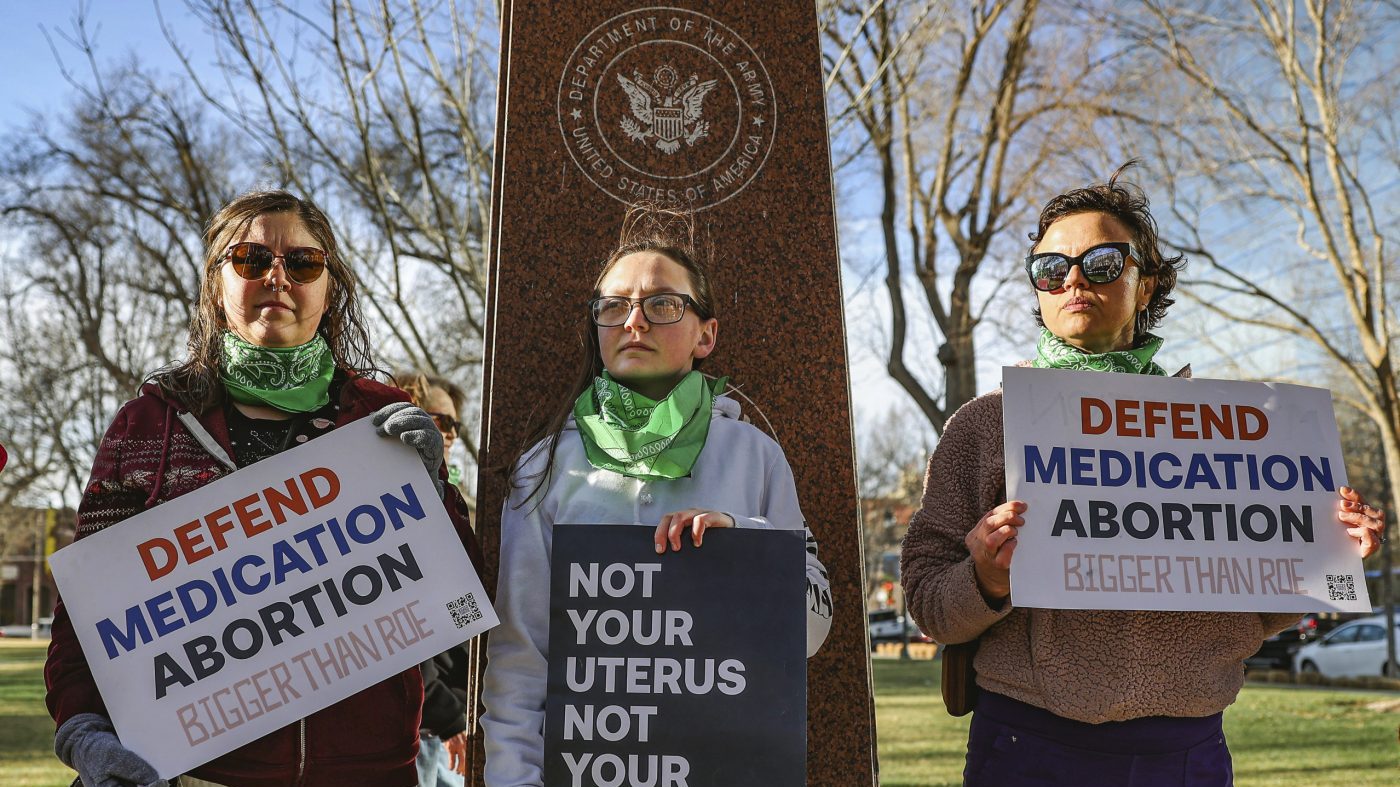
A new analysis from the Guttmacher Institute documents a fundamental shift in how Americans access abortion care in the years following the Supreme Court's Dobbs decision. The data shows a marked decline in patients traveling from states with total abortion bans, while the use of telehealth services for medication abortion has risen sharply.
Declining Interstate Travel
In the wake of Roe v. Wade's overturn, the number of people crossing state lines for abortions has steadily decreased. According to the report, approximately 170,000 patients traveled for care in 2023. That figure fell to 154,000 in 2024 and dropped again to 142,000 in 2025. Researchers attribute this trend not to a reduction in demand, but to the growing availability of remote care and the chilling effect of new state laws.

Several states, including Idaho and Tennessee, have passed so-called 'abortion-trafficking' statutes that impose penalties on individuals who assist residents in traveling out of state to obtain an abortion. These laws have created legal risks that complicate traditional pathways to care.
Telehealth Fills the Gap
As travel has diminished, telehealth provisions have expanded significantly, particularly within the 13 states with total bans. The report found that telehealth abortions increased from about 72,000 in 2024 to 91,000 in 2025. This method now accounts for roughly two-thirds of all abortions nationally, with providers in states with protective laws mailing the pills mifepristone and misoprostol to patients in restrictive jurisdictions.
'It makes sense that we’d see a decline in travel,' Guttmacher data scientist Isaac Maddow-Zimet told The Hill. 'Because people accessing abortion care through telehealth in general then no longer need to travel for care. So it’s not surprising, per se, but it is the first time that we’ve been able to put out specific numbers showing this shift.'
State-Level Data Reveals Scale
The scale of this cross-border care is substantial. A separate report from the Massachusetts Department of Public Health found that in 2024, clinicians in the state provided 27,836 abortions to non-residents, compared to 21,407 for state residents. 'The majority of that care is being provided by telehealth by Massachusetts providers to people living in states like Texas or Alabama or other restrictive states,' Maddow-Zimet noted. 'There’s very little physical travel into Massachusetts for care at brick and mortar facilities.'
Illinois has emerged as another major hub, providing about 32,000 abortions to out-of-state residents in 2025—nearly a quarter of all such procedures documented that year. This dynamic underscores how the national abortion landscape has fragmented into a patchwork of access and restriction, reshaping broader healthcare delivery systems and patient behavior.
Stable Overall Numbers, Shifting Methods
Despite these seismic changes in how care is delivered, the overall number of clinician-provided abortions in the U.S. has remained remarkably stable. The Guttmacher report estimates there were roughly 1,126,000 abortions in 2025, a change of less than 0.2 percent from the previous year. This suggests that demand persists unabated, even as the logistical and legal hurdles have multiplied.
When asked about the quality of care via telehealth, Maddow-Zimet pointed to decades of research showing medication abortion to be 'really safe and effective' and 'very low risk.' He emphasized that 'patients should be able to access abortion care in their own communities using the method of their choice and in the setting of their choice.' This shift occurs alongside other strains on the nation's healthcare infrastructure, from overwhelmed services to rising costs.
The data presents a clear picture of adaptation in a post-Roe era. While political and legal battles continue—including challenges to the FDA's approval of mifepristone—patients and providers are navigating new realities. The rise of telehealth abortion represents a technological and logistical response to geographic restrictions, fundamentally altering the politics of reproductive rights and setting the stage for future state and federal policy clashes.