The Supreme Court's recent decision in Trump v. Slaughter has dismantled a long-standing pillar of agency independence, fundamentally altering the balance of power between Congress and the presidency. By ruling that presidents can fire agency heads—and potentially any agency employee—for any reason, including purely political ones, the court has opened the door to unprecedented political control over the federal bureaucracy.
The End of an Era
For most of American history, Congress has been able to restrict presidential removal of federal employees, from independent regulatory agency heads to career civil servants. This structure was designed to insulate agencies from political pressure and ensure they could operate based on expertise rather than partisan loyalty. The Trump v. Slaughter ruling strikes down these protections, granting the president sweeping authority to reshape the administrative state at will.

This shift is not merely a matter of regulatory policy. It strikes at the heart of public trust in the information that agencies provide daily—information that underpins everything from GPS navigation to weather forecasts to food safety alerts. As Haiyun Damon-Feng, assistant professor of law at Cardozo School of Law, argues, the ruling leaves the public with an unreliable state and emboldens a largely unaccountable president.
Trust in Information at Risk
Agencies have long served as trusted sources of nonpartisan information, enabling individuals and businesses to make informed decisions. The independence of these agencies was a bulwark against presidents using the administrative state to construct politically convenient realities. Without that independence, the credibility of agency communications is in jeopardy.
Historical examples illustrate what may be lost. During his first term, President Trump suggested that news networks should lose their licenses for unflattering coverage. At the time, the independent Federal Communications Commission chairman defended the First Amendment and refused to comply. Similarly, after the 2023 Potomac River plane crash, the independent National Transportation Safety Board cited the Federal Aviation Administration's systemic failures—a finding that might not have been possible under a presidentially controlled agency.
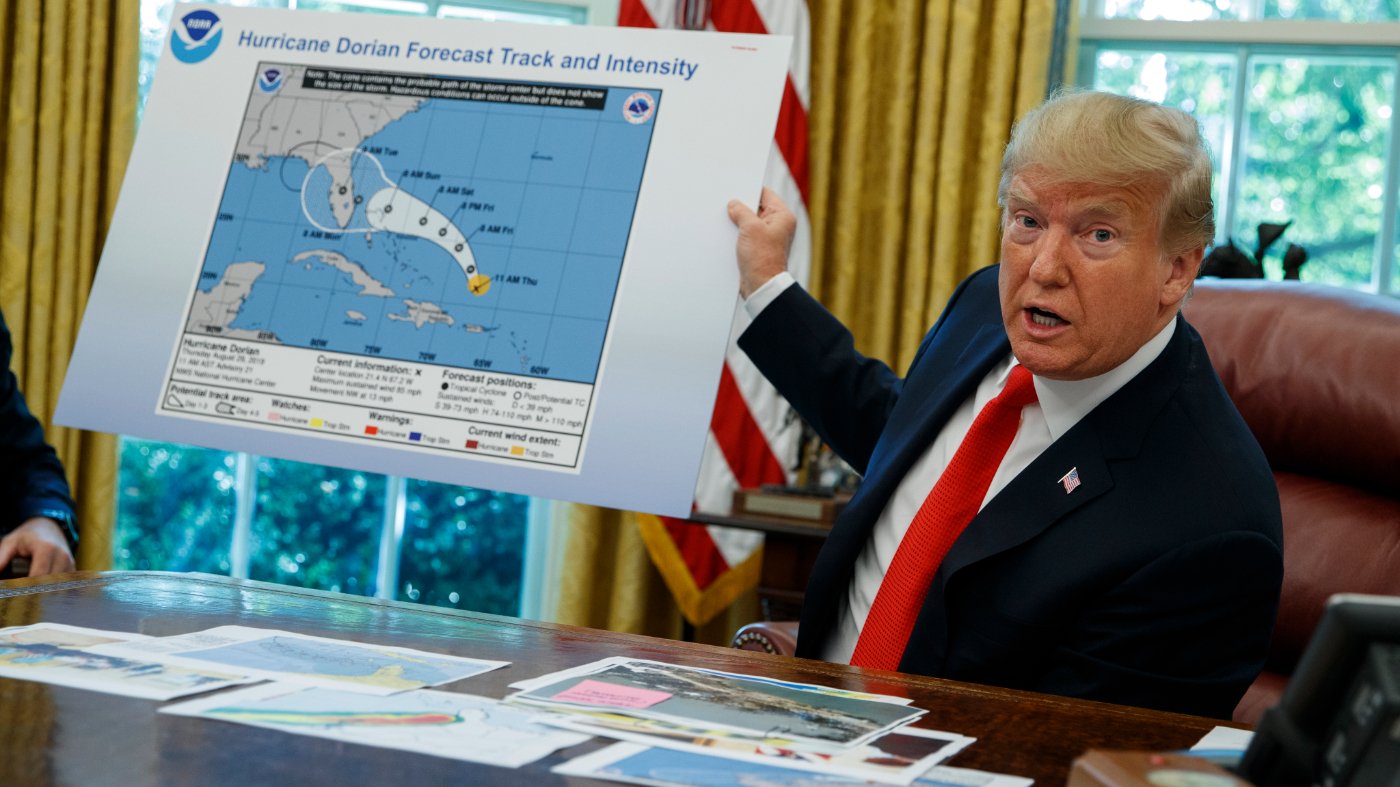
The ruling also raises concerns about the manipulation of information. In the 1980s, the Reagan administration attempted to classify ketchup as a vegetable in school lunch guidelines. More recently, the Environmental Protection Agency has been directed to remove climate change references from public communications, and national parks have been ordered to remove signage about women's history, immigrants, and civil rights. The infamous 'Sharpiegate' incident, where Trump used a marker to alter a hurricane forecast map, further underscores the risks.
A Double Standard at the Court
The court's own reasoning in a related case, Trump v. Cook, highlights the inconsistency. In that case, the court carved out the Federal Reserve Board from the Slaughter holding, citing the need to protect investor and public confidence in the economy. As Damon-Feng notes, the court understands why independence matters for the Fed but fails to extend that logic to other agencies. Trust in government undergirds everything, and the court's selective approach undermines that trust.
The decision comes amid broader political tensions. House Democrats have held press conferences to counter the Trump agenda ahead of the midterms, while Democratic fury over Trump's moves at the Election Assistance Commission has been met with criticism. The ruling is likely to intensify these debates as the 2024 election approaches.
Public trust in government has been declining for decades, and Trump v. Slaughter will surely accelerate that trend. By subordinating the entire epistemic output of agencies to the whims of a single partisan leader, the court leaves the nation with an unreliable state—one where the president need not even fire anyone to taint the enterprise. The mere possibility is enough.