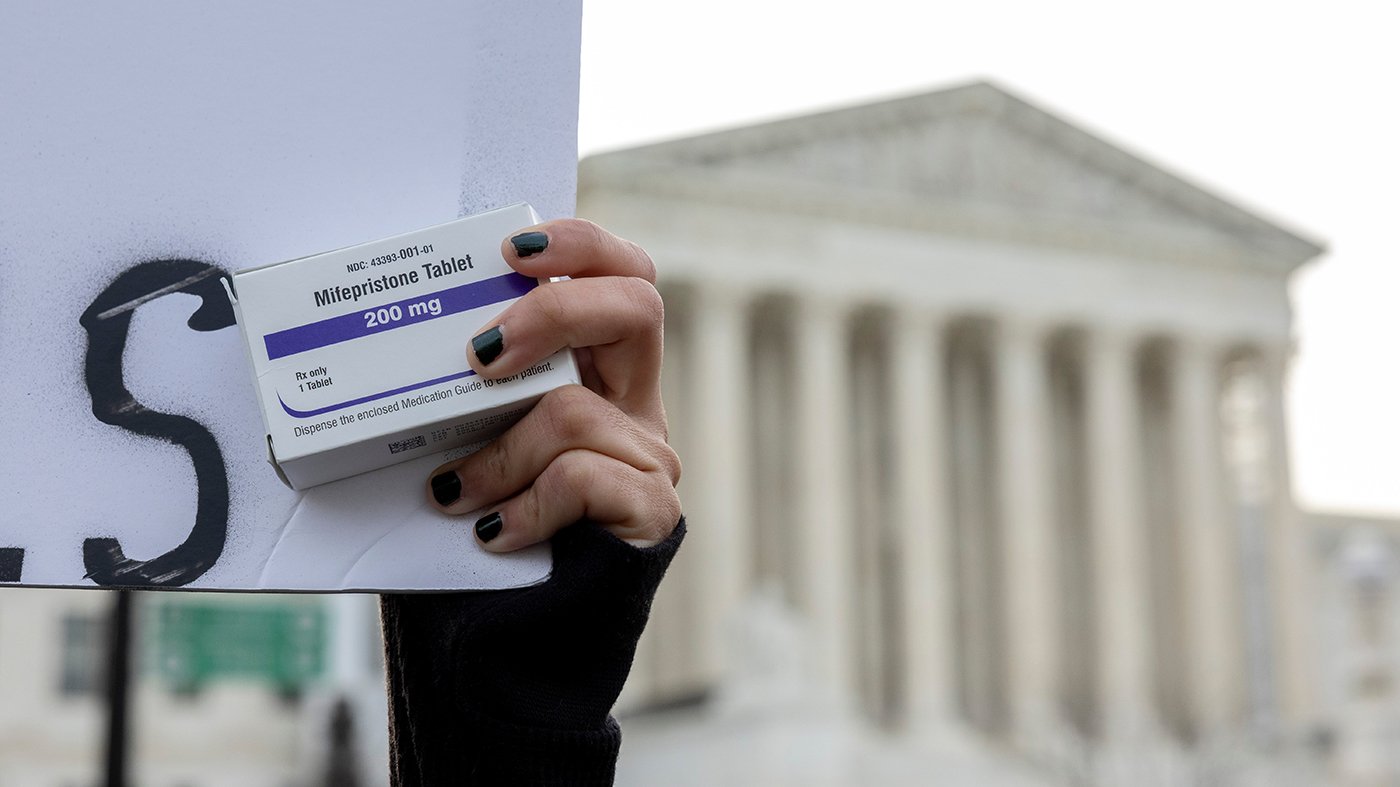
The Supreme Court on Thursday temporarily blocked a lower court decision that would have ended mail-order access to abortion pills, handing a reprieve to patients and providers as a legal battle continues.
The justices halted a May 1 order from the conservative U.S. Court of Appeals for the 5th Circuit that would have required in-person visits to obtain mifepristone. Had it taken effect, the ruling would have sharply curtailed abortion access nationwide.

Conservative Justices Clarence Thomas and Samuel Alito dissented separately, with Alito calling the court's action “unreasoned” and warning it undermines the 2022 decision overturning Roe v. Wade. Thomas invoked the Comstock Act, an 1873 anti-obscenity law, arguing that mailing mifepristone is already a federal crime.
“Applicants are not entitled to a stay of an adverse court order based on lost profits from their criminal enterprise,” Thomas wrote. “They cannot, in any legally relevant sense, be irreparably harmed by a court order that makes it more difficult for them to commit crimes.”
The case now returns to the 5th Circuit, with a possible future appeal to the Supreme Court. The emergency intervention was sought by two drugmakers that manufacture mifepristone and a generic version, who argued the appeals court ruling was unprecedented and disruptive.
The dispute stems from a Louisiana lawsuit challenging a 2023 FDA regulation that allowed mifepristone to be prescribed via telehealth, dispensed at pharmacies, and mailed. Louisiana Attorney General Liz Murrill (R) criticized the Supreme Court's move, saying it “blocks common-sense return to medically ethical practices.”
This case is one of the most significant abortion-related disputes since the end of Roe v. Wade. In 2024, the Supreme Court unanimously upheld mifepristone access on standing grounds, ruling that anti-abortion doctors lacked legal standing to sue.
Medication abortion is now the most common method of pregnancy termination. Mail-order pharmacies and state shield laws in blue states have helped maintain access even as conservative states impose near-total bans, leading to an increase in abortions nationwide post-Roe.
The Trump administration did not take a position in this case, though other Republican states and members of Congress filed briefs supporting Louisiana. The FDA continues to review mifepristone's safety protocols, with no timeline for completion. The Justice Department warned the lower court ruling would “disrupt FDA’s ongoing review, and usurp FDA’s scientific role, but would also threaten chaos.”
For more on related legal battles, see our coverage of how the Supreme Court is weighing religious school funding and the broader implications of the Louisiana case for fetal personhood.