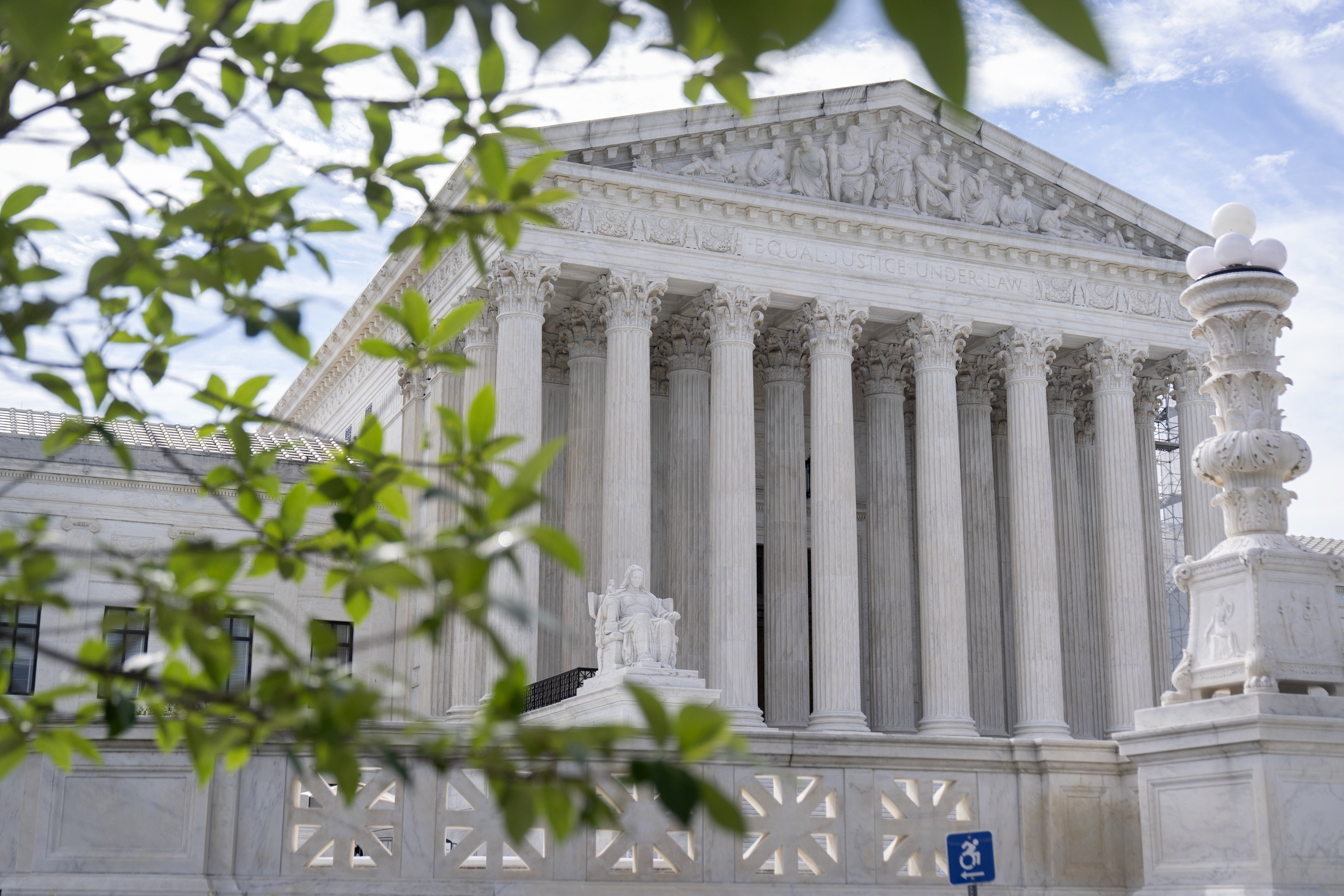
The Supreme Court is wading into a legal thicket of its own making as it considers Louisiana's bid to block mail-order abortion pills. At the surface, the case hinges on whether the state has standing to sue the FDA over its rules allowing online prescriptions for mifepristone, a drug used in medication abortions. But lurking beneath is a far more consequential question: whether a fetus holds legal rights as a person.
Justice Samuel Alito temporarily paused a lower court order last week that would have barred the mailing of mifepristone, a drug that the Johns Hopkins Bloomberg School of Public Health calls "extremely safe and effective" with no deaths directly linked to it. Louisiana, backed by the Fifth Circuit, argues the drug undermines its laws protecting "unborn human life."

Since the 2022 Dobbs decision that overturned Roe v. Wade, medication abortions have become the majority of abortions in the U.S. If the Court allows Louisiana to proceed, millions of women could face new barriers. But the deeper shift may be doctrinal: a move toward recognizing fetuses as legal persons under the Fourteenth Amendment.
In Roe, the Court held that fetuses are not "persons" under the Constitution, even as states could protect fetal life. That balance was reaffirmed in Planned Parenthood v. Casey, where Justice Sandra Day O'Connor rejected spousal notification requirements by noting the absurdity of a husband's interest outweighing a woman's liberty. Dobbs upended that framework, effectively subordinating women's rights to state interests in fetal life, though it did not formally overrule the personhood holding.
Justice Stephen Breyer's dissent in Dobbs warned that the majority had ended a half-century of precedent respecting women as autonomous beings with full equality. The result has been over 400 criminal prosecutions of pregnant women, forced medical interventions, and higher maternal mortality in states with abortion bans. The logic, as legal scholars note, is stark: if fetal and maternal lives are equal, self-defense may no longer justify abortion.
The Fifth Circuit's opinion blithely cited Louisiana's law declaring that "every unborn child is a human being from the moment of conception and is, therefore, a legal person." Ten other states have similar statutes. If the Supreme Court endorses this view, the implications would ripple far beyond abortion—into custody disputes, medical decisions, inheritance, and even lawsuits against car accidents, employers, or pharmaceutical companies for prenatal harm.
The case, Louisiana's request to keep its ban on mail-order abortion pills, is a direct challenge to FDA authority. But as Justice Alito and Justice Jackson clashed over the fast-tracked schedule, the Court seems aware of the stakes. A ruling that implicitly or explicitly adopts fetal personhood could create a legal mess that even the conservative majority may struggle to manage.
For now, the public should watch closely. The time for attention is now, before the Court's next move reshapes American law in ways few anticipated.