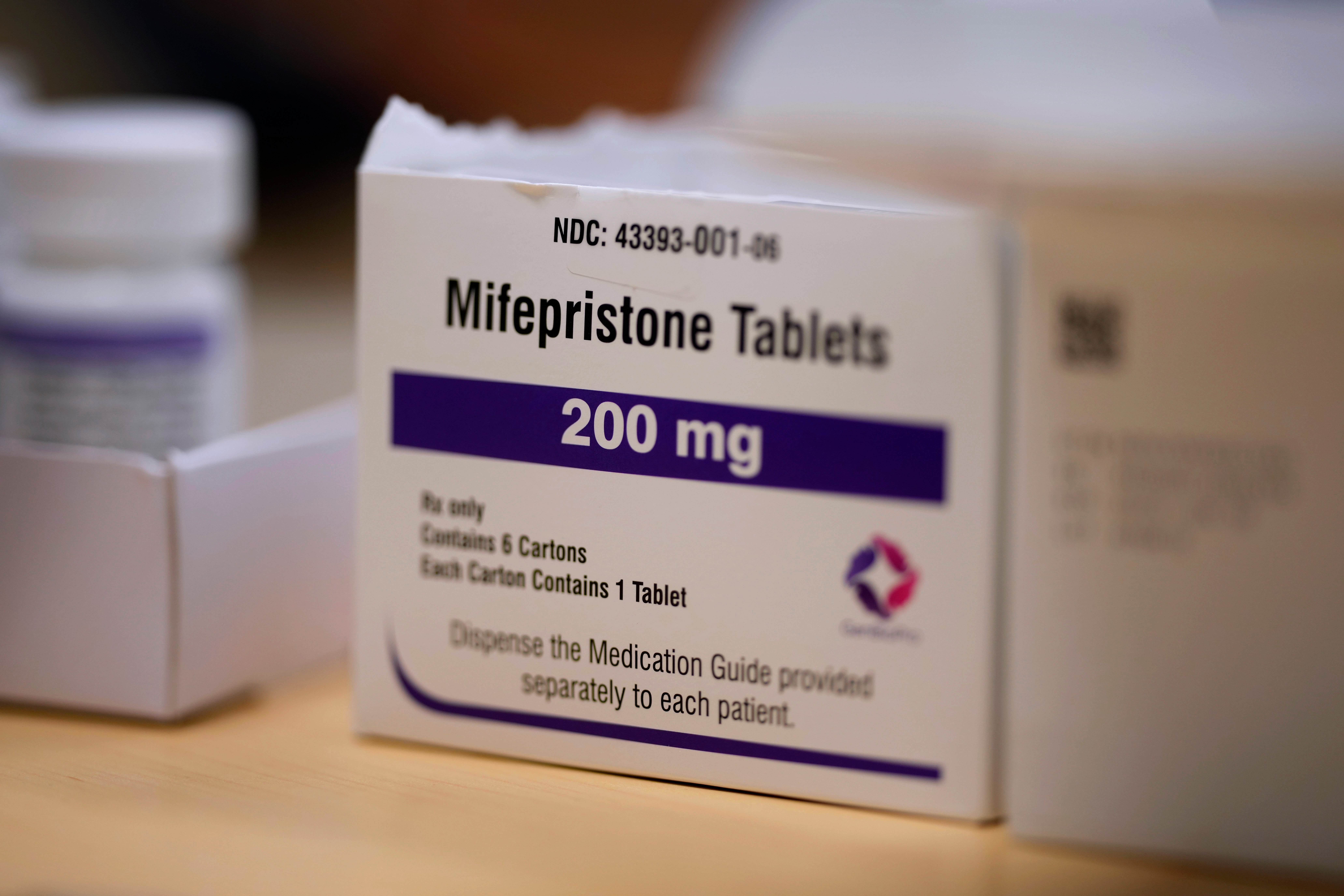
Louisiana officials have formally asked the Supreme Court to let stand a lower court order that would prohibit women across the country from receiving a common abortion medication through the mail. The move escalates a legal battle over mifepristone, one of two drugs used in medication abortions, and tests the boundaries of state authority over reproductive health.
The Trump administration, caught between its anti-abortion base and broader political considerations, has offered no public position. The Department of Justice did not file any brief in the case, even though the federal government is a defendant. This silence has angered conservative activists who expected stronger action after the Supreme Court's 2022 decision overturning Roe v. Wade.
Last week, Justice Samuel Alito temporarily blocked a ruling from the conservative U.S. Court of Appeals for the 5th Circuit that had reinstated a requirement for in-person visits to obtain mifepristone. That earlier ruling caused widespread confusion among patients, providers, and pharmacies, and prompted two drug manufacturers to seek Supreme Court intervention. Alito's pause was procedural, giving the full court time to weigh the merits.
The underlying dispute began when Louisiana sued the Food and Drug Administration over its 2023 regulation that eliminated the in-person dispensing requirement and allowed mifepristone to be prescribed via telehealth, dispensed at pharmacies, and mailed directly to patients. The state argued that the FDA's rule violated its sovereignty and constituted a “quintessential injury” to its ability to enforce abortion restrictions.
Louisiana has banned nearly all abortions since the Dobbs decision, but medication abortions facilitated by out-of-state doctors mailing pills into the state have surged. State officials described the influx of mail-order pills as an “assault on pro-life states.” The case has become one of the most significant post-Dobbs battles over abortion access, with implications for telehealth and interstate medical regulation.
The Trump administration initially opposed Louisiana's lawsuit on procedural grounds, arguing the state waited three years to file. It asked a federal district court to pause the case while the FDA reviews mifepristone's safety. The district judge agreed, but Louisiana quickly appealed to the 5th Circuit, which declined to wait for the FDA review and imposed a nationwide pause on mail-order access.
Deirdre Shiefeling, chief political and advocacy officer at the American Civil Liberties Union, criticized the administration's inaction. “The administration's silence speaks volumes and is a permission slip to the Supreme Court to restrict access to medication abortion nationwide, betraying decades of science and President Trump's campaign promises not to impose new federal restrictions on abortion,” she said. “The silence from the Trump administration is deafening.”
The drug companies now have an opportunity to reply to Louisiana's brief. The Supreme Court is expected to act before Alito's temporary stay expires Monday at 5 p.m. EDT. The case could reshape how medication abortion is regulated nationwide, with potential spillover effects on telehealth and federal preemption doctrines. As the court fast-tracks this case alongside other high-profile disputes, the political stakes remain high for both parties.