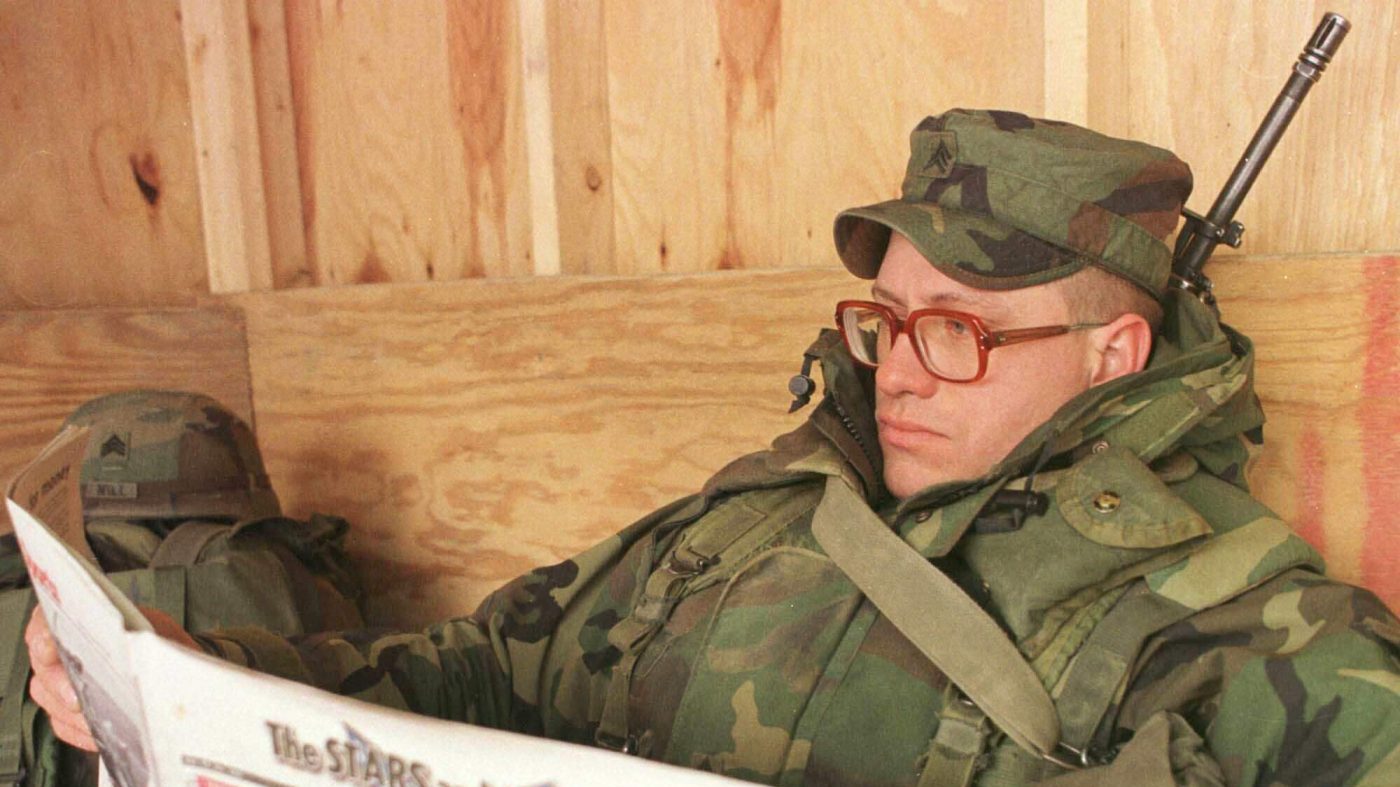
Senate Democrats are raising fresh alarms over the Trump administration's treatment of Stars and Stripes, following a Pentagon letter that outlines new restrictions on the military newspaper just as its independent watchdog was ousted. The April correspondence, obtained by The Hill, was dated the same day the Defense Department fired the outlet's ombudsman—the official charged with monitoring editorial independence and reporting concerns to Congress.
In the letter to lawmakers, Pentagon spokesman Sean Parnell stated that Stars and Stripes must operate under March guidelines requiring content to be "in support of good order and discipline of the military." He also directed the publication to focus on material "not usually covered by commercial media," reinforcing a prior decision to ban cartoons and wire service stories. Parnell insisted the outlet "will remain editorially independent of the U.S. military chain of command, military political affairs activities, or other internal influences, and without censorship and propaganda." However, he added that it must also be "a fiscally sound and efficient business enterprise that is fully accountable to department leadership."
Senator Elizabeth Warren (D-Mass.), who previously questioned the Pentagon alongside other colleagues, said the letter offers "repeated indications" that the department is not honoring its commitment to independence. "While America is at war, the Trump administration is hellbent on silencing our key military newspaper and attacking service members' access to the free press," Warren said in a statement. "Every American should be concerned about this blatant censorship."
The Pentagon declined to directly answer whether it has blocked any stories from publication. Parnell wrote that "the language concerning good order and discipline has not led to any Stripes articles being withheld from publication." Yet critics note that since January, the administration has steadily eroded the outlet's autonomy. Parnell tweeted that month that the Pentagon would return Stars and Stripes to its "original mission" and "refocus its content away from woke distractions." In March, a memo mandated the newspaper's "modernization," replacing a framework established in 1994. Parnell defended the move, calling the old rules "unnecessary" as they largely "related to internal management of the agency and its personnel."
These changes come amid broader restrictions on Pentagon reporters under Defense Secretary Pete Hegseth, who has sought to bar certain journalists from the building and limit how they gather information from government sources. McConnell recently challenged Hegseth on Pentagon budget strategy, highlighting tensions over defense priorities.
Stars and Stripes has been editorially independent from the Defense Department since a 1990s congressional mandate. Its original mission statement says it is "governed by the principles of the First Amendment," but the March memo made no reference to constitutional press freedoms. The Pentagon also promised to form a new advisory group, but as of late April, none had been created.
Jacqueline Smith, the fired ombudsman, had been outspoken against the new policies. In an op-ed published the day she was fired, Smith wrote: "Apparently the Pentagon also doesn't want you to hear from me anymore about threats to the editorial independence of Stars and Stripes. They fired me." She added that she had informed the House and Senate Armed Services committees of her "great and growing concern about attempted control of the newspaper by the Pentagon." Smith concluded, "No one should be surprised that they're kicking out the one person charged by Congress with protecting Stars and Stripes' editorial independence."
The developments have intensified scrutiny of the administration's approach to military media, with Democrats warning that the moves undermine a vital source of news for service members. Similar concerns over a broader crackdown on Trump-critical organizations have emerged in other contexts.