House Republicans are feeling a renewed surge of confidence after a string of court victories in redistricting battles, shifting what was once a guarded outlook into genuine optimism that they might hold onto the chamber in the 2026 midterms. Lawmakers and strategists point to recent rulings—including a Virginia Supreme Court decision blocking a Democratic-leaning map and a U.S. Supreme Court ruling that narrowed the Voting Rights Act’s scope—as game-changers that have reshaped the electoral landscape.
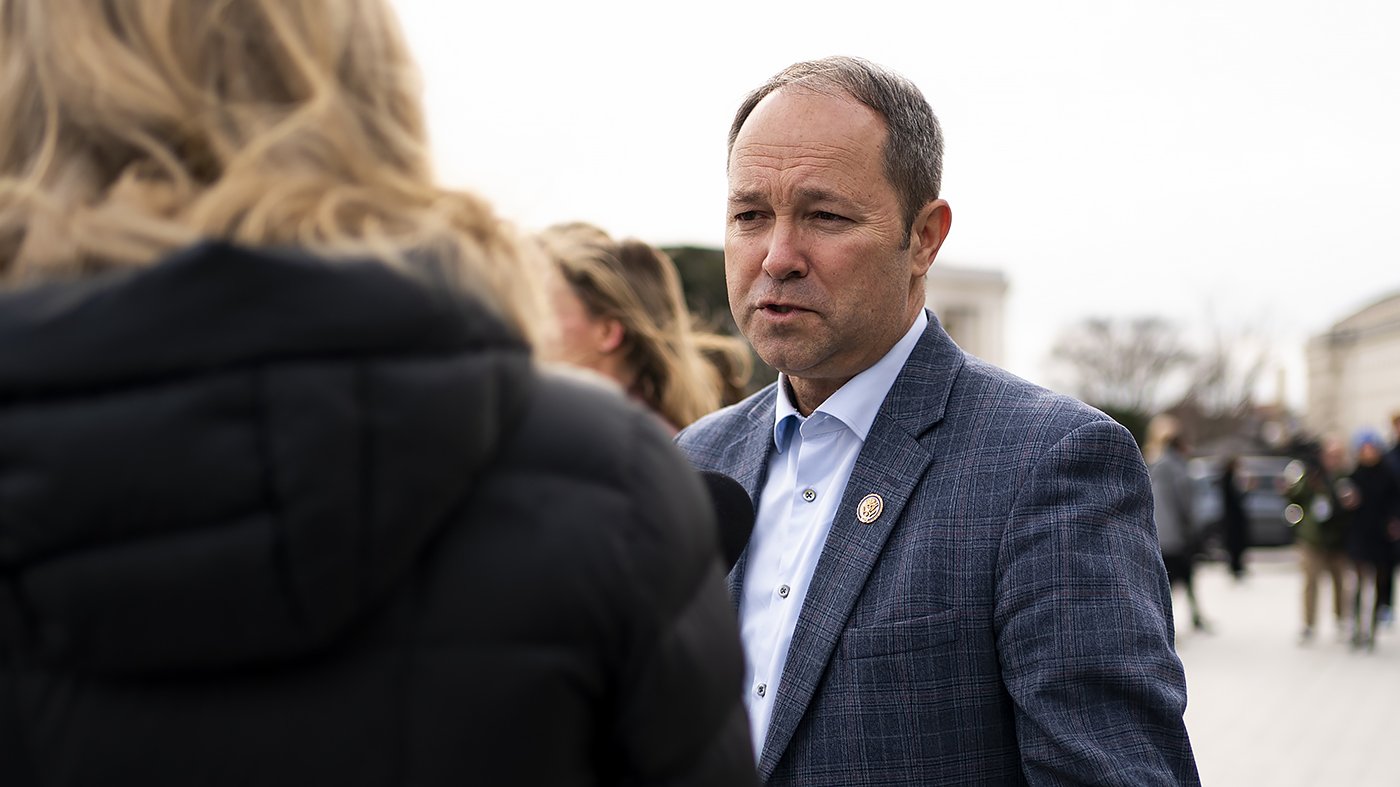
“We’re putting ourselves in the best spot possible. We’re leading and raising money. If you put Democrats and Republicans in our corners, we have more districts for us than them,” said Rep. Marlin Stutzman (R-Ind.). He added, “There’s a real chance we win the House. Hey, why not? Let’s beat the trend.”

The shift in tone is notable, given that earlier this year many Republicans privately doubted their ability to defy historical midterm losses. One House GOP member, speaking on condition of anonymity, told The Hill that before the court rulings, “you had to be a real optimist” to believe the party could keep the majority. Now, that same lawmaker describes the odds as “a coin flip.”
Speaker Mike Johnson (R-La.) called the developments “seismic,” and the party is already planning to capitalize. In states like Louisiana and Alabama, Republicans are moving to redraw maps that could eliminate Democratic-leaning seats. The Cook Political Report currently counts 210 districts as solidly or leaning Republican, 207 as Democratic-leaning, and 18 as toss-ups—numbers that could shift further in the GOP’s favor. As one GOP member noted, “If it goes from 209 to 213 [Republican-leaning seats], all of a sudden, you’re going from needing to win more than half the contested swing seats to only having to win five.”
The party’s internal momentum was on display at a closed-door meeting Wednesday, where National Republican Congressional Committee Chair Richard Hudson (R-N.C.) told members that Democrats had wasted $70 million in their fight for favorable maps. Hudson highlighted the NRCC’s role in the Virginia case, which he framed as a victory for fair representation. Meanwhile, Johnson and other leaders have cast the court wins as a principled stand against Democratic gerrymandering. “The Constitution protects every American equally… Democrats spent decades trying to engineer electoral maps that divided Americans, and this decision from the Supreme Court hopefully ends that terrible practice once and for all,” Johnson said at a press conference, adding that Democrats have “become arsonists—institutional arsonists.”
Democrats, however, are pushing back. House Minority Leader Hakeem Jeffries (D-N.Y.) argued that Republicans may be overreading their gains. “They’re not getting five out of Texas. They’ll be fortunate if they get three,” he said, pointing to 45 competitive seats that could flip. “Maybe we have to flip five seats, maybe we have to flip six seats. We’ll see where it all lands once all the litigation is over. Do we think we’re going to flip more than six seats? The answer is unequivocally, yes.”
Despite the redistricting wins, Republicans acknowledge that map advantages alone won’t secure victory. Rep. Beth Van Duyne (R-Texas), who flipped a competitive district in 2020, stressed that “at the end of the day, I think it comes down to the candidates and the quality of the candidates.” Lingering voter discontent over President Trump’s approval ratings, the cost of living, and the ongoing Iran conflict could still weigh heavily in swing districts. Trump himself downplayed economic concerns this week, telling reporters that Americans’ financial situations are not motivating him, a remark that could fuel Democratic attacks.
For now, the party is focused on shoring up its base. Stutzman noted that in Indiana, six of seven state senators who opposed Trump’s redistricting push lost their primaries last week. “Our voters kicked out the senators that didn’t vote for it,” he said. “I think these other states need to take redistricting seriously, and then that helps us in the midterms.” As the legal battles continue, Republicans are betting that a combination of favorable maps and strong candidate recruitment can overcome the historic drag of a president’s party losing seats in the midterms. For more on how voters can push back on gerrymandering, read How Voters Can Disrupt Gerrymandering Ahead of 2026 Midterms. Meanwhile, the Missouri Supreme Court Clears GOP Redistricting Map, further boosting the party’s prospects.