In a swift and decisive move, the Missouri Supreme Court unanimously dismissed three legal challenges to a Republican-drawn congressional map on Tuesday, clearing the way for a redistricting plan that is expected to bolster the GOP's House majority in the upcoming midterm elections. The rulings came just hours after oral arguments were heard, underscoring the urgency of the case.
Chief Justice W. Brent Powell, writing for the court, emphasized the narrow scope of judicial review. “This Court’s review of the Missouri residents’ appeals is limited to determining only the legality – not the prudence or popularity – of the map,” he stated. The decision effectively ends state-level opposition to the map, which dismantles the Kansas City-based district of Democratic Representative Emanuel Cleaver and creates a new Republican-leaning seat.

The map is part of a broader national trend where Republican-controlled states have redrawn boundaries to maximize their partisan advantage, following a pattern seen in states like Alabama and Texas. As noted in recent reporting on similar redistricting battles in Alabama, these maps often face legal scrutiny but are frequently upheld by courts, particularly when state constitutional provisions are at issue.
Tuesday's decision is likely the final word unless the U.S. Supreme Court intervenes, but legal experts consider that unlikely because the challenges were rooted in Missouri's state constitution, not federal law. The U.S. high court typically only steps in when a federal question is raised, a standard that was not met here.
Two of the lawsuits argued that the map violated a state constitutional requirement that districts be compact. Plaintiffs contended that splitting the Kansas City area into multiple districts undermined that principle. However, the court found that the lower court had not ignored their evidence but simply gave it little weight. “The circuit court did not refuse to consider Appellants’ evidence; rather, it merely gave this evidence little weight,” Powell wrote.
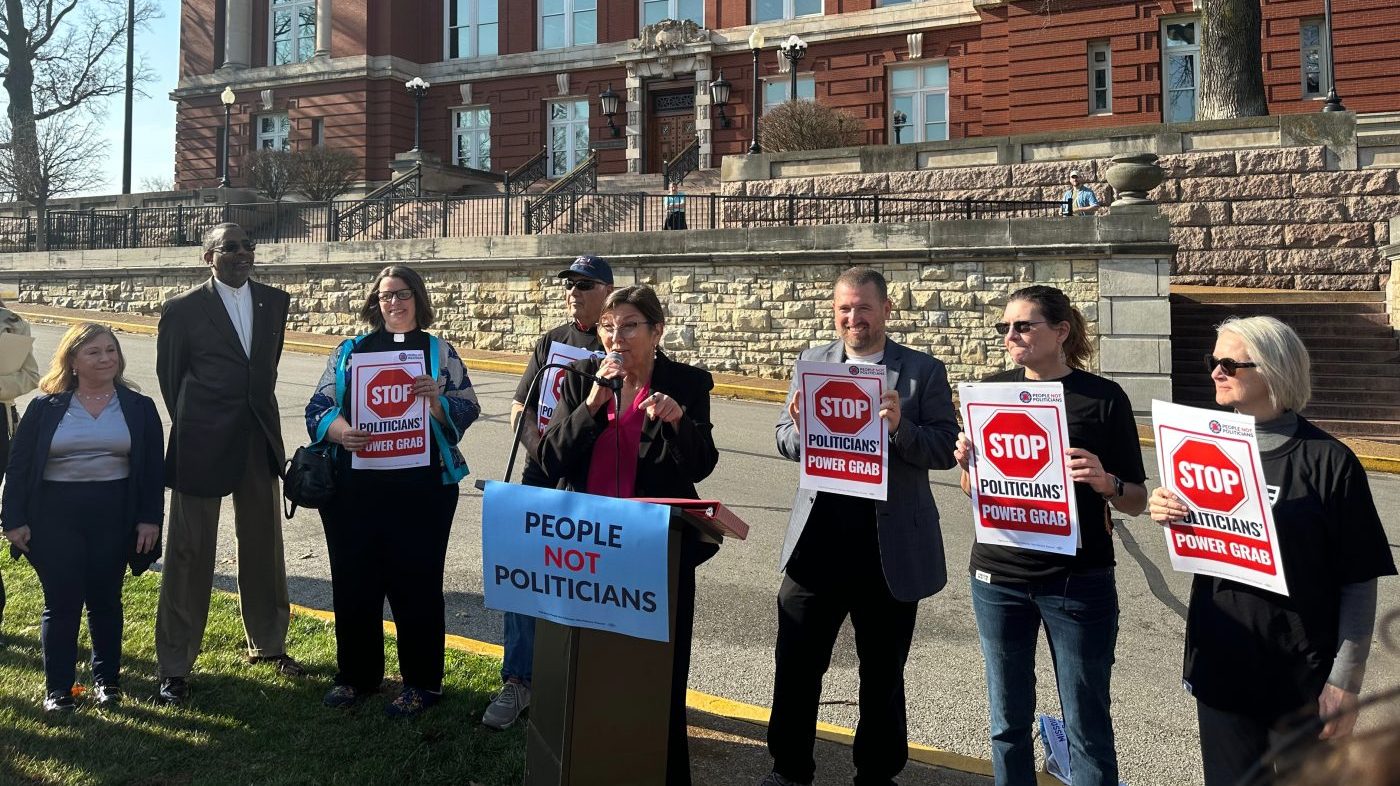
A third suit claimed that the map was automatically suspended when voters gathered enough signatures last December to force a referendum on the redistricting law. The court rejected this argument, with Judge Ginger Gooch noting that the state constitution does not explicitly provide for an automatic suspension upon the filing of a referendum petition. “Had the drafters intended a referendum petition filing to automatically suspend any act of the General Assembly at issue in the referendum petition, they would have so stated,” Gooch wrote.
The latest ruling follows a previous 4-3 decision in March, in which the same court affirmed that state lawmakers had the authority to redraw districts mid-decade—a procedural ruling that did not address the map's design. That earlier case set the stage for the current map to take effect.
Missouri's map is part of a larger Republican strategy to lock in gains in the House, particularly in states where the party controls the redistricting process. The move has drawn criticism from Democrats and voting rights advocates, who argue that such gerrymandering undermines fair representation. The Supreme Court's recent rulings on voting rights, including a decision that critics say gutted key provisions of the Voting Rights Act, have limited federal oversight of such maps.
With the midterms approaching, the new map is expected to give Republicans a significant edge in Missouri's congressional delegation, potentially flipping a seat that had been held by Democrats. The decision also highlights the ongoing national debate over redistricting and the balance of power between state legislatures and the courts.