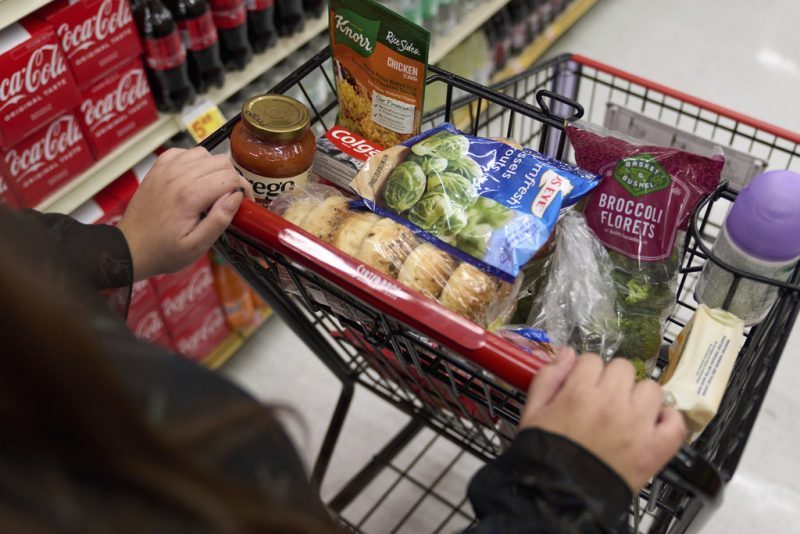
Starting October 1, the Supplemental Nutrition Assistance Program (SNAP) will implement updated benefit amounts and income eligibility rules for the roughly 37 million Americans who rely on the program to buy groceries. The annual cost-of-living adjustment (COLA) will nudge maximum allotments upward in most states, but not all recipients will see an increase.
The U.S. Department of Agriculture, which administers SNAP, adjusts benefits each year to reflect changes in the price of food. This year’s adjustment is modest, with maximum monthly benefits rising by about 2.7% in the 48 contiguous states and Washington, D.C. That aligns with the latest inflation data from the Bureau of Labor Statistics, which shows food-at-home prices up 2.7% year-over-year, while overall inflation sits at 3.4%.
What’s Changing for Recipients
For a family of four in the lower 48 states, the maximum monthly benefit will increase from $994 to $1,023. Individual recipients will see their maximum rise from $298 to $306. The chart below shows the new maximums for households in the contiguous U.S. and D.C.:
- 1 person: $306 (up from $298)
- 2 people: $562 (up from $546)
- 3 people: $808 (up from $785)
- 4 people: $1,023 (up from $994)
- 5 people: $1,217 (up from $1,183)
- 6 people: $1,463 (up from $1,421)
- 7 people: $1,616 (up from $1,571)
- 8 people: $1,841 (up from $1,789)
- Each additional person: $225 (up from $218)
Alaska, Hawaii, Guam, and the U.S. Virgin Islands have higher maximums because of the elevated cost of groceries in those regions. For example, a family of four in rural Alaska can receive up to $2,027 per month starting in October. However, Hawaii is the only state where benefits are actually decreasing: a household of four there will see its maximum drop to $1,655.
Income Limits Also Shift
Along with benefit amounts, the program’s income eligibility thresholds are being updated. Generally, a household qualifies for SNAP if its gross monthly income is at or below 130% of the federal poverty level. Starting in October, that means $1,729 for an individual and $3,575 for a family of four in the 48 states and D.C. The net income limits—after certain deductions—are lower: $1,330 for an individual and $2,750 for a family of four.
These figures vary by household size and are higher in Alaska and Hawaii, as shown in the USDA’s new guidance. Households that include an elderly or disabled member are subject to different rules, with higher income thresholds and a higher asset limit of $4,750, compared to $3,000 for most other households.
The asset limit itself remains unchanged this year. Recipients must still meet these limits to qualify for assistance.
Political and Policy Context
The annual SNAP adjustment is a routine but politically sensitive issue. SNAP benefits rise 2.9% in October, but eligibility tightens—a headline that captures the broader tension between providing a safety net and controlling federal spending. Some lawmakers have pushed for stricter work requirements and tighter eligibility, while advocates argue that benefits should keep pace with the real cost of food.
The new benefit amounts and eligibility rules will remain in effect from October 1, 2026, through September 30, 2027. Recipients will see the updated amounts on their EBT cards starting this month.
For those in states with higher costs, the adjustment may still fall short of covering actual grocery bills. The USDA’s figures are based on the Thrifty Food Plan, a market basket that is often criticized as outdated. As inflation continues to pressure household budgets, the debate over SNAP’s adequacy is likely to remain a flashpoint in Washington.