Kenyan President William Ruto on Monday broke his silence over a controversial U.S. Ebola quarantine facility, defending the project as a vital partnership between long-standing allies. His remarks come despite a court order blocking construction and growing public opposition.
Speaking Monday night, Ruto emphasized that the quarantine center at Laikipia Air Base is one of 24 similar facilities established across Kenya under a bilateral health agreement. He framed the project as part of a broader collaboration that has spanned decades, pushing back against critics who say the country’s fragile health system cannot handle foreign patients.
The controversy erupted after the U.S. announced last week that no American Ebola patient would be repatriated; instead, individuals would be quarantined at the Kenyan facility. The United States has committed $13 million to the partnership, but many Kenyans view the plan as an imposition on an already strained public health infrastructure.
On Tuesday, the High Court extended an earlier suspension of construction and the arrival of any foreign patients, following a petition from the Law Society of Kenya and the Katiba Institute. The groups argue that Kenya’s health system is too weak to manage imported cases. The case has become a flashpoint in public debate over sovereignty and health security.
Ruto, however, dismissed the opposition as reckless. “We are a responsible government. We know what we are doing,” he said, adding that the facilities would also serve Kenyans in the event of an Ebola outbreak. He urged politicians to avoid “unnecessary talk that doesn’t mean anything.”
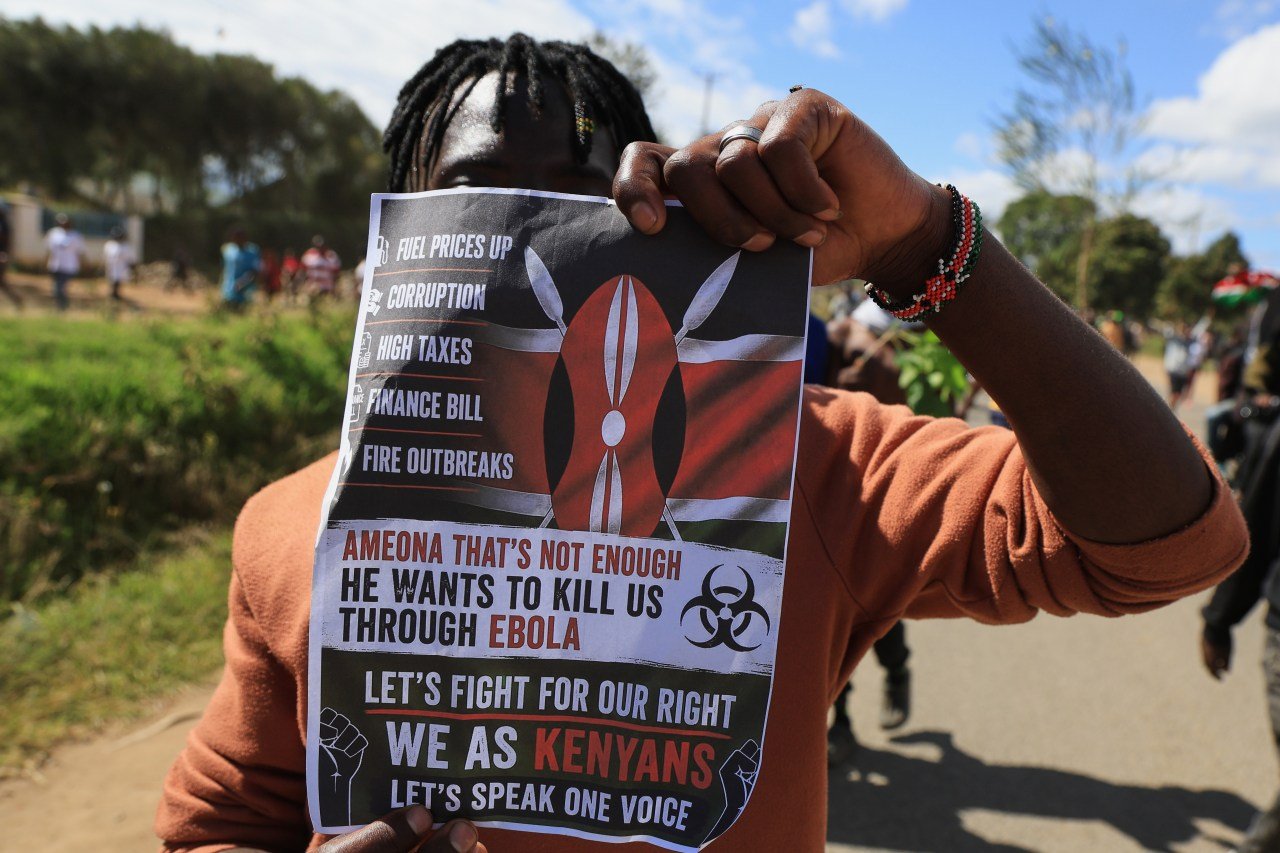
The president’s defense comes amid broader tensions over foreign military and health infrastructure in Kenya. The Laikipia facility has drawn particular scrutiny after the U.S. clarified that no American patient would be flown home, stoking fears that Kenya would become a dumping ground for contagious patients. Protests by Kenyan youth have intensified, with demonstrators calling for the project’s cancellation.
Ruto’s reference to former President Donald Trump underscores the project’s origins in the Trump administration, which prioritized border security over global health cooperation. Experts have warned that the current Ebola outbreak could become the second-largest in history, raising the stakes for containment efforts. Former CDC Director Robert Redfield has cautioned that the outbreak is accelerating, making international coordination critical.
The court is expected to hear the case again next week. Meanwhile, the U.S. has not publicly commented on the suspension, but the partnership remains a key pillar of American health diplomacy in Africa. Ruto’s administration is betting that the facilities will ultimately be seen as a net benefit, even as legal and political challenges mount.
For now, the quarantine center sits in limbo—a symbol of the delicate balance between public health cooperation and national sovereignty. As one Kenyan analyst put it, “The question isn’t whether we need Ebola preparedness. It’s who decides what that preparedness looks like.”