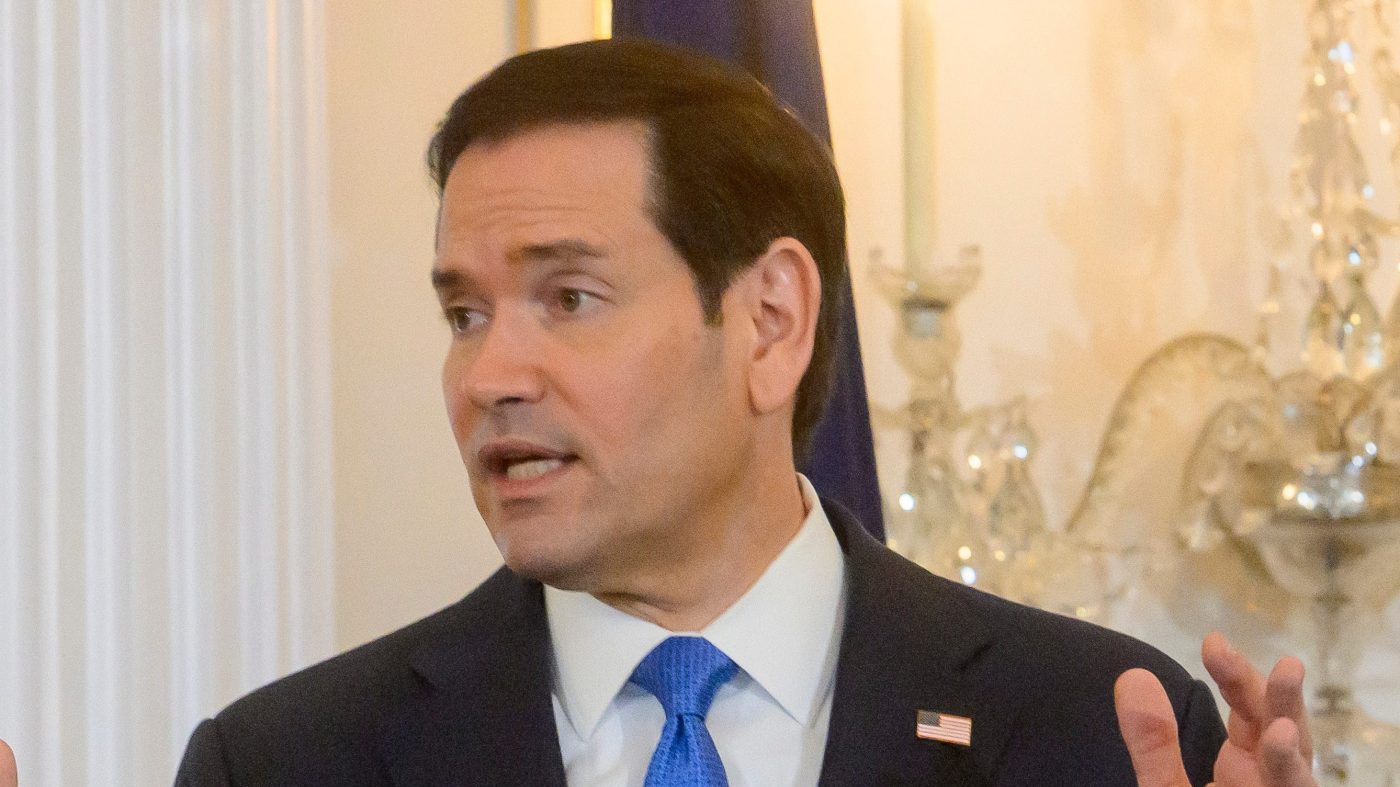
Secretary of State Marco Rubio is set to depart Tuesday for a three-day tour of the Middle East, where he will meet with key Gulf allies to rally backing for the controversial preliminary agreement with Iran and ensure safe navigation through the Strait of Hormuz.
Rubio’s itinerary includes stops in the United Arab Emirates, Kuwait, and Bahrain—nations that have faced sustained bombardment from Iran during the more than three-month conflict. The State Department said the secretary will discuss “a range of regional priorities including the memorandum of understanding with Iran, efforts to secure full and free safe transit through the Strait of Hormuz, and the importance of peace and stability in the region.”
In Bahrain, Rubio is also scheduled to meet with the Gulf Cooperation Council, a six-member bloc that also includes Saudi Arabia, Qatar, and Oman. The Trump administration has pressed GCC members to commit to a $300 billion investment fund for Iran, a central pillar of the MOU. It remains unclear whether those countries have agreed to finance reconstruction in the Islamic Republic.
Under the reported terms, Iran is consulting with Oman and other Gulf states on the “future administration” of the Strait of Hormuz, signaling Tehran’s intent to assert control and potentially levy fees for passage through the strategic waterway—which was free to navigate before the war began on Feb. 28. The MOU provides a 60-day window of toll-free transit for ships, while President Trump has threatened to impose a U.S. toll if a broader nuclear deal is not reached.
The diplomatic push comes as Vice President Vance wrapped up the first round of talks with Iranian officials under the MOU on Monday. The administration has also issued sanctions waivers allowing Iran to sell its oil openly on global markets.
However, the deal is facing mounting opposition in Washington. Many Republicans and policy experts argue the MOU grants exceptional concessions to Iran without requiring Tehran to abandon its nuclear program or submit to rigorous inspections. Critics also note that Iran appears to be getting a pass on its funding for terrorist proxies and missile production. For a deeper dive into the internal GOP revolt, see Trump Allies Revolt Over Secretive Iran MOU, Citing Risks to Nuclear Gains.
The administration’s approach has also drawn scrutiny in other policy arenas, with some questioning the broader strategy. For instance, the Rick Scott Pushes GOP Shutdown Plan Ahead of Trump Meeting reflects internal party divisions that could complicate the president’s agenda.
As Rubio seeks to lock in Gulf support, the fate of the Iran deal remains uncertain, with the 60-day toll-free window and the $300 billion investment fund hanging in the balance amid fierce debate over whether the agreement truly advances U.S. security interests.