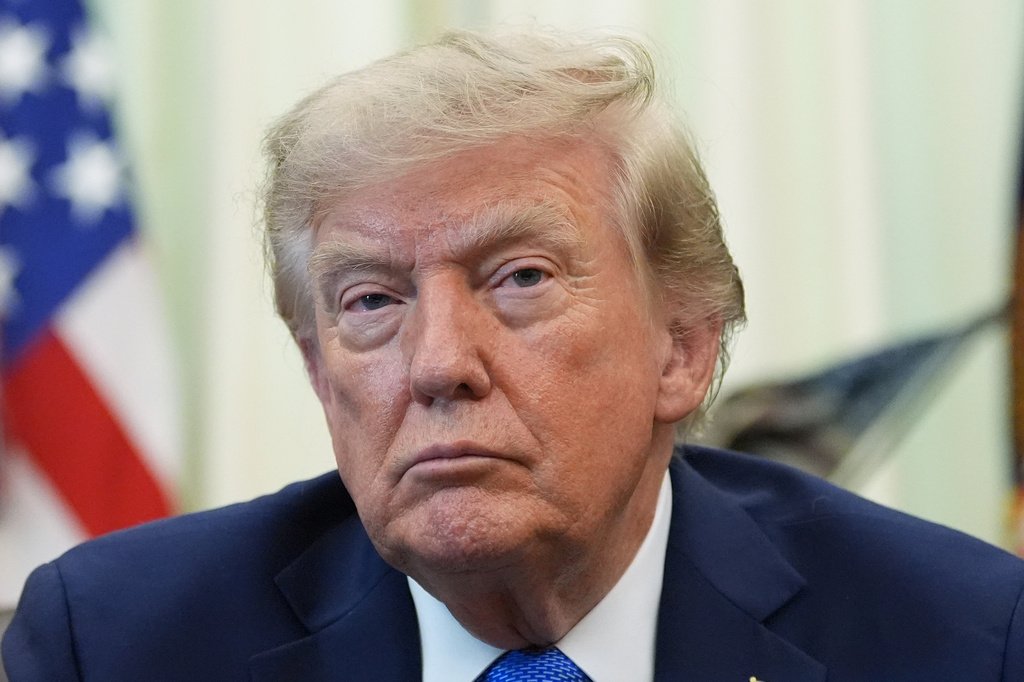
President Donald Trump's approval ratings have hit rock bottom as the war with Iran grinds into its sixth month, defying his early promises of a swift and decisive victory. A series of new polls shows the president's public support at its lowest ebb since taking office, with bipartisan criticism mounting over his handling of the conflict.
Trump's instinct-driven approach, which critics have long warned could lead to a quagmire, is now bearing out. He initially predicted the war would last just four to five weeks, boasting on March 5 that U.S. and Israeli forces were "totally demolishing the enemy far ahead of schedule." Two days later, he told reporters on Air Force One, "We're winning the war by a lot. We've decimated their whole evil empire." By March 20, he declared, "I think we won."
But the conflict has not ended. Talks have stalled, and the optimism from the White House has worn thin. An Associated Press poll reveals that 64 percent of Americans now say the war is not worth fighting. This includes 87 percent of Democrats and, notably, 37 percent of Republicans—a stark repudiation of the president's strategy, which has dragged on far longer than he predicted.
The polling numbers are grim for Trump. A CNN survey puts his approval at just 34 percent, matching his post-Jan. 6 low. An AP-NORC poll has him at 33 percent, tying his worst since 2017, and Quinnipiac finds him at 32 percent. Yet Trump continues to insist on Truth Social that "MY REAL POLL NUMBERS ARE THE HIGHEST THEY HAVE EVER BEEN."
Despite the president's claims, Republicans facing reelection are increasingly worried. The political environment is toxic, and even if Trump believes his own spin, the midterms are approaching. Republican pollster Kristen Soltis Anderson told the New York Times that the GOP's best hope is that Democrats lack a crisp message beyond "Trump is bad." But she added, "if the environment truly stays this grim, that may be enough."
Trump now faces a critical choice: escalate to force a deal or cut his losses and withdraw. He has repeatedly threatened to bomb Iran "back to the Stone Age," but his credibility is eroding both at home and abroad. The administration's mixed signals—alternating between bombing and diplomacy—have left Tehran and the American public uncertain about U.S. strategy.
If negotiations collapse, Trump could still inflict enough pain to bring Iran to the table, but that would require a coherent policy he has yet to demonstrate. Alternatively, he could declare victory and pull out, but few would believe him, even if he shouts it in all caps on social media. The American people have seen enough of his empty promises.
The president's impulsive style, as described by New York Times correspondent Peter Baker as "the most impulsive president of modern times," has led him into a war with no clear exit. As the midterms loom, the clock is ticking. Trump must decide whether to double down or disengage, but the longer he dithers, the more his political capital erodes.