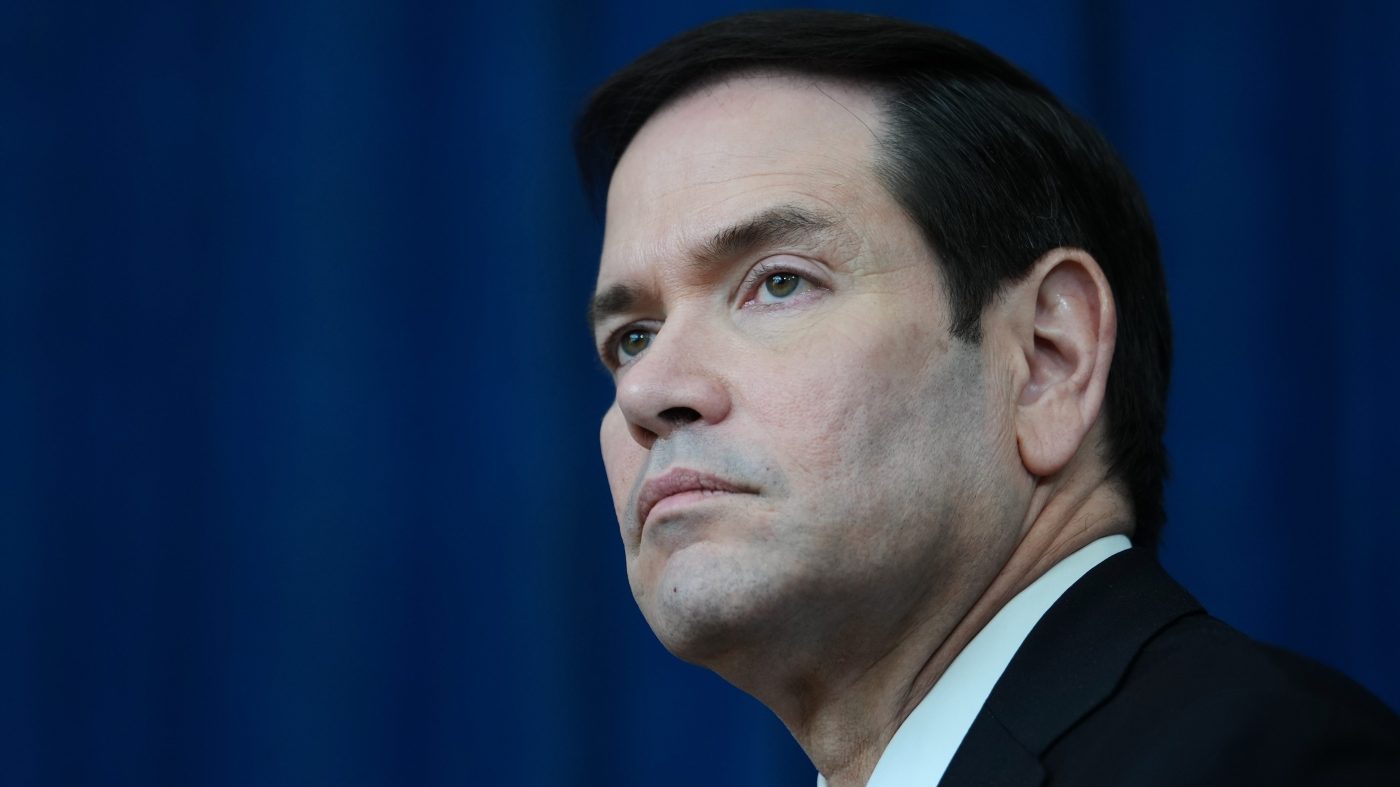
Secretary of State Marco Rubio chaired the inaugural meeting of the Economic Diplomacy Action Group (EDAG) on Wednesday, a panel first established under the Biden administration two years ago. The session marks a renewed push to align US economic tools with foreign policy priorities, with a sharp focus on bolstering American competitiveness in artificial intelligence.
The committee, composed of senior leaders from across the federal government, aims to "shape the contours and focus of U.S. economic statecraft to advance U.S. foreign policy priorities," a State Department official told The Hill. The official emphasized that the group will work to "coordinate and leverage the full range of U.S. government programs and capacity-building mechanisms" to create favorable economic conditions for American businesses and workers.
Attendees included representatives from the State, Commerce, Energy, Agriculture, Defense, and Treasury departments, as well as the U.S. Trade Representative, the Export-Import Bank, the Development Finance Corporation, the U.S. Trade and Development Agency, the Small Business Administration, the Millennium Challenge Corporation, and the White House Office of Science and Technology Policy.
Rubio’s involvement with the concept predates the Biden administration. He co-sponsored the Championing American Business through Diplomacy Act of 2019, which laid the groundwork for EDAG. That legislation aimed to "bolster U.S. commercial competitiveness by strengthening U.S. government support of U.S. private sector interests internationally," according to the State Department. Former President Joe Biden formalized the group via a presidential memorandum in June 2024, designating the secretary of State as its chair.
This meeting is just the latest in a series of high-profile roles Rubio has taken on since President Donald Trump returned to the White House. Rubio also serves as acting national security advisor, making him the first secretary of State to hold both positions since Henry Kissinger in 1973. Trump previously tapped Rubio as acting administrator of the U.S. Agency for International Development (USAID) before the agency was effectively shuttered in 2025, and as acting archivist at the National Archives and Records Administration after the previous archivist was fired—though Rubio left that role in February.
The EDAG’s launch comes amid broader economic tensions, including ongoing debates over trade policy and global security. For example, Trump’s demands that Gulf states pay for Hormuz protection have drawn sharp responses from Iran, while the administration’s reinstatement of a Strait of Hormuz blockade with a 20% shipping levy has rattled global markets.
Rubio’s diplomatic portfolio has also extended to international institutions. He recently launched a global campaign to dismantle the International Criminal Court, promising a "brick by brick" approach. The EDAG meeting underscores his broader strategy to use economic leverage as a cornerstone of U.S. foreign policy.
The group’s work will be critical as the administration seeks to attract foreign investment, create domestic jobs, and assert American leadership in cutting-edge technologies like AI. The State Department official said the EDAG will enable "economic conditions and opportunities that support U.S. companies, create jobs for American workers, and attract investment into the United States."