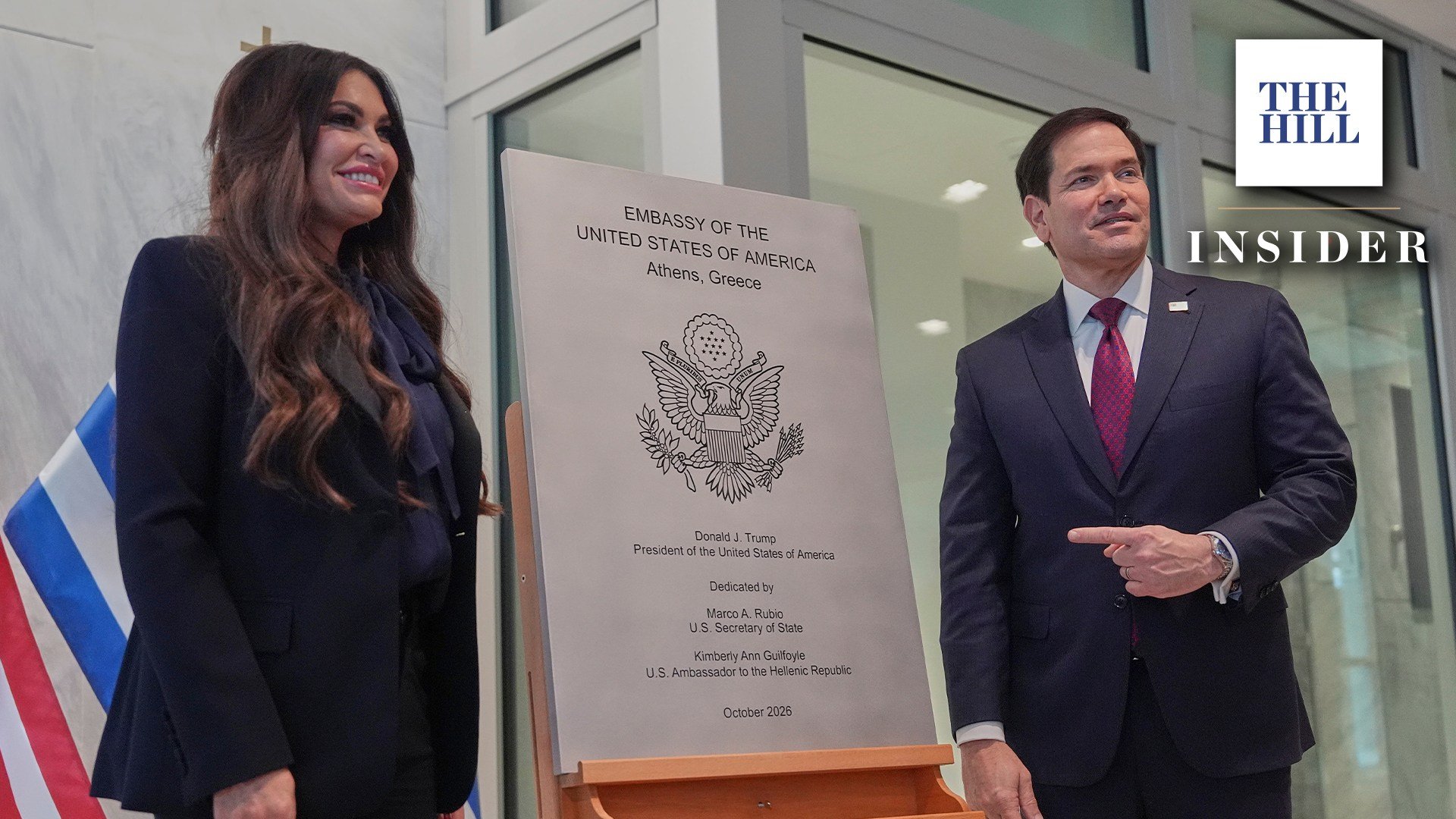
Two senior figures from the Trump administration touched down in Greece this week, and their visits could hardly have produced more divergent headlines. Secretary of State Marco Rubio used the trip to advance traditional diplomatic priorities, while U.S. Ambassador to Greece Kimberly Guilfoyle found herself at the center of a fresh ethics controversy. The juxtaposition offers a stark window into the dual nature of the Trump era: policy momentum on one track, scandal on the other.
Rubio's schedule in Athens centered on reinforcing NATO's southeastern flank and discussing energy security in the Eastern Mediterranean. His meetings with Greek officials emphasized defense cooperation and the importance of stability in a region increasingly contested by Russian and Chinese influence. For a secretary of state navigating the final stretch of a turbulent presidency, the message was one of continuity and institutional heft.
Guilfoyle, by contrast, faced questions about her fundraising tactics and political activities while serving as ambassador. Reports this week detailed her outreach to Republican donors, including a plea for a $100,000 contribution that was exposed in text messages. The cash-for-access scandal has deepened as allies face new scrutiny, raising concerns about the line between official duties and personal political ambitions.
Two Faces of the Same Administration
The contrast between Rubio and Guilfoyle is not merely personal; it reflects a broader tension within the administration. On one hand, officials like Rubio work to project traditional American leadership abroad. On the other, figures like Guilfoyle blur the boundaries between public service and partisan advantage, a pattern that has defined much of the Trump presidency.
This split is visible in the administration's approach to domestic and foreign policy. While Rubio's diplomatic efforts aim to reassure allies, the president's own rhetoric often undercuts those assurances. Recent comments targeting Somali residents in Minnesota and the press's handling of his Iran remarks have kept allies and critics alike guessing about the administration's true intentions.
The Political Fallout
For Republicans, the Guilfoyle story is an unwelcome distraction as the party prepares for the next election cycle. Her role as a prominent fundraiser and surrogate had already raised eyebrows, but the latest revelations have intensified calls for transparency. Some party insiders worry that such scandals could erode the administration's credibility on issues like the bipartisan wealth-building initiative that has drawn praise across the aisle.
Meanwhile, Rubio's steady performance offers a counter-narrative of competence. His ability to navigate sensitive geopolitical terrain without generating negative headlines has made him a valuable asset, even as the president's own controversies dominate the news cycle. The contrast was on full display in Greece, where Rubio's meetings were conducted with minimal drama while Guilfoyle's presence sparked a media frenzy.
The administration's defenders argue that the focus on Guilfoyle is overblown and that her fundraising is protected political speech. They point to her work in Athens as evidence of her commitment to the ambassador role. But critics see a pattern of ethics violations and conflicts of interest that undermines the integrity of U.S. diplomacy.
A Defining Moment
This week's events in Greece may well serve as a metaphor for the entire Trump era. On one side, there is the pursuit of traditional statecraft, embodied by Rubio's measured diplomacy. On the other, there is the chaos of personal ambition and transactional politics, exemplified by Guilfoyle's troubles. The question for voters is which of these forces will ultimately define the administration's legacy.
As the president's term winds down, the Republican Party faces a choice: embrace the institutionalists who keep the government running or double down on the populist, scandal-prone figures who have energized the base but alienated moderates. The split in Greece suggests that both impulses are alive and well, and the battle for the party's future is far from over.
For now, Rubio and Guilfoyle's competing headlines offer a real-time case study in the contradictions of the Trump presidency. Whether the administration can reconcile these tensions or will remain fractured until the end is a question that will shape not only its final months but also the political landscape for years to come.