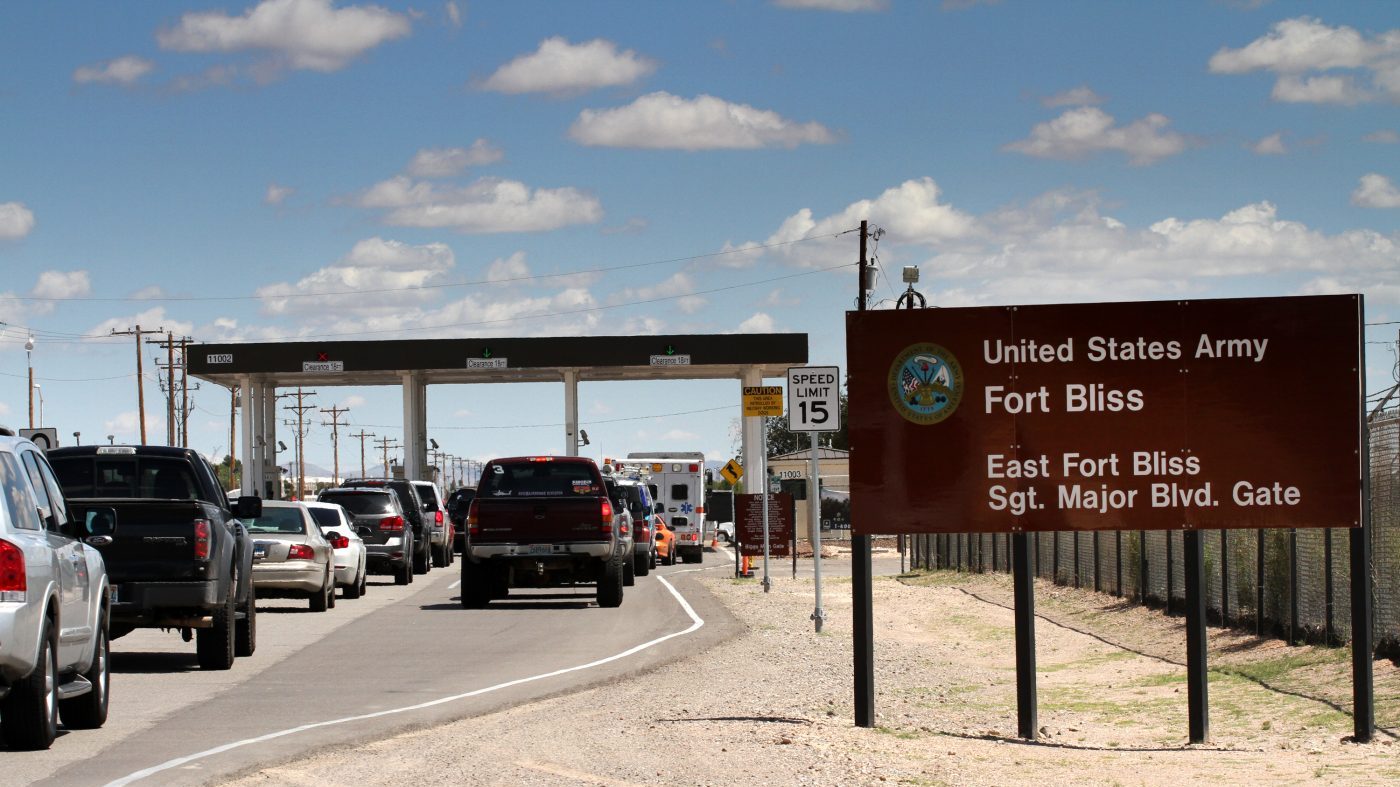
Human Rights Watch and the American Civil Liberties Union released a scathing report Wednesday accusing the U.S. Army-run immigration detention camp at Fort Bliss, Texas, of systematic abuse, including beatings, medical neglect, and what they describe as enforced disappearance.
The 84-page report, titled “‘You’re Only Getting Out Deported or Dead’: Abusive U.S. Immigration Detention at Ft. Bliss,” focuses on conditions at Camp East Montana. It alleges migrants there faced “cruel, degrading and inhuman treatment, excessive use of force including one extrajudicial killing, life-threatening medical neglect, barriers to legal representation, and coercive third-country removals.”
A Department of Homeland Security spokesperson rejected the findings outright, calling them “categorically false.” The spokesperson said ICE facilities undergo regular audits to ensure compliance with national detention standards, adding, “No detainees are being beaten or abused. Ensuring the safety, security, and well-being of individuals in our custody is a top priority at ICE.”
The report is based on interviews with 80 individuals, 71 of whom said they were held at Camp East Montana between October 2025 and June 2026. Over 60 detainees reported being arrested despite presenting valid documentation proving legal entry into the U.S., often with what they described as excessive force. Many said they felt they were being “kidnapped” by federal immigration enforcement officers.
Detainees described masked guards in black entering cramped pods designed for 72 people. Germán L., a detainee, said, “If one person speaks up for themselves, they take it out on all of us … just for insisting on getting your rights, food, or medicine when you don’t get it.” Ricardo H., a Cuban national, alleged that guards beat him after he went 20 hours without food. He said he kicked a metal door “out of desperation” and was then swarmed by 15 officers, thrown to the ground, and stomped on. “I still have severe pain in my ear and in my right collarbone,” he said. “At 31 years old, I have never seen death until that day. I thought they were going to kill me.”
The report also alleges detainees were denied access to legal counsel and that relatives could not find their loved ones in ICE databases, a practice the groups say amounts to enforced disappearance. “Enforced disappearance is a continuous violation that begins at the moment of deprivation of liberty and persists until the state acknowledges the detention and provides reliable information about the person’s whereabouts and legal status,” the report states.
Conditions at the camp are described as overcrowded and filthy, with “bathrooms covered in feces and urine, and living quarters flooded with dirty water and dust.” Detainees developed infections due to lack of soap and inadequate ventilation. Ismael M., a Honduran man, told investigators he experienced suicidal thoughts. “I sometimes look at my bed sheets, and I wonder if it would be easier to hang myself instead of trying to survive this torture,” he said. “I feel forgotten. People have died here and no one cares. I’ve gone a month without seeing the sun.”
Angélica César, an Aryeh Neier Fellow at Human Rights Watch and the ACLU, called Camp East Montana “a human rights disaster.” She urged the U.S. government to “shut it down, conduct independent investigations into all abuses and deaths in custody, and put an end to mass deportations and mandatory immigration detention.”
The report comes amid broader scrutiny of immigration enforcement policies and detention conditions. In a separate case, environmental groups have sued the administration over habitat rollbacks, and human rights groups have challenged ICC sanctions. The Fort Bliss allegations also intersect with ongoing debates about TPS terminations and their humanitarian impact.