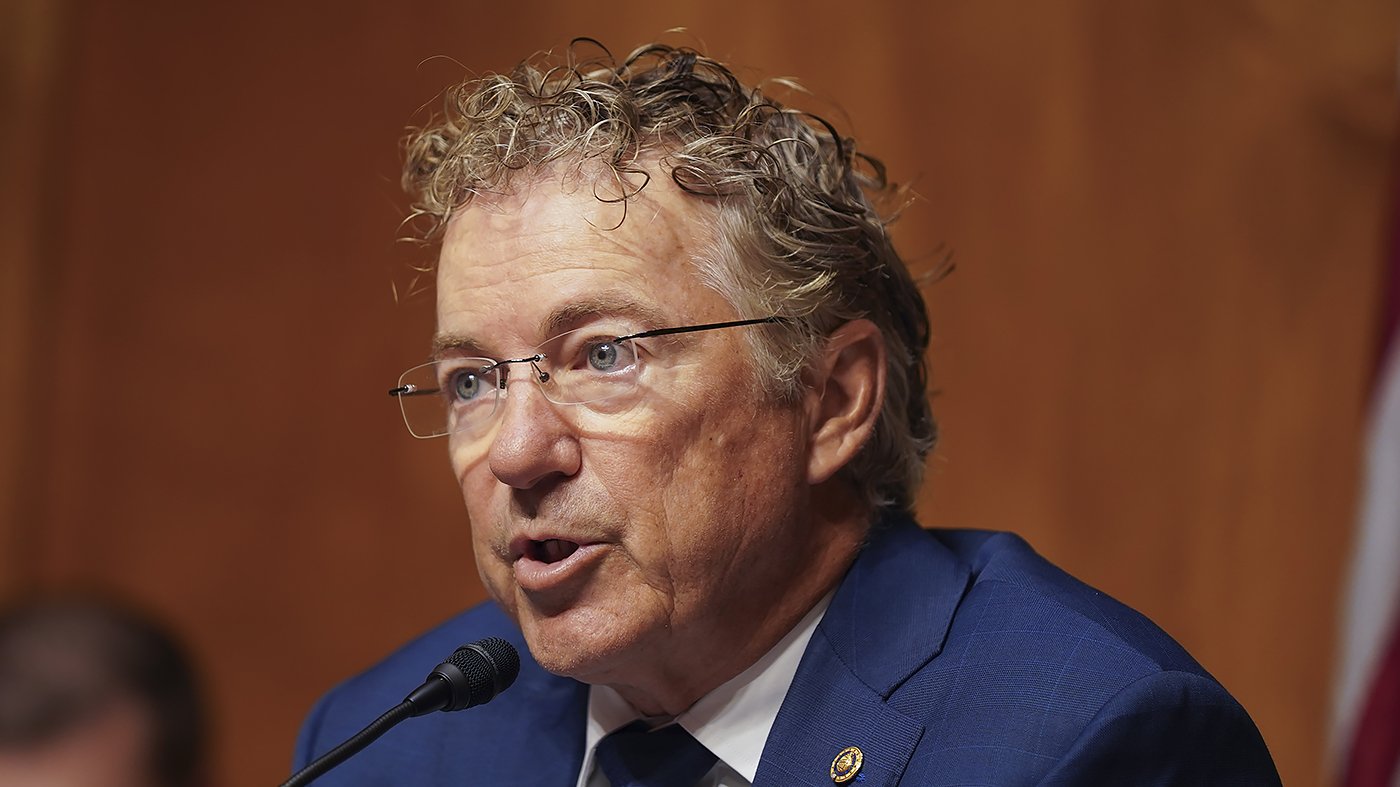
Sen. Rand Paul (R-Ky.) has undergone a notable political transformation, emerging as an unlikely but valuable ally for President Trump in the Senate as tensions between Trump and Republican leadership intensify. The Kentucky libertarian, once a frequent thorn in the president's side, now finds himself in Trump's inner circle, a shift that political observers attribute to both necessity and political calculation.
Paul's evolution follows the May primary defeat of Rep. Thomas Massie (R-Ky.), a fellow libertarian-leaning lawmaker who lost to a Trump-backed challenger. Despite Paul's public support for Massie in that race, the senator has since pivoted toward cooperation with the president. Trump acknowledged the shift in a Truth Social post Tuesday evening, writing, "THE MASSIE MASSACRE in the Great Commonwealth of Kentucky has had a really great impact on Senator Rand Paul who will be running in two years. He's been terrific, lately!" The post came ahead of Paul's contentious Senate hearing with former White House chief medical adviser Dr. Anthony Fauci, where Fauci invoked the Fifth Amendment more than 100 times.

Paul has seized on the Fauci hearing to push for prosecution, echoing calls from Rep. James Comer (R-Ky.) that a Biden pardon would not shield Fauci from testimony. Paul told reporters he had not coordinated with the White House before the hearing but added he "always loves getting praise from the president."
The senator has also taken a lead role on a $70 billion immigration enforcement funding bill, standing beside Trump at its signing ceremony last month. He has backed the president's push for the Safeguard American Voter Eligibility (SAVE America) Act and supported budget reconciliation to fund the Iran war, though he has abstained from some war powers votes, citing his opposition to costly conflicts.
This thaw marks a sharp reversal from last year, when Trump called Paul "a nasty little guy" after the senator criticized U.S. strikes on alleged drug boats in the Caribbean. Now, with Trump increasingly at odds with Senate Republicans on multiple fronts, the president sees value in cultivating Paul. "At the end of the day, the Senate is not overly in the president's camp even with the majority," one Republican strategist told The World Signal. "Every senator and every vote counts. I think the president is smart enough to see that developing that relationship rather than rubbing it the wrong way is probably helpful to his cause and his agenda."
For Paul, the alliance offers political benefits as he eyes a potential 2028 presidential run. He told CBS News earlier this year he will decide after the midterms. "He's smart enough to realize that having the president in your corner makes that a lot easier," the strategist added. However, the relationship remains transactional, with both men pursuing their own agendas. Despite the improved rapport, Paul and Trump still diverge on key issues, particularly foreign policy. Last week, Paul said the Iran war has not been a success and that the U.S. is worse off, signaling he may continue to push back on military actions if given the chance.
Sen. Tim Kaine (D-Va.), who has partnered with Paul on resolutions to limit Trump's war powers, said Paul remains consistent. "He's been very, very consistent on this stuff, which is real helpful," Kaine said. Paul missed the last such vote, but Kaine still views him as a reliable ally on curbing executive war authority.
Paul is among several Republicans who have mended ties with Trump after rocky starts. Secretary of State Marco Rubio, Sen. Ted Cruz (R-Texas), and the late Sen. Lindsey Graham (R-S.C.) all traded barbs with Trump in 2016 but later became close confidantes. Trump eulogized Graham at his funeral Tuesday, calling him "a beloved friend." A former Trump White House official noted, "No one said more awful things about Trump than Lindsey did. But eventually they worked it out. I don't see Massie — or say, Pence, for that matter — coming back into the fold. But it isn't impossible."
The former official cautioned that Trump's relationships are "always fluid," with no one permanently in or out. "If Massie did or said the right things, or if for some reason Trump determined that he needed Massie for something, that relationship could change in an instant."