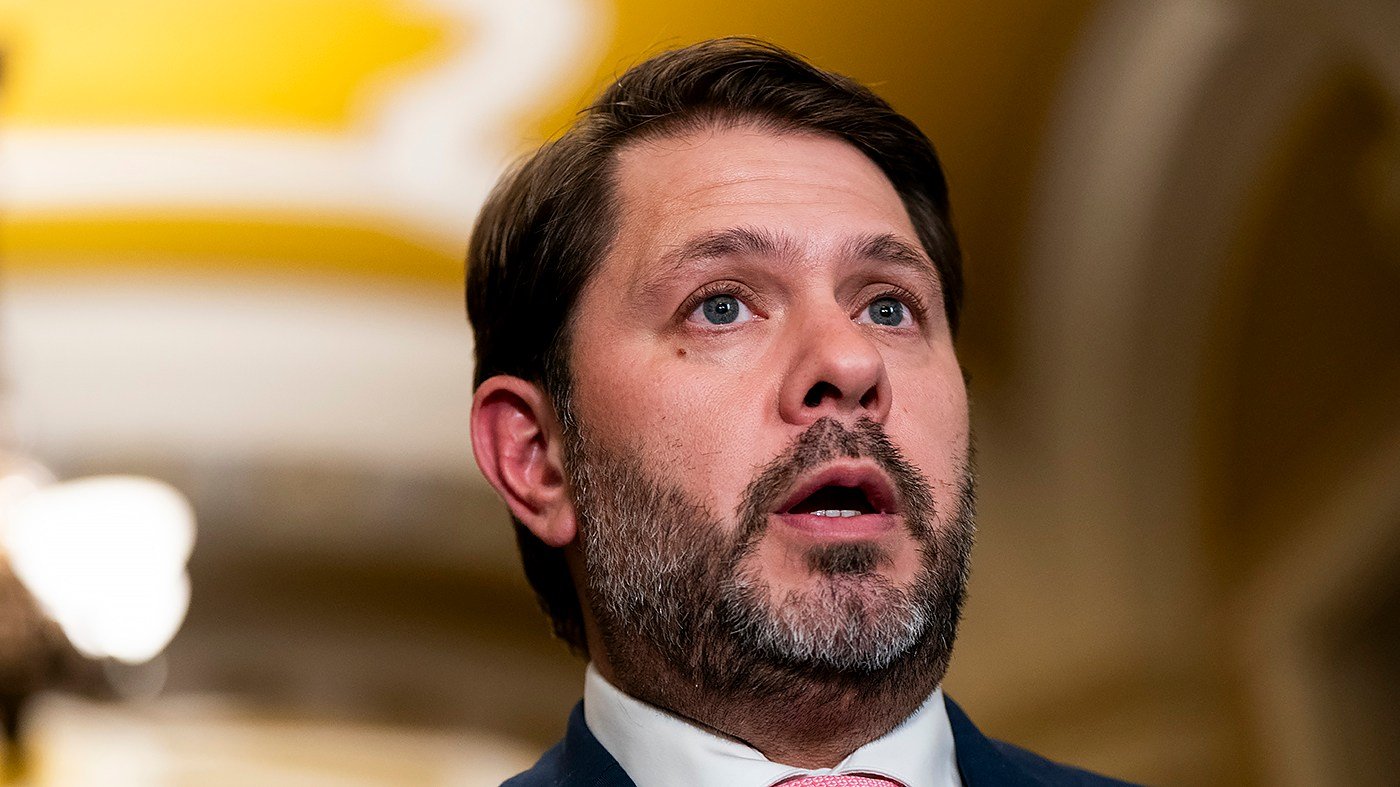
Sen. Ruben Gallego (D-Ariz.) intensified his push for stricter artificial intelligence regulation on Sunday, likening the technology to a runaway creation as top tech executives called for a pause in its rapid advancement.
Appearing on CNN's "State of the Union," Gallego told host Jake Tapper that AI represents a fundamental break from earlier technological innovations because it possesses a level of autonomy that could have catastrophic consequences.

"This isn't previous tech. Previous tech could not make a decision to kill us, right? When we turned on the internet, it did not have autonomy, right?" Gallego said. "When we created a nuclear weapon, the nuclear weapon did not have the decision-making power to drop a nuclear weapon. AI has the capability and will have the capability to make a decision like that."
The senator, a member of the Armed Services Committee, drew a stark literary parallel to underscore the urgency. "This is more akin to Dr. Frankenstein telling us, 'The monster is loose. Help me stop the monster,'" he added.
Gallego's remarks come amid a weekend of heightened alarm from some of the technology sector's most prominent figures. Anthropic CEO Dario Amodei published a blog post on Saturday arguing that AI development must be deliberately slowed to allow for the implementation of safety measures. He was backed by OpenAI's Sam Altman and Tesla's Elon Musk, both of whom have previously voiced concerns about the unchecked growth of AI capabilities.
"We must slow the pace at which we improve the capabilities of AI models," Amodei wrote. "Progress will still seem fast, and we must make wise use of the time we gain."
The Anthropic chief recommended that AI companies adopt "pacing" mechanisms to regulate the speed of model development, warning that without such brakes, the consequences could be dire.
The debate over AI regulation has intensified in recent years as the technology's reach has expanded into everything from healthcare to defense. Lawmakers in Washington have struggled to keep pace, with some calling for a federal AI commission and others pushing for sector-specific rules.
Gallego's comments reflect a growing bipartisan concern about the potential risks, though consensus on how to proceed remains elusive. The senator's focus on autonomy echoes warnings from researchers who argue that advanced AI systems could act in ways their creators did not intend.
As the Trump administration convenes industry leaders on various tech policy fronts, the AI regulation debate is likely to become a central flashpoint in the coming months. Some Republicans have cautioned against overregulation, while Democrats like Gallego are urging swift action.
The push for a slowdown also comes as House GOP leaders face a government shutdown deadline, complicating the legislative calendar. Still, Gallego insisted that AI oversight cannot wait.
"We're not talking about a tool that just writes essays or makes art," he said. "We're talking about a system that could make decisions with life-or-death implications. That demands a response."