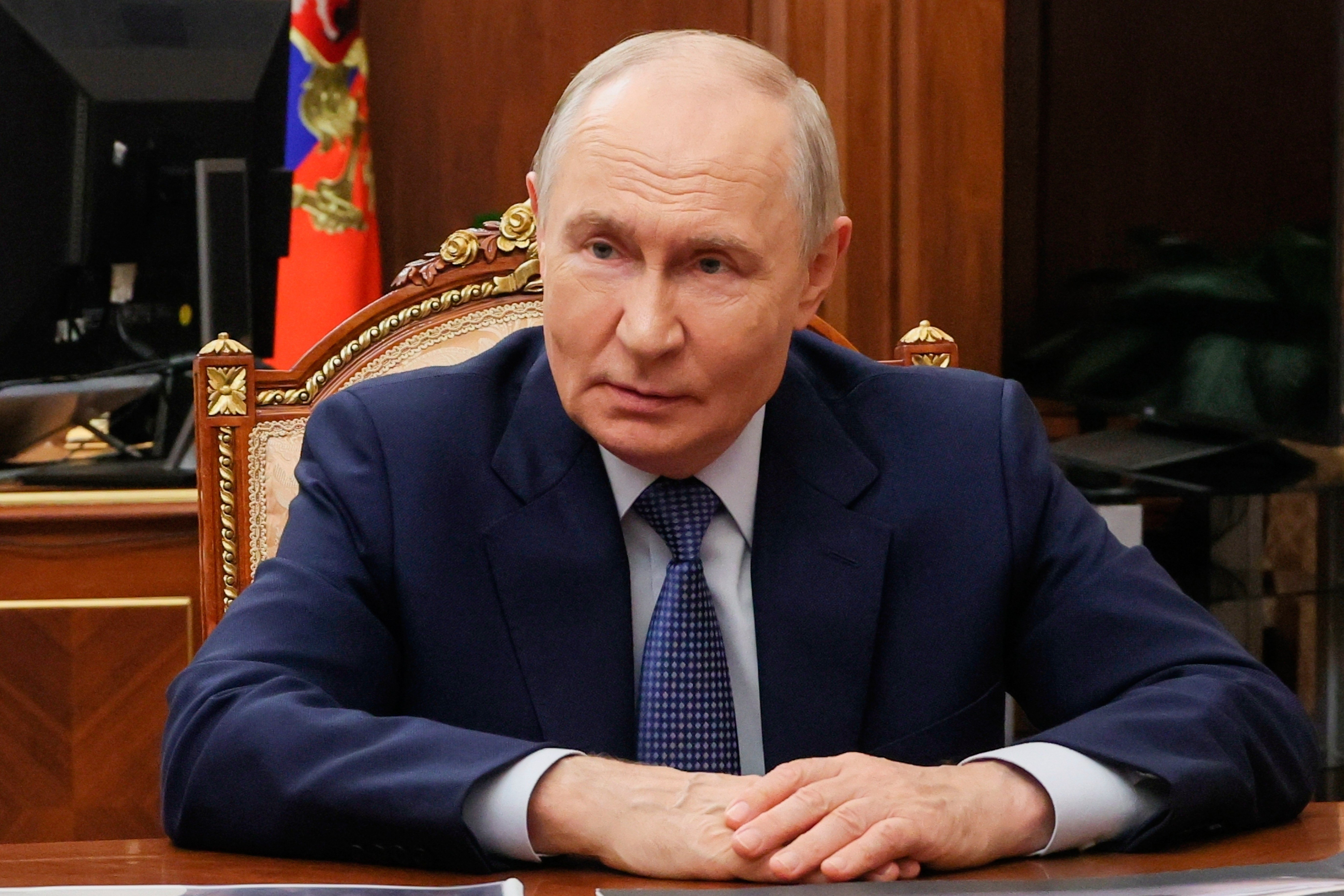
Russian President Vladimir Putin has never explicitly threatened to use nuclear weapons to end the war in Ukraine, but his actions have consistently signaled that Moscow might be willing to cross that threshold if needed. In recent months, Putin has approved an updated nuclear doctrine that appears to lower Russia's threshold for using such weapons, emphasized Moscow's readiness to deploy nuclear arms in support of allies like Belarus, and moved nuclear weapons onto Belarusian territory. He has also authorized major tactical nuclear drills as Ukrainian drone attacks have intensified.
Several of Putin's allies have been less restrained in their rhetoric. Dmitry Medvedev, a former president and current deputy chairman of Russia's Security Council, has repeatedly threatened nuclear use. In July 2023, responding to a Ukrainian counteroffensive, Medvedev warned that if the offensive succeeded, Russia would have to use nuclear weapons. Earlier this year, as Russian forces struggled and Ukrainian missiles struck Moscow, he stated, "Our patience is not limitless. This ultimate [nuclear option] remains a last resort. Today we are a few steps from it."
International leaders, including Indian Prime Minister Narendra Modi and Chinese President Xi Jinping, have privately urged Putin against nuclear escalation. Reports indicate that Modi's outreach to Putin in 2022 and again in 2024 helped dissuade the Russian leader from resorting to nuclear weapons. A Polish foreign ministry official confirmed in 2025 that Modi had indeed intervened in 2022. Xi also reportedly warned Putin in 2022 and 2023, though the Kremlin denied the latter. Notably, Moscow has not denied the reports about Modi's intervention.
Despite these warnings, European officials remain concerned. Finnish and French military and civilian leaders interviewed this month expressed fears that Putin might be increasingly inclined to follow through on Medvedev's threats as the war enters its fifth year with no end in sight. They are also worried about how the US might respond if Putin orders a nuclear strike. Some fear Washington might stand aside, leaving Ukraine and Europe to fend for themselves, while others worry the US could retaliate with nuclear weapons, risking rapid escalation to a strategic nuclear conflict.
However, there are strong reasons to believe Putin would hesitate to authorize a nuclear strike on Ukraine, regardless of the battlefield situation. First, Putin cannot be certain how the US would respond. A retaliatory strike on Moscow would almost certainly trigger the collapse of his regime. Second, Russia faces a second independent nuclear threat from France. France has been a staunch supporter of Ukraine and has extended its "Forward Nuclear Deterrence Initiative" to more European nations, including Finland as of mid-September. The French nuclear deterrent operates independently of the US, so Putin cannot assume that if Washington holds back, Paris would too.
French officials have made clear that Paris would not rule out a retaliatory strike against Moscow if Russia used nuclear weapons. This dual uncertainty makes it highly unlikely that Putin would order a nuclear attack, even in the most extreme scenario. Instead, Russia is likely to continue intensifying missile and drone attacks on Ukrainian civilian and military infrastructure.
While Putin may not resort to nuclear weapons, Ukraine faces an urgent need for additional defensive assets to counter Russia's relentless use of jet-powered drones and missiles. Western Europe has provided some support, but even with its own munitions running low, the US should make every effort to provide further assistance to Kyiv as it fights to preserve its freedom and independence. As Putin's broader ambitions in the region remain clear, the stakes for Ukraine and its allies have never been higher.