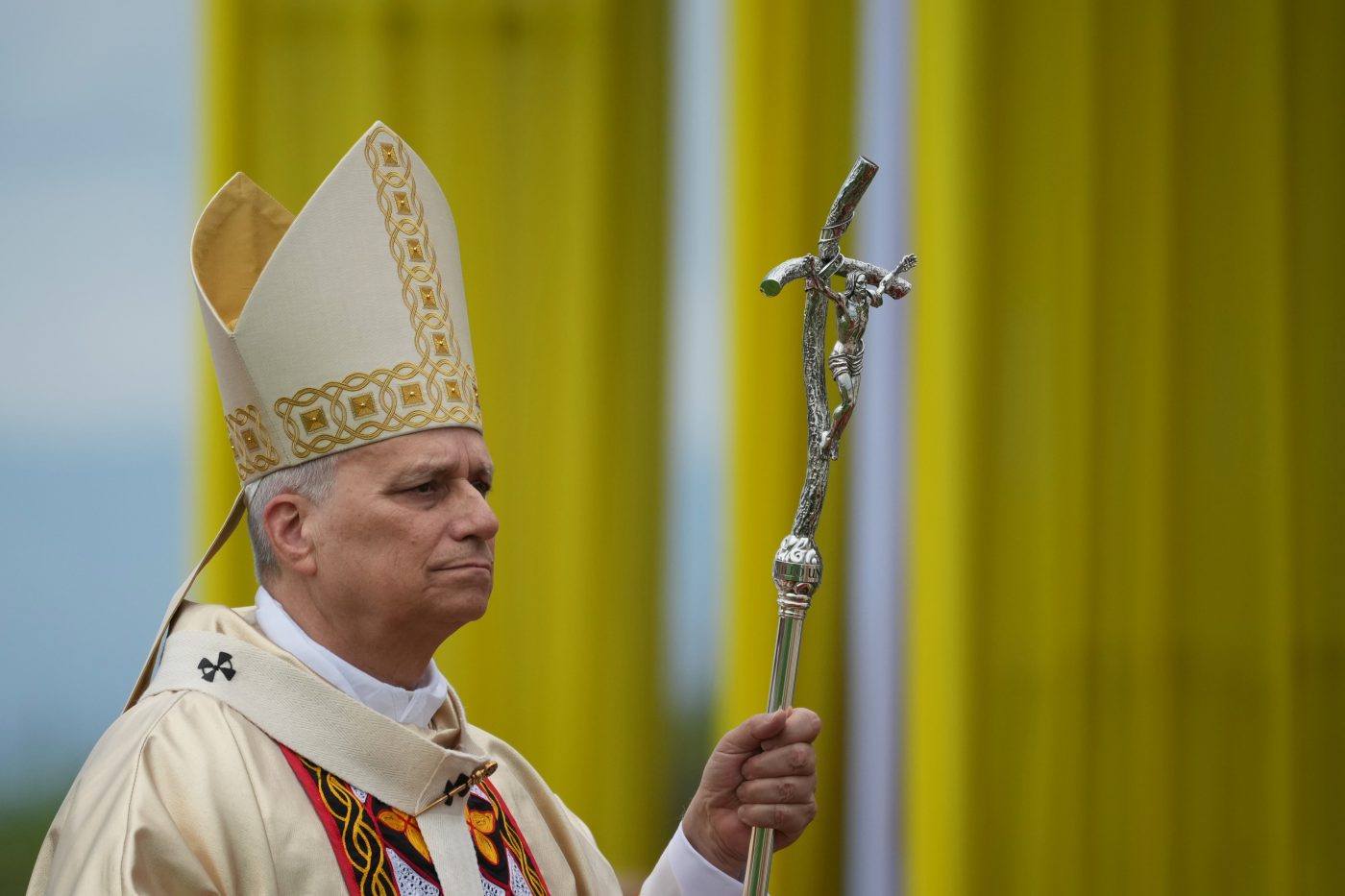
Pope Leo XIV issued a sharp condemnation of using religion for political and military purposes on Thursday, a rebuke delivered as his public feud with President Donald Trump reaches new intensity. Speaking during an apostolic visit to Cameroon, the pontiff warned against those who drag sacred matters into profane conflicts for personal gain.
"Woe to those who manipulate religion and the very name of God for their own military, economic, and political gain, dragging that which is sacred into darkness and filth," the Pope declared. While his remarks were framed within the context of advocating for peace in Cameroon's civil war, they landed squarely within an escalating transatlantic political conflict with the Trump administration.
A Direct Clash Over War and Peace
The friction stems from the Pope's repeated calls for a peaceful resolution to the ongoing U.S.-Israeli military engagement with Iran, which he has framed as a moral imperative. This stance has drawn fierce criticism from Trump and key administration officials. In a significant development, House Republicans recently blocked a war powers resolution, reinforcing the President's authority to continue the conflict without congressional constraint.
Defense Secretary Pete Hegseth has publicly invoked scripture to justify military strikes, while Trump himself posted—and later deleted—an AI-generated image depicting him in a messianic role. The President followed this with a lengthy social media post on Sunday directly attacking Pope Leo.
"Pope Leo is WEAK on Crime, and terrible for Foreign Policy," Trump wrote on Truth Social. He asserted that he does not "want a Pope who criticizes the President of the United States" and suggested the pontiff's election was orchestrated by cardinals seeking to counter his administration. The Pope had also previously expressed concern over the administration's stringent immigration enforcement, adding another layer to the dispute.
Refusal to Apologize and Calls for Disarmament
Facing criticism from allies, including Italian Prime Minister Giorgia Meloni, Trump refused to apologize on Monday. "Pope Leo said things that are wrong," the President stated. "He was very much against what I'm doing with regard to Iran, and you cannot have a nuclear Iran. Pope Leo would not be happy with the end result." Some Trump allies, like Elise Stefanik, have publicly backed the President's criticism of the pontiff's leadership style.
In response, Pope Leo said he is "not afraid" of the Trump administration. He doubled down on his peace message Wednesday in a social media post, advocating for a fundamental shift in international relations. "Let us reject the logic of violence and war, and embrace peace founded on love and justice—an unarmed peace, not based on fear, threats or weapons," he wrote. "This peace is disarming, because it is capable of resolving conflicts, opening hearts, and generating trust, empathy, and hope."
The Pope's emphasis on an "unarmed peace" presents a direct philosophical challenge to the administration's defense posture. The conflict has also spilled into domestic political debates, with figures like Governor Andy Beshear accusing Senator J.D. Vance of violating Catholic teaching in his defense of the President's actions.
As the war continues, the administration is grappling with its political and economic fallout. Vice President Kamala Harris has blamed Trump's Iran policy for surging fuel costs, labeling the conflict a "war of choice," while reports indicate Trump is seeking a scapegoat for the war's consequences, with Secretary Hegseth potentially in the line of fire.
The public spat between the White House and the Vatican underscores a deep divide over the role of moral authority in global conflict, setting the stage for continued friction as both sides refuse to yield.