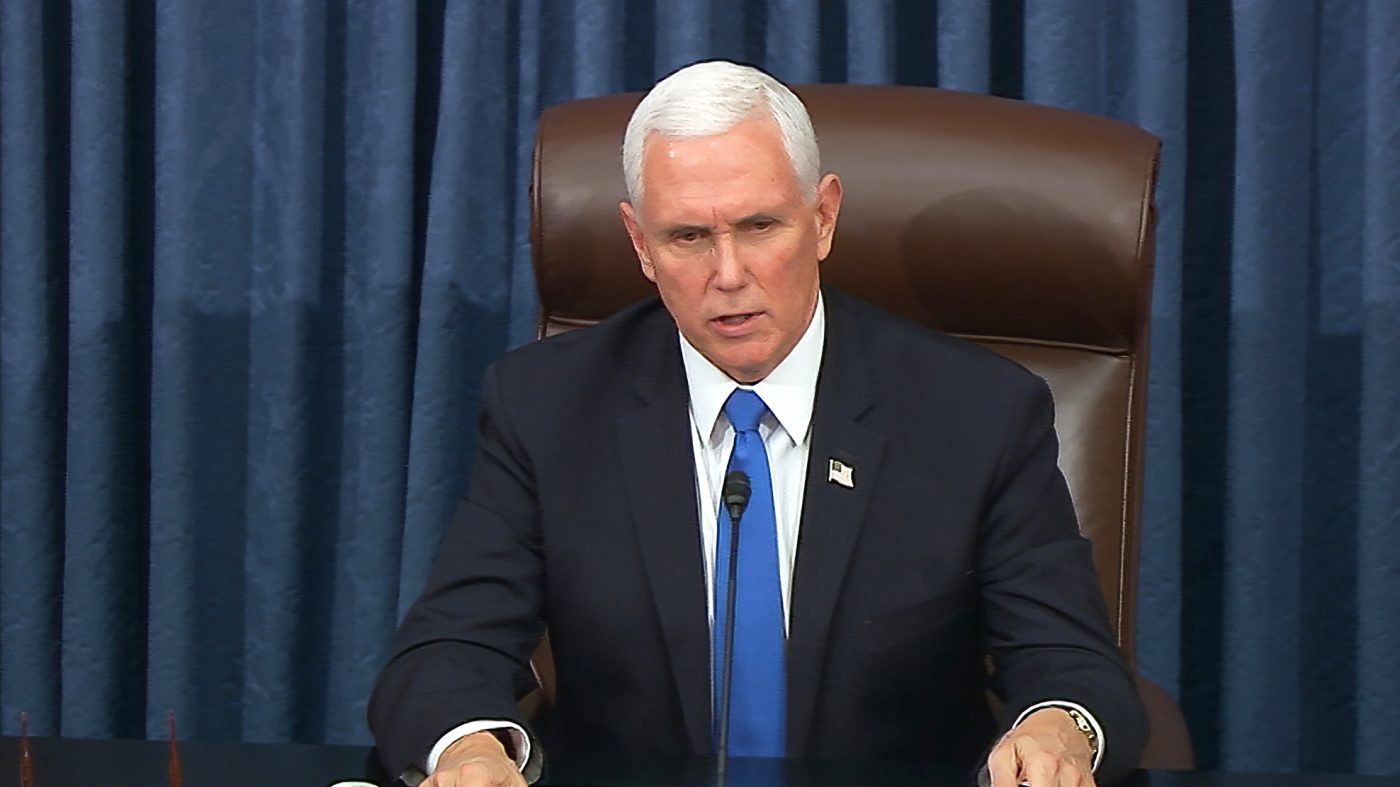
Former Vice President Mike Pence escalated his long-running feud with President Donald Trump on Sunday, accusing him of jettisoning conservative principles in favor of a populist agenda that threatens the Republican Party's core identity. In a Wall Street Journal op-ed and a subsequent appearance on CBS News's Face the Nation, Pence argued that Trump's shift represents a fundamental break from the party's traditional values.
Pence, who served as Trump's vice president from 2017 to 2021, pointed to Trump's attempt to pressure him into overturning the 2020 election results as an early indicator of what he called a "newfound populism merging with progressivism and its hostility to constitutional order." The former vice president has been a vocal critic of Trump since the January 6 Capitol riot, and he continues to urge Republicans to reassess their loyalty to the former president as the party looks toward the 2028 election cycle.
Populism vs. Conservatism
In his op-ed, Pence wrote, "Populism is progressivism in disguise. It strikes at us not from the Democratic Party but from within our own ranks, sparking a battle for the soul of the Republican Party." He contrasted this with what he described as principled conservatism, which he argued is rooted in timeless values rather than transient political instincts.
Pence highlighted a revealing comment from Trump during the 2024 campaign: "You know, people say, 'You're conservative.' I'm not conservative. You know what I am? I'm a man of common sense." According to Pence, this statement underscores Trump's lack of ideological commitment. "Mr. Trump makes a distinction between conservatism and common sense. In doing so, he reveals that his political commitments are grounded not in conservative principles, but in his instincts, which have often been conservative but increasingly aren't," Pence wrote.
Policy Reversals on Abortion, Courts, and Trade
The former vice president cataloged several policy areas where he said Trump has abandoned conservative orthodoxy. On abortion, Pence noted that Trump once championed the right to life but now claims abortion policy is "no longer the business of the federal government." On judicial appointments, Pence argued that while Trump once pushed courts in a conservative direction through smart nominations, he has since attacked many of the people and groups involved in building that legacy. On foreign policy, Pence criticized Trump's shift toward isolationism, saying he has "increasingly withdrawn" from global leadership and sought to isolate the U.S. from longtime allies.
These criticisms echo broader concerns within the GOP about the direction of the party. In a related development, a GOP strategist recently slammed Trump's endorsement of Ken Paxton as a costly blunder, highlighting internal divisions over the party's future.
A Battle for the GOP's Future
During his Face the Nation interview, Pence elaborated on the threat he sees from within the party. "There's been a rise of what I call the populist right that focuses more on what we're against than what we're for, focuses more on grievance than a positive conservative agenda," he said. He warned that this faction would embrace isolationism abroad, big government and protectionism at home, and marginalize the right to life.
Pence's critique comes as the GOP grapples with its identity ahead of the 2024 elections and beyond. His warnings about populism's corrosive effect on conservative principles have resonated with some traditionalists, but they face an uphill battle against Trump's enduring popularity among the party's base. The former vice president's stance on January 6 remains a flashpoint, as he has accused Trump allies of rewriting the history of that day.
As the Republican Party heads into the fall campaigns and prepares for 2028, Pence's call for a return to conservative fundamentals represents a significant challenge to the populist wave that has reshaped American politics. Whether his message gains traction will depend on the party's willingness to look beyond Trump's influence and embrace a more traditional vision.