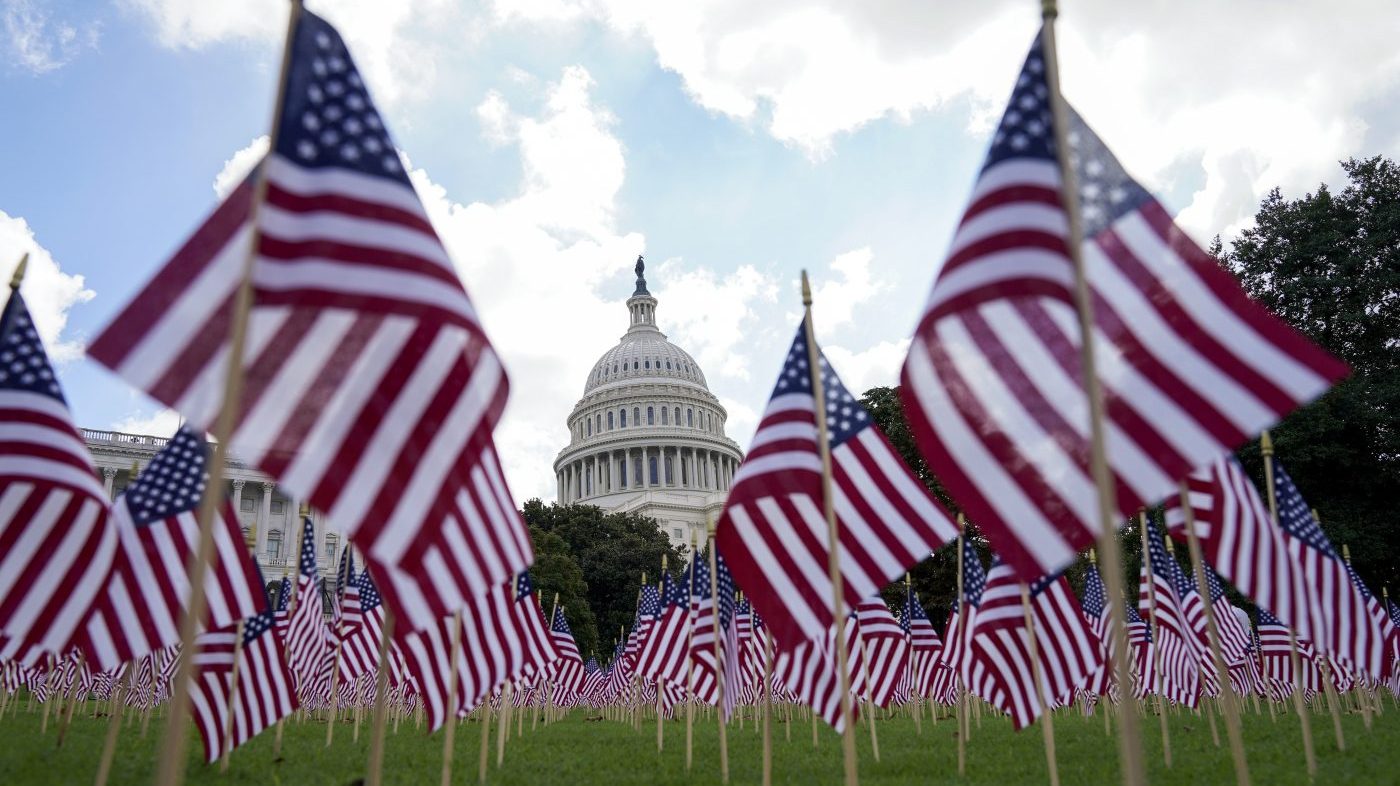
A new survey from the Associated Press-NORC Center for Public Affairs Research reveals a marked decline in the share of Americans who consider the United States an exceptional nation as the country approaches its 250th anniversary. Only 44 percent of respondents said the U.S. ranks among the world's greatest countries, while roughly a quarter described it as standing above all other nations.
The findings, released Monday, underscore a growing skepticism about American identity and the nation's global standing. The poll surveyed 2,596 adults between April 16 and 20 and carries a margin of error of 2.6 percentage points.
Generational divides are particularly stark. Just 51 percent of Americans aged 18 to 29 said democracy is a core component of U.S. identity, rating it as extremely or very important. In contrast, 81 percent of those 60 and older said the same. Among respondents aged 45 to 59, that figure was 66 percent, and among those 30 to 44, it was 61 percent.
The American Dream also saw diminished faith, especially among younger adults. Only 58 percent of those under 30 said the American Dream remains important to U.S. identity, compared with 79 percent of seniors. Overall, just 34 percent of all adults said the American Dream still holds true today. Fifty-one percent said it once held true but no longer does, and 15 percent said it never held true.
Partisan splits are sharp: 57 percent of Republicans said the American Dream still holds true, compared with 17 percent of Democrats and 24 percent of independents. A majority of Democrats—64 percent—said it once held true but no longer does, a view shared by 54 percent of independents.
The survey also found that only 56 percent of adults consider a shared culture and set of values extremely or very important to American identity, down from 65 percent in a similar 2017 poll. Meanwhile, 51 percent said the ability for people to escape violence or seek economic opportunity is key, and 55 percent said the mixing of different cultures and values defines the nation.
On cultural mixing, the partisan gap is wide: more than three-quarters of Democrats said it is a key feature of American identity, compared with just 4 in 10 Republicans. The results come as political leaders continue to spar over national identity and democratic norms. The rise of figures like Pete Buttigieg as a Democratic counterweight reflects the ongoing debate over what the country stands for.
Meanwhile, the erosion in belief in American exceptionalism may have implications for policy debates, including the intensified gerrymandering battles expected ahead of the 2028 election cycle. The poll suggests that for many Americans, particularly younger ones, the ideals of democracy and opportunity that once defined the nation no longer ring true.