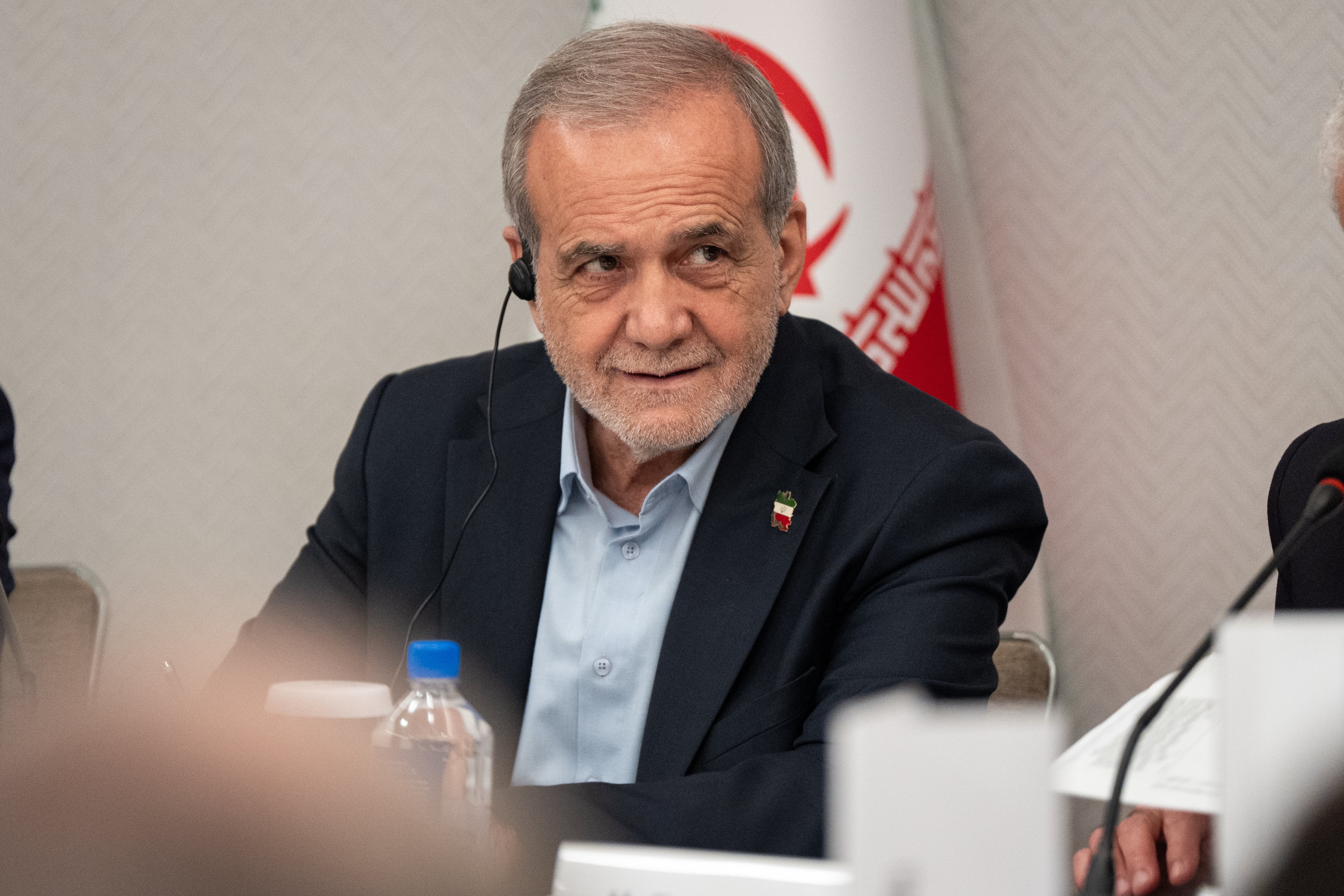
Iranian President Masoud Pezeshkian declared on Monday that a "deep historical mistrust" of the United States government endures, casting a shadow over a second round of peace negotiations set to begin imminently in Islamabad, Pakistan. The remarks, posted on the social media platform X, frame the upcoming diplomatic engagement as occurring under a cloud of profound skepticism from Tehran.
"Honoring commitments is the basis of meaningful dialogue," Pezeshkian wrote, establishing his core precondition. He elaborated sharply, stating, "Deep historical mistrust in Iran toward U.S. government conduct remains, while unconstructive and contradictory signals from American officials carry a bitter message; they seek Iran's surrender. Iranians do not submit to force."
The comments arrive as both sides navigate a tense and fragile landscape. Iran's state media recently released figures claiming at least 3,375 Iranian deaths since the conflict with the U.S. and Israel began on February 28, a war Tehran describes as self-defense against foreign strikes. Despite the acrimony, Pezeshkian has previously signaled an openness to diplomacy, writing in an open letter earlier this month that "continuing along the path of confrontation is more costly and futile than ever before." He framed the moment as decisive, adding, "The choice between confrontation and engagement is both real and consequential; its outcome will shape the future for generations to come."
Ceasefire Under Strain and Naval Confrontations
The diplomatic window appears narrow. The current short-term ceasefire is scheduled to expire on Wednesday, and former President Donald Trump has publicly accused Iran of violating its terms by firing on a French and British vessel in the Strait of Hormuz. Compounding tensions, the U.S. military seized an Iranian-flagged vessel attempting to transit the American naval blockade in the same critical waterway on Sunday, a move that prompted immediate vows of retaliation from Tehran and led analysts to dampen expectations for the talks.
Trump has told Bloomberg he is unlikely to extend the two-week ceasefire, raising the specter of a rapid return to open hostilities. The U.S. delegation for the Islamabad talks is expected to include high-profile figures such as Vice President Vance, special envoy Steve Witkoff, and Jared Kushner.
Legacy of Failed Negotiations
The previous round of negotiations collapsed after Iran accused U.S. officials of seeking to deny what it calls its right to uranium enrichment—a process with both civilian energy and military applications. On Sunday, Iran's state news agency condemned Washington for "excessive demands and unreasonable, unrealistic requests," echoing a long-standing grievance that has stalled past diplomatic efforts. This persistent deadlock over Iran's nuclear program remains the central, intractable issue.
The environment is further charged by recent U.S. actions, including the seizure of an Iranian vessel in the Strait of Hormuz and Trump's own threats against Iranian civilian targets, which have been defended by some officials as legitimate pressure tactics. These events have placed the Iranian military on high alert as the diplomatic deadline looms.
President Pezeshkian's stark rhetoric underscores the fundamental chasm of trust that must be bridged for any agreement to hold. His assertion that the U.S. ultimately seeks capitulation, not compromise, suggests Tehran will enter the Islamabad talks with maximalist defensive posture, viewing American diplomacy through a lens shaped by decades of hostility. The success of the negotiations may hinge on whether the U.S. delegation can offer guarantees or concessions tangible enough to overcome what Iran describes as a justified and "historical" distrust.
With the ceasefire clock ticking down and military posturing continuing in the Gulf, the Islamabad talks represent a critical test. Failure could precipitate a swift and dangerous escalation, while success would require navigating a minefield of technical demands, domestic political pressures in both nations, and the heavy weight of a bitter shared history.