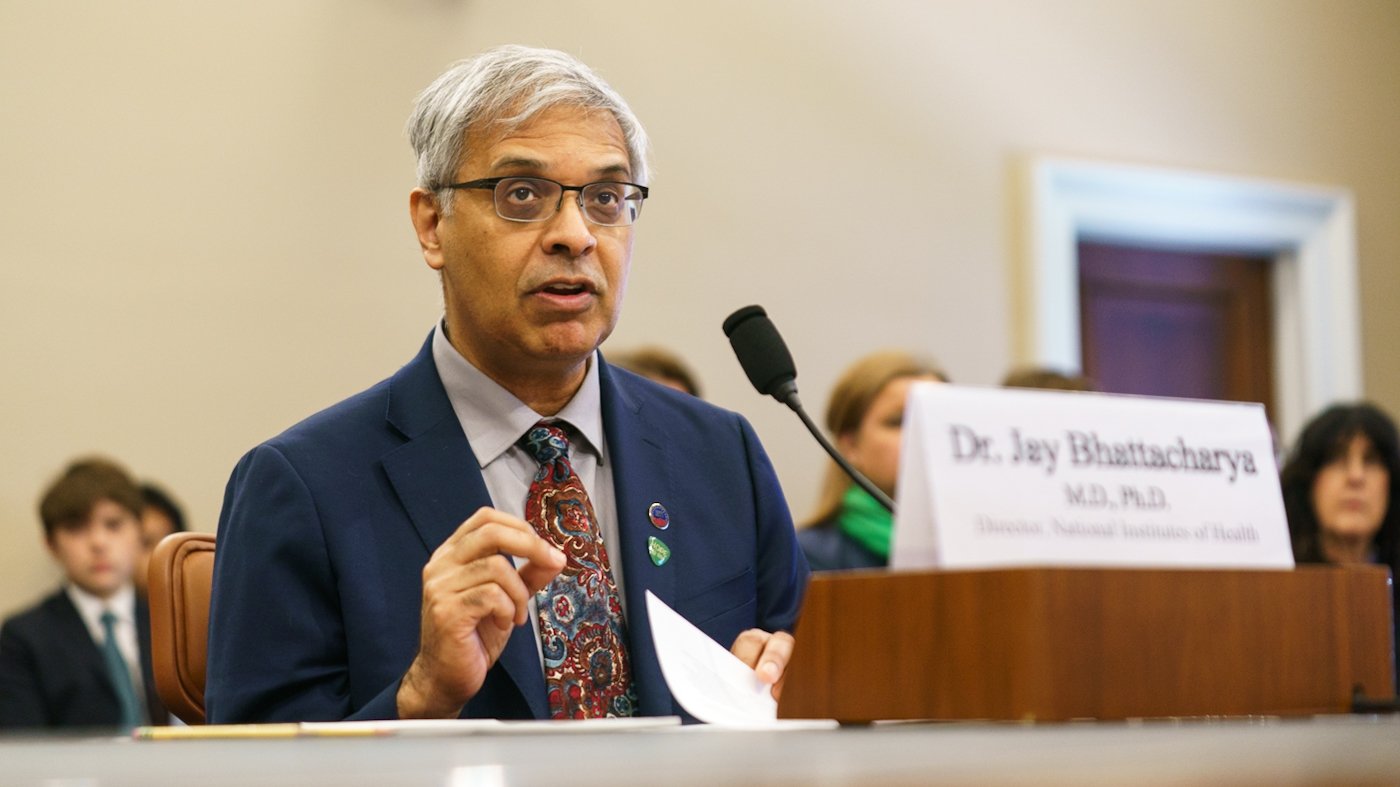
Acting CDC Director Jay Bhattacharya on Thursday forcefully defended the Trump administration's approach to the Ebola outbreak, arguing in a Wall Street Journal op-ed that the current containment strategy rests on stronger scientific footing than the COVID-19 response he has long criticized.
Bhattacharya, a prominent critic of pandemic lockdowns and mandates, wrote that COVID-era measures like school closures, mask requirements, and vaccine mandates “made little scientific sense.” In contrast, he said the administration’s Ebola strategy is “scientifically justified, sensitive to the epidemiological facts and specifically tailored to contain the outbreak.”
The acting CDC chief emphasized that the top priority is preventing Ebola from reaching U.S. soil. Shortly after the first cases were confirmed, the Departments of Homeland Security and Health and Human Services barred entry to non-U.S. passport holders who had recently traveled to Congo, Uganda, or South Sudan. “Requiring aliens traveling from these countries to spend at least 21 days elsewhere before entering the U.S. will greatly reduce the risk of importation,” Bhattacharya wrote.
However, infectious disease experts have pushed back, arguing that border closures are ineffective at stopping viral spread. The Infectious Disease Society of America stated last month, “Public health policies that single out non-U.S. citizens won’t prevent viruses from crossing our borders. Diseases don’t recognize passports.”
More controversially, Bhattacharya defended the administration’s plan to quarantine Americans exposed to Ebola at a new facility in Kenya rather than flying them home. He described the facility as offering ICU-level care and personalized treatment plans, staffed by U.S. Public Health Service officers with Ebola experience. But those plans have been suspended after Kenya’s High Court last week blocked the facility’s establishment, pending a lawsuit filed by the Law Society of Kenya and a constitutional watchdog. On Tuesday, the court extended the ban and ordered the Kenyan government to disclose details of its agreement with the United States.
The legal challenge and public protests underscore growing tensions over the U.S. quarantine base, which some Kenyans view as a violation of sovereignty and human rights. Meanwhile, Democrats in Congress have linked the Ebola surge to cuts in global health programs, including the shutdown of USAID operations, which they say has fueled the outbreak. As Congress faces pressure to reverse public health cuts, Bhattacharya’s defense of the administration’s targeted measures highlights a sharp partisan divide over how to handle emerging infectious threats.
The acting CDC director’s op-ed comes as the Ebola outbreak in East Africa continues to expand, with former CDC Director Robert Redfield warning it could become the second-largest in history. The administration’s focus on border restrictions and overseas quarantine has drawn both praise from allies who see it as a prudent step and criticism from those who argue it stigmatizes immigrants and fails to address the root causes of the outbreak.