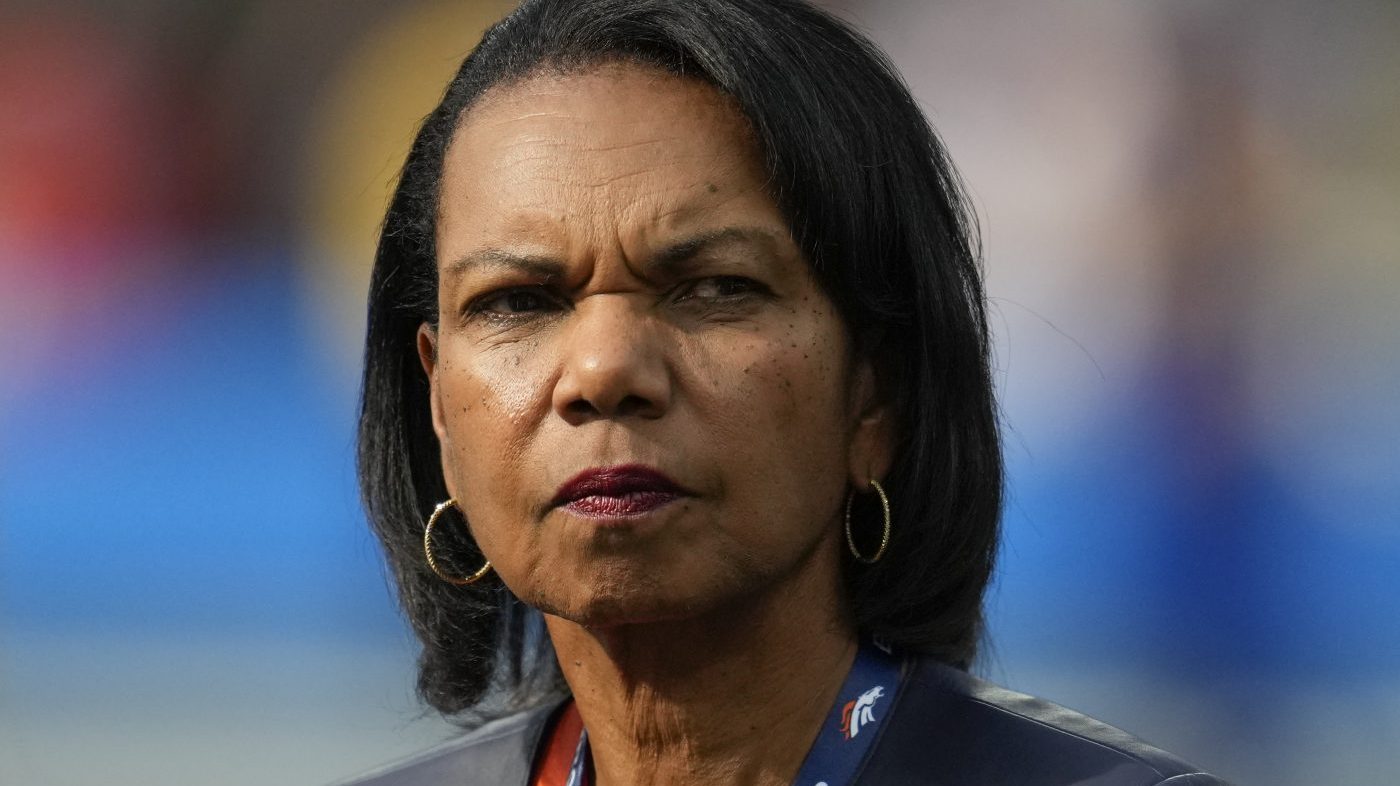
Former Secretary of State Condoleezza Rice asserted Wednesday that the U.S.-Israeli military campaign against Iran has produced a “weaker, more confused” regime in Tehran, even as the conflict fell short of toppling the government.
In an op-ed for The Wall Street Journal, Rice, who served under President George W. Bush, praised the campaign's achievements while acknowledging its limited scope. “This war hasn’t brought, as many had hoped, the end of the Iranian regime,” she wrote. “But it has left a weaker, more confused one.” She noted that Supreme Leader Mojtaba Khamenei has not been seen publicly since his installation, and that economic pressure has made the regime vulnerable to internal fractures over Iran’s future global role.

Rice credited the U.S. blockade of the Strait of Hormuz with delivering “severe economic damage” and emphasized that Iranian leaders remain “physically vulnerable to U.S. military power and allied intelligence.” She urged European leaders to “re-engage with us,” accusing them of having “behaved shamefully” as the U.S. confronted growing Iranian capabilities and regional attacks.
“Iran isn’t only our problem. It isn’t only an Israeli problem,” Rice wrote, framing the threat as a shared international challenge.
The former secretary of state highlighted the conflict’s role in deepening defense cooperation and intelligence sharing among the U.S., Israel, and Persian Gulf states, leaving Israel “more secure than ever.” She noted that many Arab governments now recognize Israel’s legitimacy and seek technological and economic partnerships, driven by a desire for modernization.
Rice acknowledged diplomatic hurdles for Israel in securing international support for continued operations but argued that the regional landscape has shifted. “Securing international support for its continued efforts to deal with that threat remains a diplomatic hurdle for Jerusalem,” she wrote. “But many Arab regimes no longer question Israel’s legitimacy; instead, they seek the benefits of technological and economic cooperation with Israel. Modernization is their strongest motivation.”
She concluded on a cautiously optimistic note, calling the current moment “a new day in the Middle East, though it isn’t one without clouds.” Rice said no U.S. president has had “a better chance to build a different and more stable region” and suggested it “may just take a little more time.”
The world is now watching whether President Trump and Iranian leaders will extend the current 60-day ceasefire and reopen the Strait of Hormuz. A potential agreement could lay the groundwork for negotiations to end Iran’s nuclear program, a central U.S. objective in the military campaign. Meanwhile, House lawmakers passed a largely symbolic bill this week to force Trump to end the war, though its legal force remains disputed and Trump is expected to contest it if the Senate follows suit. For more on the political dynamics, see Rubio’s defense of the administration’s Iran strategy and his recent House grilling over policy and cuts.