After spending 37 years in prison for a murder he may not have committed, Robert Wallace Lyons walked out of an Oregon prison this month. Prosecutors are now weighing whether to retry him, but his case has become a stark reminder of the dangers of allowing outdated forensic methods to decide guilt.
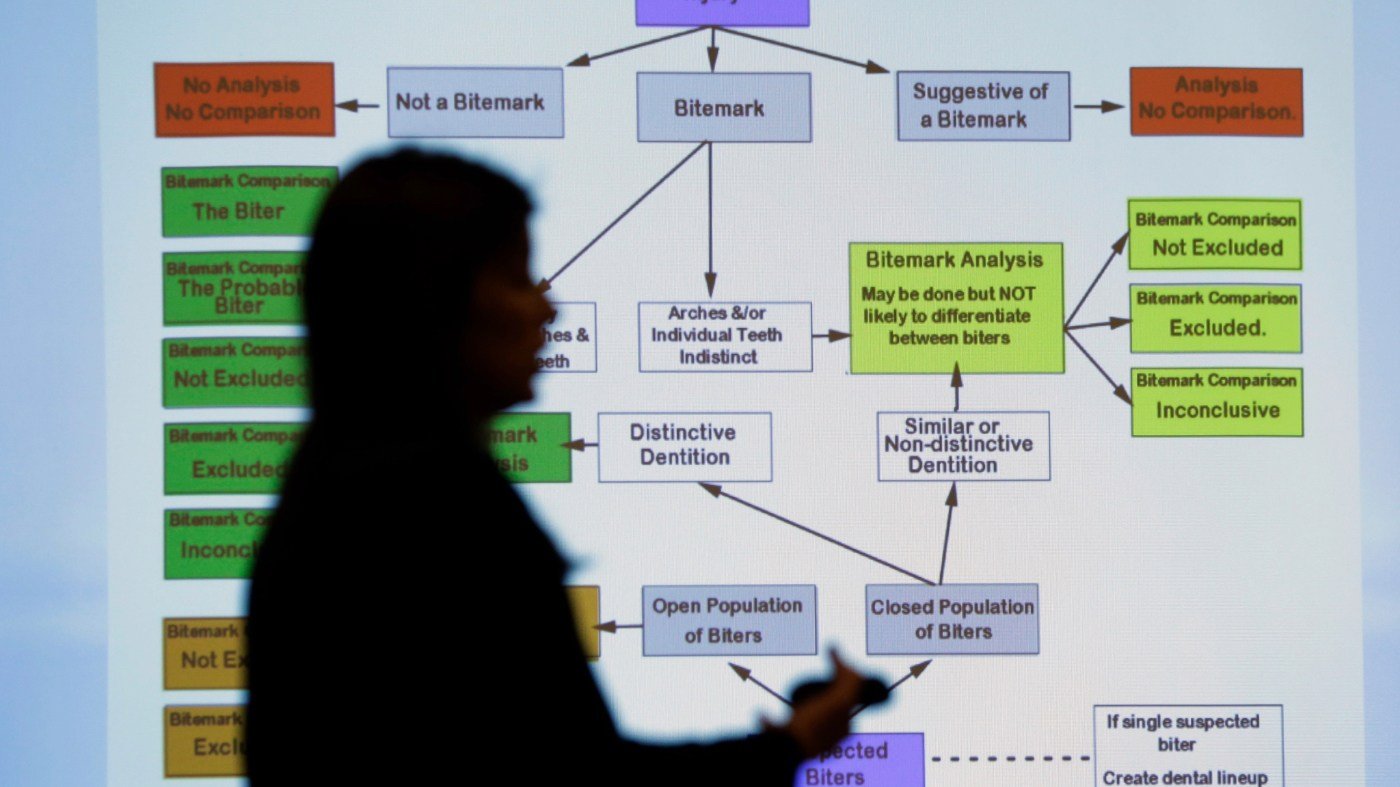
In 1990, a Lane County jury convicted Lyons of killing Lori Stabenow, who was found strangled in her motel room. The prosecution's case hinged on bitemark evidence, a technique that was once routine in courtrooms but has since been widely discredited for lacking scientific validity. An expert testified he was certain that bite marks on Stabenow's body matched wax molds of Lyons' teeth, testimony that helped secure a conviction that stood for decades.
Oregon only this year passed a law formally recognizing bitemark analysis as unreliable, opening the door for Lyons and others to challenge their convictions. But the delay is telling: the scientific community had already rejected the method years earlier, and Oregon still lacks a rigorous judicial gatekeeping standard to prevent such evidence from ever reaching a jury.
That's where the federal rules of evidence come in. Rule 702 empowers judges to act as gatekeepers, allowing them to exclude expert testimony that is not based on reliable science. It's a standard that has guided federal courts for decades and serves as a model for states to adopt. When states fail to implement similar standards, defendants can be convicted on evidence that later turns out to be junk science.
Lyons' case is not isolated. Bitemark analysis, arson pattern evidence, and bullet lead composition analysis have all led to convictions that were later overturned or called into question. Without consistent state standards, the justice system remains fragmented, and the outcome of a trial can depend more on where it is held than on the facts.
The problem is not just the lack of gatekeeping, but also the time it takes to correct errors once science moves forward. Bitemark evidence was deemed unreliable in 2009, yet it took another 17 years for Lyons to be released on bond. Meanwhile, other inmates may still be waiting as their appeals grind through the courts.
No appellate process can undo an execution or restore decades of a person's life. That's why gatekeeping has to work upfront, not years later. As courts face mounting caseloads, the risk of wrongful convictions grows.
States that have not yet aligned their admissibility standards with federal rules should act now. Lawmakers have a clear path forward: adopt Rule 702 or its equivalent to ensure expert testimony is rooted in science, not speculation. Without such reforms, we risk more tragedies like Lyons' ordeal.
The question is how many other convictions built on discredited techniques are still standing. How many people are on death row because of weak expert witness standards? These are questions with real answers, and the solution is not a mystery. States need to catch up before the next Robert Wallace Lyons runs out of time.