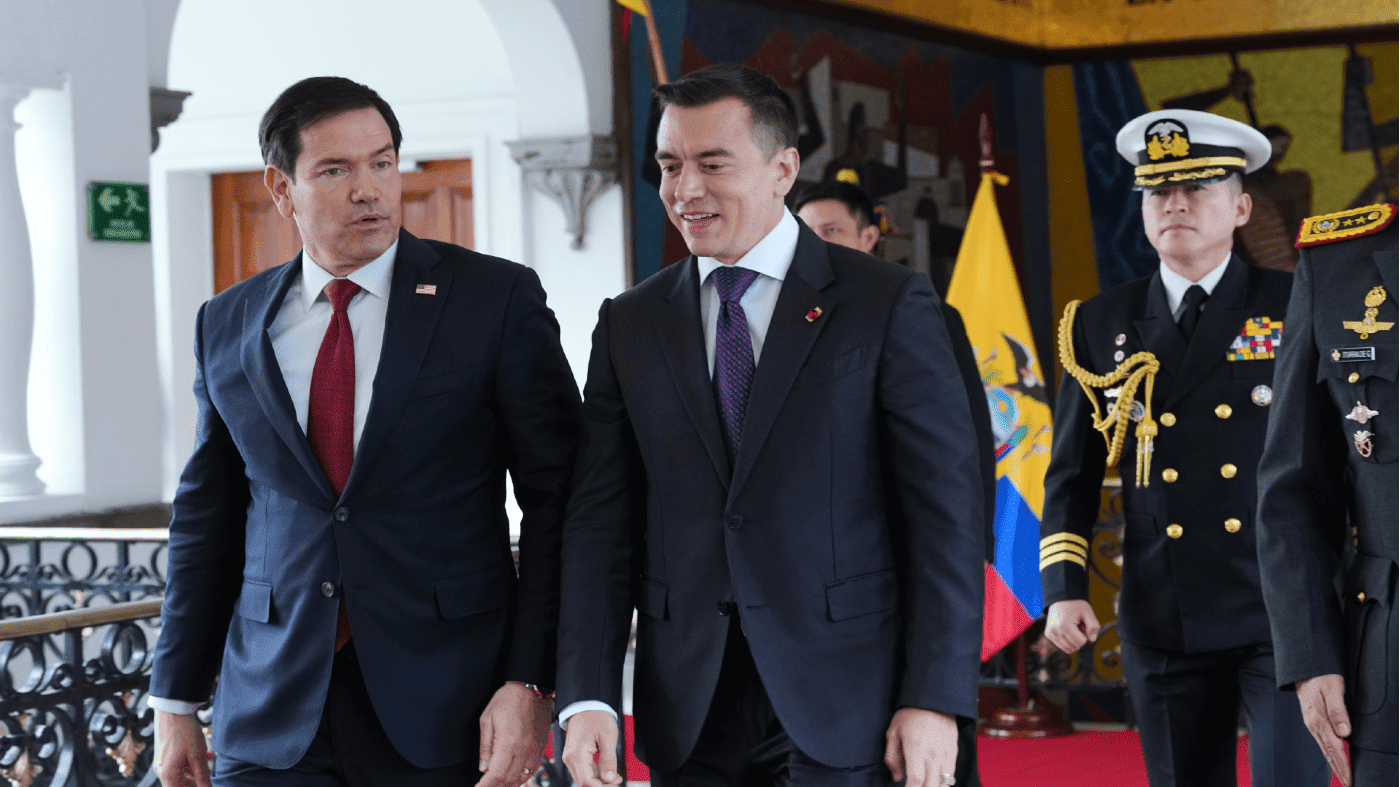
Ecuador has emerged as the clearest practitioner of the Trump administration's Western Hemisphere strategy, which calls for partnering with regional allies to curb drug trafficking and dismantle cartels. Under President Daniel Noboa, Quito has not only resumed extraditions to the United States but also expanded military, intelligence, and law-enforcement collaboration. This cooperation, particularly at sea and in the extradition of high-profile cartel figures, positions Ecuador as a deserving candidate for designation as a major non-NATO ally—a status that would institutionalize and broaden the partnership.
The maritime dimension of the alliance has been especially fruitful. Since U.S. and Ecuadorian forces began joint operations in March, the U.S. Coast Guard cutter James has conducted nine interdictions, seizing over 46,500 pounds of narcotics. Last month, Quito authorized two U.S. warships to patrol its waters, and three Black Hawk helicopters already stationed in Manta are ready for expanded missions. These assets extend American reach into operations Ecuador is already supporting, demonstrating the tangible benefits of the bilateral security relationship.

Extradition has provided even stronger evidence of Ecuador's commitment. After Ecuadorian voters approved extradition in transnational organized crime cases by a nearly 30-point margin in a referendum, Quito sent three of its nationals to face U.S. courts on major drug charges. The first was José Adolfo Macías Villamar, alias “Fito,” leader of the Los Choneros gang, extradited under the 2024 reform. Two more Ecuadorians accused of international drug trafficking followed in June. The message to cartel leaders is clear: an arrest in Ecuador can lead to a U.S. prison cell—a crucial deterrent for long-term success against cartel leadership.
Ecuador's judicial system has also shown it can handle both cartel finance and abuses by its own security forces. An Ecuadorian tribunal convicted six individuals and two companies for laundering over $17 million through Macías Villamar's family network. In a separate case, a trial court convicted 16 servicemen for the forced disappearance of four boys, with three appealing. This balance of stringent enforcement and domestic accountability makes Ecuador a reliable partner in the region.
Designating Ecuador as a major non-NATO ally would place this partnership on firmer ground. It would not entail a NATO-style defense commitment or a blank check, but it would make Ecuador eligible for reciprocal military training, cooperative defense research and testing, and loans of equipment for joint projects. If Washington later provides military financing for an approved purchase, Quito could contract directly with U.S. defense firms. These authorities could enhance maritime surveillance, improve aircraft maintenance, and bolster secure communications, making long-term cooperation easier to plan and turning today's deployments into lasting Ecuadorian capacity.
The strategic logic extends beyond bilateral ties. Colombia already holds major non-NATO ally status, and President Trump designated Peru in January. Ecuador sits between them on the Andean Pacific coast. Granting all three the same status would facilitate trilateral training and joint defense projects along a principal cocaine corridor. It would also signal to the hemisphere that Washington rewards governments that align with the United States and helps them absorb the short-term costs of confronting criminal groups after years of neglect.
Political momentum is building. Five House Republicans, led by Rep. María Elvira Salazar (R-Fla.), have urged Secretary of State Marco Rubio to support the designation. President Trump can act without a treaty, and the statutory process only requires a 30-day notice to Congress, not a vote. This administrative path makes the designation a swift and effective tool.
The administration has asked regional governments to confront cartels, share the burden of hemispheric security, and align openly with the United States. Ecuador has answered that call. Designating it a major non-NATO ally would give “regional champion” real meaning and provide a powerful incentive for other nations to follow Ecuador's lead.