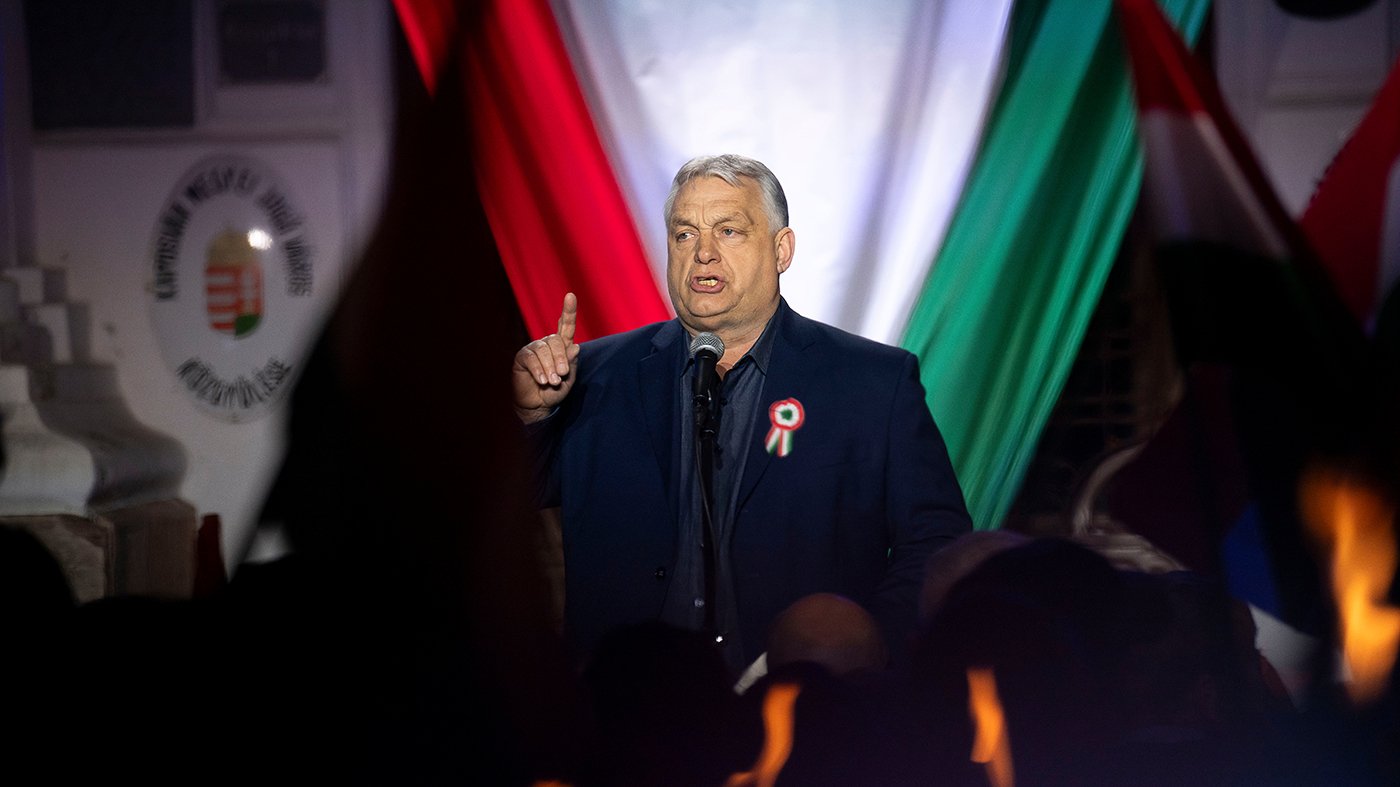
In a seismic political shift for Central Europe, Hungarian Prime Minister Viktor Orbán has conceded defeat in national elections, bringing his 16-year tenure to a close. The victory for challenger Péter Magyar and his center-right Tisza Party marks a decisive rejection of Orbán's nationalist governance and delivers a significant setback to his key international ally, former U.S. President Donald Trump.
A Consequential Defeat
With approximately 60% of votes counted, the Tisza Party held a commanding lead with over 52% of the vote compared to 38% for Orbán's Fidesz party, according to Associated Press data. The National Election Office reported turnout exceeding 77%, the highest in any post-communist Hungarian election. Magyar confirmed the victory in a social media post, stating, "Prime Minister Viktor Orbán has just called to congratulate us on our victory."
The result is particularly striking given a high-profile intervention just days before the vote. U.S. Vice President J.D. Vance traveled to Budapest for a rally with Orbán, praising him as a defender of "Western civilization" and his hardline stances against immigration and EU centralization. The effort failed to alter the electoral trajectory, highlighting the limits of external political endorsements.
Strategic Implications for U.S. Politics
Orbán's defeat represents a direct blow to Trump's international network of populist allies. Trump had publicly championed Orbán's leadership, writing on Truth Social last Friday that his administration stood ready "to use the full Economic Might of the United States to strengthen Hungary's Economy" under Orbán's continued rule. The loss removes a pivotal European figure from Trump's political orbit and may signal vulnerabilities in the broader populist coalition. This foreign policy setback for Trump's allies follows other contentious international moves, such as the UK's suspension of the Chagos sovereignty transfer after Trump withdrew support.
Vance's unsuccessful mission to Budapest underscores the complex dynamics of U.S. political figures engaging in foreign elections. The rally framed the contest in stark civilizational terms, mirroring a rhetorical style Trump has employed elsewhere, including in his unprecedented civilizational rhetoric on Iran.
A Referendum on Hungary's Direction
The election was widely viewed as a referendum on Hungary's geopolitical alignment. Magyar, a former member of Orbán's own Fidesz party who broke with the leader in 2024, framed the choice as one "between East or West." Orbán had cultivated close ties with Russian President Vladimir Putin, repeatedly obstructing European Union efforts to support Ukraine, including recently blocking a critical $104 billion EU loan package. His government also maintained Hungary's dependence on Russian fossil fuel imports.
Magyar's victory suggests a potential recalibration of Hungary's foreign policy, possibly toward greater cooperation with the EU and NATO. In his concession, Orbán stated his party would "serve the Hungarian nation and our homeland from opposition as well," indicating Fidesz intends to remain a potent political force.
Broader European and Global Context
This political transformation in Hungary, a nation Orbán often labeled an "illiberal democracy," will reverberate across Europe. It removes a persistent internal critic from EU councils and could facilitate a more unified Western response to the war in Ukraine. The outcome demonstrates that even entrenched populist leaders face potent electoral challenges when domestic discontent overrides ideological alignment.
The result also illustrates the risks for U.S. politicians who tie their fortunes too closely to foreign leaders. Just as Trump's withdrawal from the Iran nuclear deal was condemned as a historic foreign policy failure, the heavy investment in Orbán's campaign has ended in a stark political defeat. As vote counting concludes, Hungary prepares for a new era, ending one of Europe's longest-serving leaderships and altering the continent's political landscape.