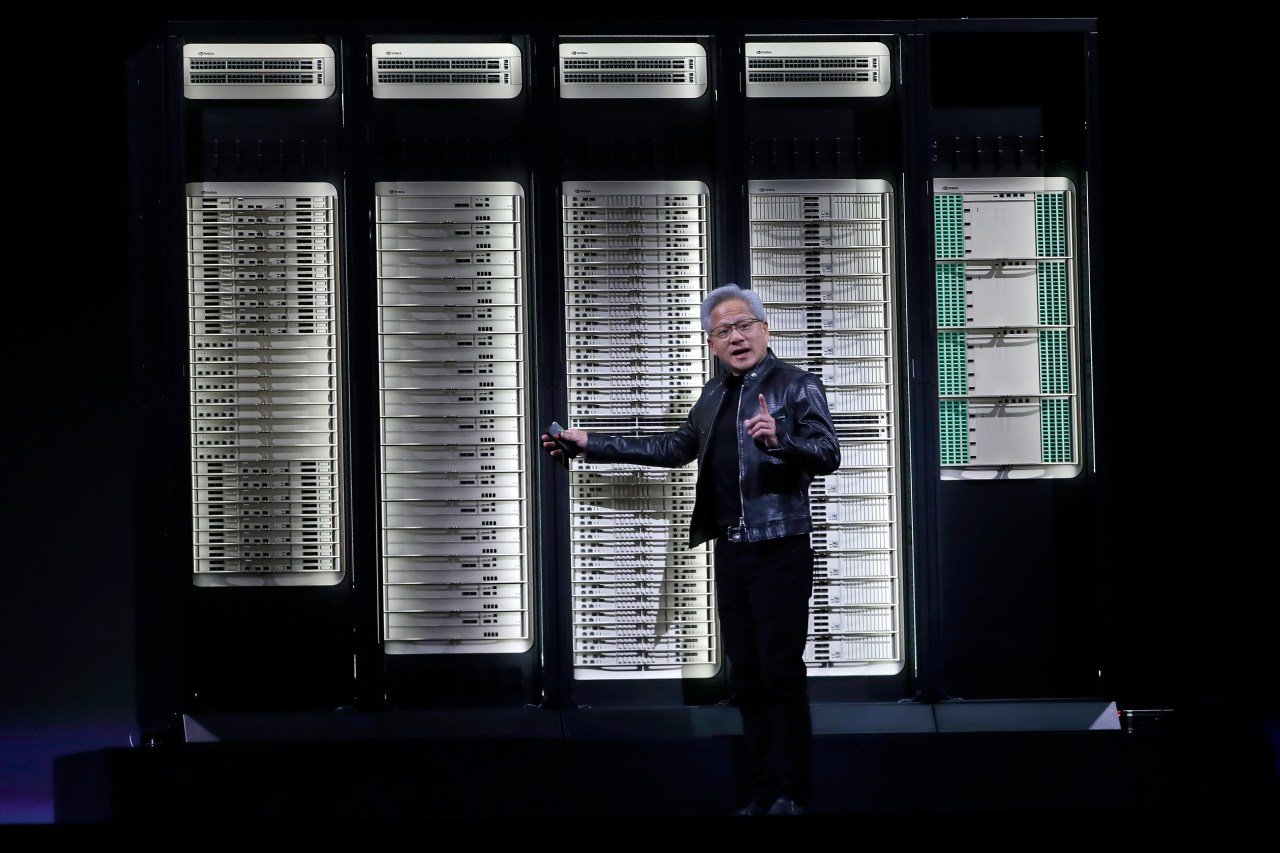
TAIPEI, Taiwan — Nvidia on Monday announced a new line of chips designed to bring advanced artificial intelligence directly into personal computers, signaling a major push beyond its dominant data-center business. The RTX Spark superchip, which combines CPU and GPU capabilities, will power a new generation of Windows laptops and desktops from partners including Microsoft and Dell, with models expected to hit the market later this year.
Speaking at the company's annual GTC event in Taipei, founder and CEO Jensen Huang declared that Nvidia and Microsoft are poised to reinvent the personal computer. “This is going to be the new PC,” Huang said, unveiling the superchip that he argued will transform how users interact with their machines. He described a future where an autonomous AI agent can understand a user, look at them, read files, conduct research, and perform a wide range of tasks autonomously.
Nvidia, already the world's most valuable company ahead of Apple, Alphabet, and Microsoft, is leveraging its dominance in AI data-center chips to challenge rivals Intel and AMD in the PC market. The announcement had an immediate market impact: Nvidia shares climbed nearly 4% in early U.S. trading, while Intel and AMD both fell more than 3%.
AI PCs as the Next Frontier
Microsoft confirmed in a separate statement that computers running on the RTX Spark superchip would support highly capable AI models and complex workloads, enabling local execution of AI agents without relying on cloud servers. Nvidia framed this as the most significant shift in personal computing in four decades. “This is the first across the lineup of PC reinvention for 40 years,” Huang said.
Industry analysts see the move as a strategic bet on rising consumer demand for personal AI agents. Lian Jye Su, chief analyst at Omdia, said the development gives consumers more choices, which he called “always a good thing.” Neil Shah, co-founder of Counterpoint Research, described the announcement as “revolutionizing how PCs would look like in the next 10 years,” adding that the new machines will “drive agentic AI applications in every home.”
The timing also reflects broader political and economic currents. President Trump recently added Huang to his China trip itinerary, underscoring the geopolitical weight of Nvidia's AI leadership. Meanwhile, the push for AI-powered PCs comes as young borrowers increasingly turn to personal loans for everyday costs, highlighting the economic pressures that could shape adoption of premium technology.
Beyond PCs: Data Centers, Robots, and Geopolitics
Huang also provided updates on Nvidia's data-center business, revealing that the new Vera CPUs are now in full production and poised to become a major growth driver amid the AI agent boom. Early customers include Anthropic, OpenAI, and SpaceXAI. He also showcased a humanoid robot reference design called “Isaac GR00T,” nearly six feet tall, built on a chassis from Chinese robot maker Unitree's H2 and equipped with five-fingered hands from Singapore-based Sharpa capable of finely controlled movements.
Nvidia's expansion into personal computing and robotics comes at a time of heightened scrutiny over AI's societal impact. Senate Democrats have demanded a probe into FBI Director Patel's personal travel, and similar oversight efforts are likely to extend to the AI sector as its products become more intimate and powerful.
With the RTX Spark superchip, Nvidia aims to put an AI supercomputer in every household. Whether consumers embrace that vision will shape the next chapter of the PC industry — and the company's own fortunes.