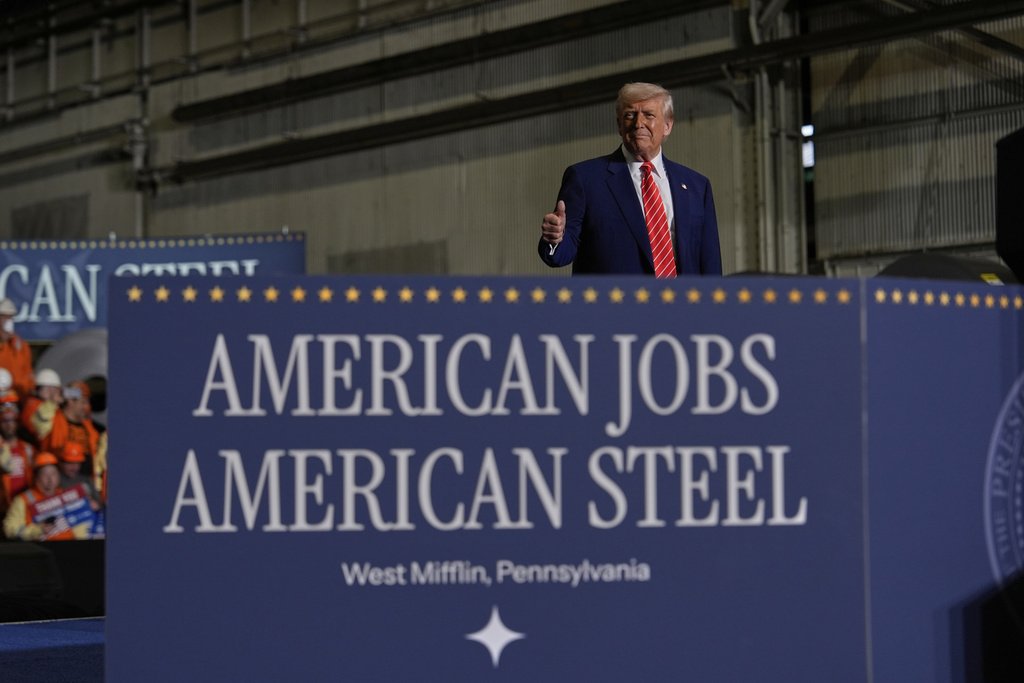
One year ago, critics of Nippon Steel's acquisition of U.S. Steel warned of job losses, a hollowed-out American manufacturing base, and national security risks. Those fears have not materialized. Workers got their promised $5,000 bonuses, the company remains headquartered in Pittsburgh, and Washington secured a 'golden share' giving it veto authority over any move that would shift jobs overseas or slash investment.
Executives and federal officials recently gathered in Pennsylvania to announce up to $2.5 billion in new investment at the Mon Valley Works, the historic birthplace of the American steel industry. The announcement provided a moment to assess one of the most contentious economic and political battles in recent memory.
How the Deal Turned Around
Politicians from both parties initially rushed to block the transaction, and the national leadership of the United Steelworkers campaigned aggressively against it. But many rank-and-file workers and local union chapter leaders saw Nippon Steel's capital as the best chance to modernize aging mills and secure long-term employment. President Biden blocked the deal on national security grounds; President Trump later reversed course, approving a revised agreement with extensive protections.
Before the acquisition, U.S. Steel had spent decades losing ground to competitors. Once the world's largest corporation, its workforce had shrunk dramatically, and many facilities were outdated. The question was never whether change would come, but whether sufficient investment would arrive to keep the company competitive. Nippon Steel has now committed roughly $11 billion to U.S. operations by 2028, including a $1.9 billion direct-reduced-iron plant in Arkansas and hundreds of millions for projects in Pennsylvania and Indiana. Dozens of Nippon engineers are embedded inside U.S. Steel to drive modernization.
Unprecedented Safeguards
Skeptics worried merger promises would evaporate after closing. But the final national security agreement gives Washington a 'golden share'—veto power over relocating headquarters, transferring jobs overseas, reducing investment commitments, or other actions deemed contrary to U.S. interests. The government also has direct representation in corporate governance. In effect, the deal secured protections for nearly every concern critics raised while preserving the benefits of foreign investment.
Challenges Remain
Not everything has gone smoothly. Last summer, an explosion at the Clairton Coke Works killed two workers and injured ten, leading to safety citations. The tragedy underscored that many U.S. Steel facilities still face significant challenges, and modernization cannot come soon enough. Some Pittsburgh-area residents remain frustrated that the broader economic transformation promised by the acquisition has yet to fully materialize.
Those concerns are real, but they reflect the difficulties of rebuilding an aging industrial giant—not signs of neglect. The deal's significance extends beyond steel towns. It tests whether America remains willing to embrace investment from trusted allies, especially as tariffs, trade disputes, and uncertainty over U.S. foreign policy leave allies questioning Washington's reliability. Japan is America's largest source of foreign direct investment, supports nearly 1 million American jobs, and is a critical partner in the Indo-Pacific. Sending a message that such investments are unwelcome would undermine broader alliance goals.
As one senior administration official noted, 'This deal shows that when we work with allies, we can modernize American industry while protecting our national security.' The bet on allies is paying off—so far.